Key Takeaways:
- Smart thermostats and heat-pump conversions deliver the largest, verifiable energy and cost savings, especially when combined with insulation and air-sealing improvements.
- LED lighting, ENERGY STAR appliances, smart power strips, and smart plugs cut lighting and standby loads; LEDs and certified appliances typically offer the fastest payback.
- Many single-purpose “energy-saving” gadgets (plug-in controllers, miracle controllers, low-cost claim devices) provide negligible savings; focus on HVAC upgrades, insulation, and behavior changes for real impact.
High-Efficiency Lighting and Automation
LEDs deliver up to 80% energy savings and long lifespans, so you cut bills and bulb swaps; be wary of cheap models with poor color rendering or dimmer incompatibility that causes flicker or heat.
Ultra-Efficient LED Ecosystems
Integrated LED ecosystems give you scene control, schedules and advanced dimming to squeeze more savings, but check hub standby power, subscription fees and choose systems with open standards for compatibility.
Occupancy and Ambient Light Sensors
Motion and ambient sensors can cut wasted lighting in unoccupied spaces by 50% or more, yet poor placement or high sensitivity creates false triggers that erase gains.
You should match sensor type to the room: PIR for predictable motion, ultrasonic for through-wall detection, or dual-tech for fewer false triggers. Mount sensors for clear coverage, set sensible delays (short in hallways, longer in living areas), and enable daylight harvesting so lights stay off when lux is sufficient. Test for pet immunity and apply firmware updates; poor setup or cheap units can cost more energy than they save.
Intelligent Energy Monitoring and Management
Monitoring lets you track whole-home and circuit-level consumption in real time, spot waste, and set priorities; choose systems with accurate, actionable alerts to drive real savings.
Whole-Home Energy Monitors
Whole-home monitors give you an instant dashboard of total draw, detect abnormal spikes, and validate panels or battery output; prefer units offering circuit-level granularity and secure cloud access.
Smart Plugs and Phantom Load Reduction
Smart plugs let you schedule and remotely cut power to eliminate phantom loads, but pick certified models with load ratings and surge protection to reduce fire risk.
You can group smart plugs into zones, set occupancy schedules, and use their energy metering to spot inefficient appliances. Choose plugs with firmware updates, UL/ETL certification, and clear amperage limits; cheap models often lack protection and can pose a fire hazard. Integrate with your hub to automate offloads and calculate monthly savings.
Major Appliance Innovations
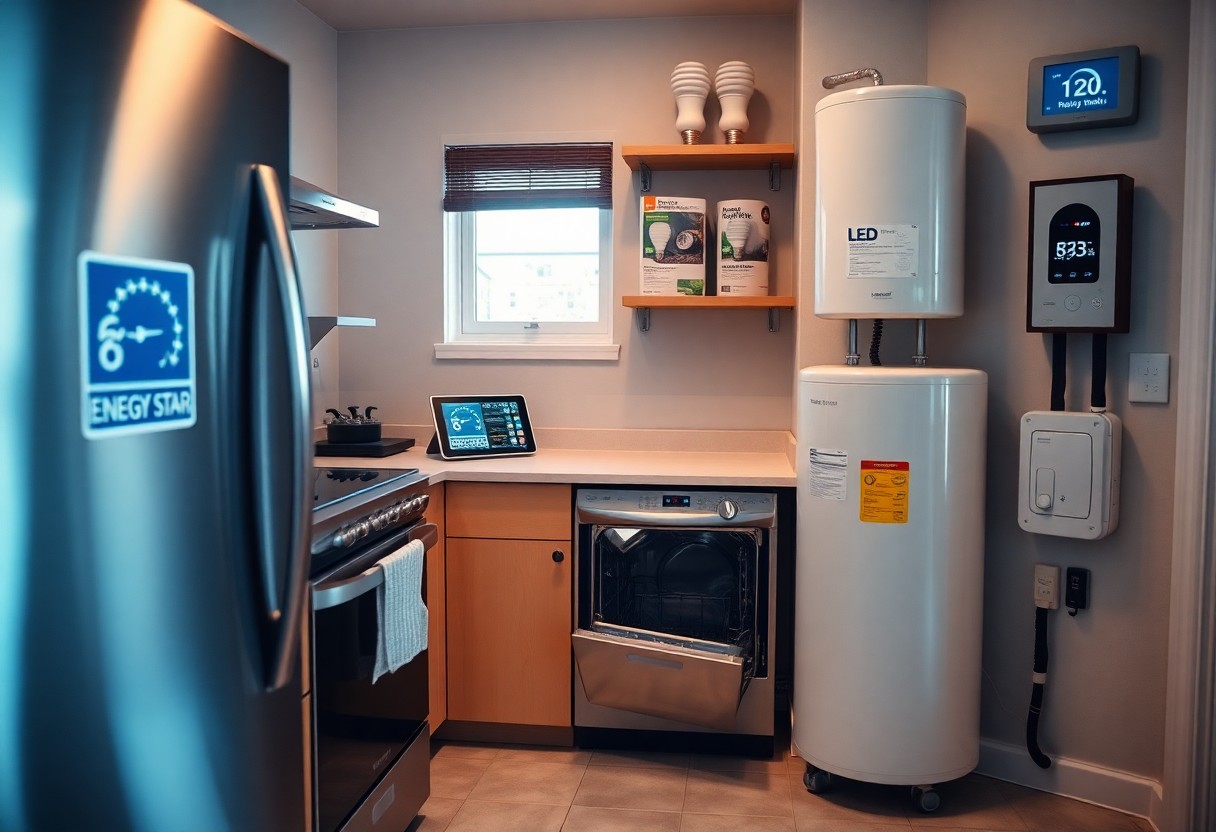
Appliances with smart controls and efficient motors can cut household energy use; you should prioritize heat-pump HVAC and high-efficiency washers to see real savings and reduce peak demand.
Heat Pump Technology in HVAC and Dryers
Heat pumps slash heating and drying energy; you can expect up to 50% savings versus resistive systems, but improper installation or poor cold-climate performance can increase costs, so you should choose reputable installers and cold-rated models.
Induction Cooktops and Energy-Star Ratings
Induction cooktops heat faster and use less energy; you should value units with Energy Star-equivalent efficiency, but expect to replace some cookware and watch for hot-surface risks if pans aren’t centered.
You can expect induction to convert around 80-90% of input energy to the pan versus ~40% for gas; check for Energy Star or equivalent efficiency labels, ensure your cookware is ferrous, and be aware that strong magnetic fields can affect some medical implants-consult a clinician if concerned.
Separating Facts from Fiction: What Doesn’t Work
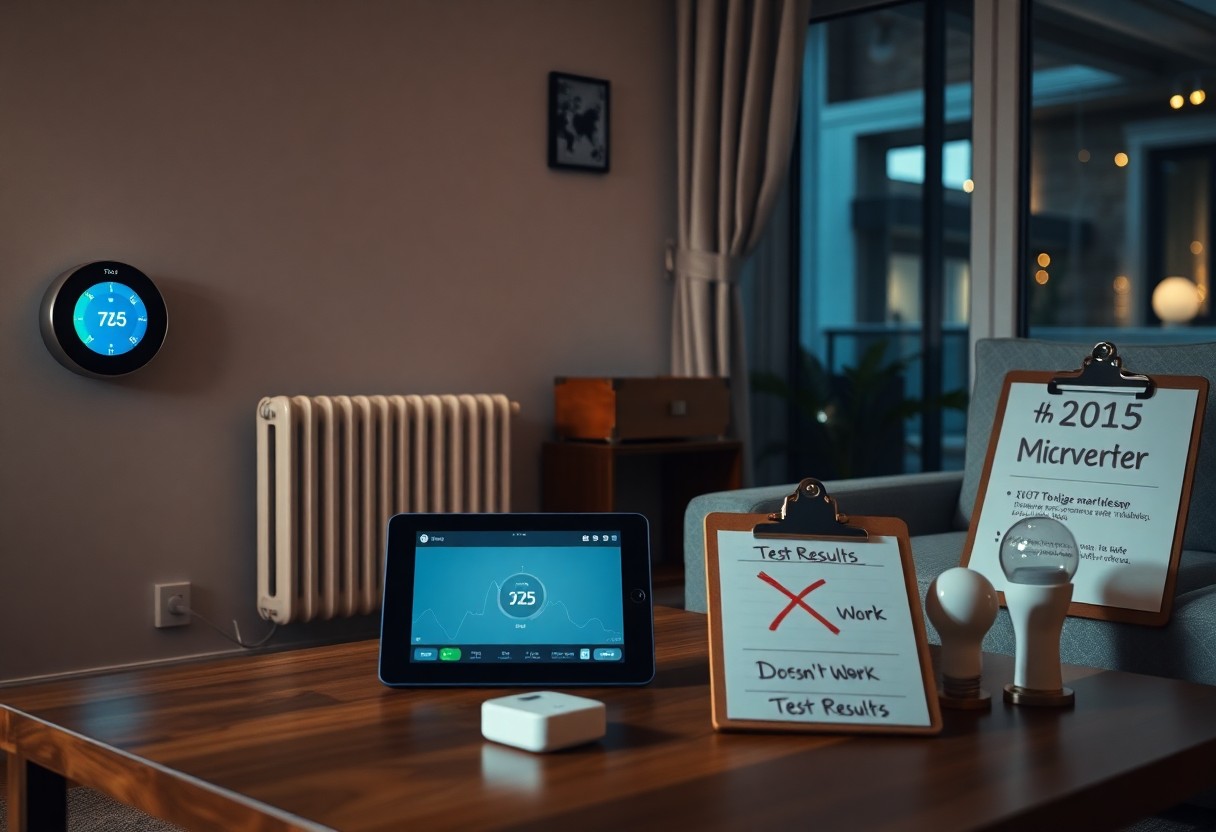
You should skip plug-in gimmicks and marketing fluff-independent lab tests show no measurable energy savings, and some devices can cause electrical interference or false meter readings.
The Truth About “Power Saver” Plug-in Devices
Manufacturers often claim plug-in “power saver” units cut bills, but multiple utility and lab studies report no real savings; you risk wasting money and getting misleading meter data.
Why Magnetic Water Conditioners Fail to Save Energy
Magnetic water conditioners promise less scaling and better efficiency, but controlled experiments show no significant reduction in energy use, so you shouldn’t expect lower bills.
Controlled tests reveal the reason: magnetic fields don’t change dissolved mineral chemistry or heat transfer; scaling behavior is driven by temperature and flow, so you see no consistent energy benefit. You may also face increased corrosion or voided warranties, so invest in insulation and efficient heaters instead.
Strategic Implementation and ROI Analysis
You should prioritize upgrades that deliver clear ROI within 3-7 years, phase installations to avoid duplicate costs, and monitor for hidden standby losses that can erase expected savings.
Calculating Payback Periods for 2025 Tech
Calculate payback by dividing your net upfront cost by projected annual energy savings, and include maintenance and inflation for a realistic timeline.
Leveraging Government Incentives and Rebates
Check available federal, state and utility programs so you reduce net costs; claim instant discounts when eligible and watch out for expired or misleading offers.
Confirm eligibility for federal tax credits, state rebates, utility programs and point-of-sale discounts before purchasing; you may cut installation costs by 30-50% on heat pumps and solar. Document all receipts, audits and contractor certifications so you can file claims and avoid denied rebates. Avoid third-party middlemen that charge fees or promise guaranteed returns; verify official program portals and deadlines to protect your savings.
To wrap up
Now you can prioritize smart thermostats, LED lighting, high-efficiency appliances and targeted insulation in 2025 to cut bills; real savings come from measured upgrades and behavior changes, while flashy gadgets without verified data rarely pay back-choose certified devices and monitor performance to get results.
FAQ
Q: Which home energy-saving devices actually deliver measurable savings in 2025?
A: Smart thermostats, heat-pump water heaters, LED lighting, induction cooktops, and properly installed heat-pump HVAC systems deliver the most reliable, measurable savings. Smart thermostats that use schedules, geofencing, and room sensors typically reduce heating and cooling costs by roughly 8-15% for heating and 10-20% for cooling depending on behavior and home envelope. Heat-pump water heaters usually cut electric water-heating energy by about 40-60% vs. electric resistance tanks and show strong returns when paired with off-peak rates or incentives. Upgrading to high-quality LED lamps and fixtures reduces lighting energy by 70-85% compared with incandescent bulbs and often pays back within 1-3 years. Induction cooktops use electricity more efficiently than gas or resistive electric ranges and shorten cooking times, which reduces energy used for cooking and lowers heat gain into the home. Whole-home heat pumps deliver large HVAC savings where gas or oil systems are being replaced, with payback influenced by climate, fuel prices, and available rebates.
Q: Which energy gadgets are mostly ineffective or a waste of money?
A: Devices that claim dramatic savings without cutting actual load are the common wastes: so-called “power conditioning” or “energy saver” plugs that attach to outlets, magnetic plug clips, and many single-purpose vampire-killer gadgets rarely produce verifiable energy reductions. Portable residential wind turbines perform poorly in suburban and urban settings because wind speed and turbulence are inadequate; noise and maintenance often negate any small generation. Cheap LED bulbs that lack proper driver design or heat sinking can fail early and offer reduced efficiency. Products that promise large percentage reductions by simply plug-in control of major appliances without proper load ratings or by altering voltage/waveform are typically scams. Homeowners should look for third-party testing, ENERGY STAR or equivalent certifications, and realistic measured savings rather than marketing claims.
Q: Should I buy smart bulbs or smart switches for room lighting control?
A: Smart switches provide the best whole-room energy control when you want wall-switch operation and consistent control of multiple fixtures, and they are usually more economical when replacing multiple bulbs. Smart bulbs work well for lamps, fixtures where you want color tuning, or when you cannot change wiring, but they are more expensive per controlled light and can be overridden by hard-switch off. Neutral-wire requirements and dimmer compatibility are the two technical checks for smart switches: verify the existing switch wiring and that the switch supports LED dimming profiles. Users who prioritize scene/color control for individual fixtures should pick smart bulbs; users who want reliable occupancy-based scheduling and whole-room savings should pick smart switches or hybrid solutions (smart switches for primary controls + bulbs for accent lighting).
Q: Are smart plugs and advanced power strips worth the investment?
A: Smart plugs and advanced power strips are worth it when you target many standby loads or clusters of electronics. Smart plugs let you schedule, measure consumption, and cut phantom load for TVs, game consoles, printers, and chargers; typical savings per device are small but add up across several items. Advanced power strips that use master-slave control are effective for entertainment centers and home offices because they automatically cut power to peripherals when the master device powers off. Check the plug rating and avoid using standard smart plugs for high-draw appliances like space heaters, ovens, or window AC units. Payback is fast for homes with many standby devices and longer for minimal-use homes; energy monitoring features help identify the best candidates.
Q: Which upgrades give the fastest payback and where should I spend first in 2025?
A: LED lighting, weatherstripping/caulking for doors and windows, and a smart thermostat typically deliver the fastest payback. LED retrofits often pay back within 1-3 years. Basic air sealing and insulation improvements reduce HVAC runtime immediately with near-instant savings. A good smart thermostat commonly returns its cost in 1-3 years depending on local energy prices and user behavior. Larger investments such as heat-pump water heaters or replacing old furnaces with heat pumps produce bigger annual savings but have longer payback periods; rebates and tax credits in 2025 can dramatically shorten those payback windows. Local utility rebates, state incentives, and federal tax credits should be checked before buying because incentives often change the cost-effectiveness ranking of larger devices.