recycling energy-saving bulbs is important because they contain mercury; you should take them to special drop-off points to avoid hazardous contamination and to recover materials that reduce waste.
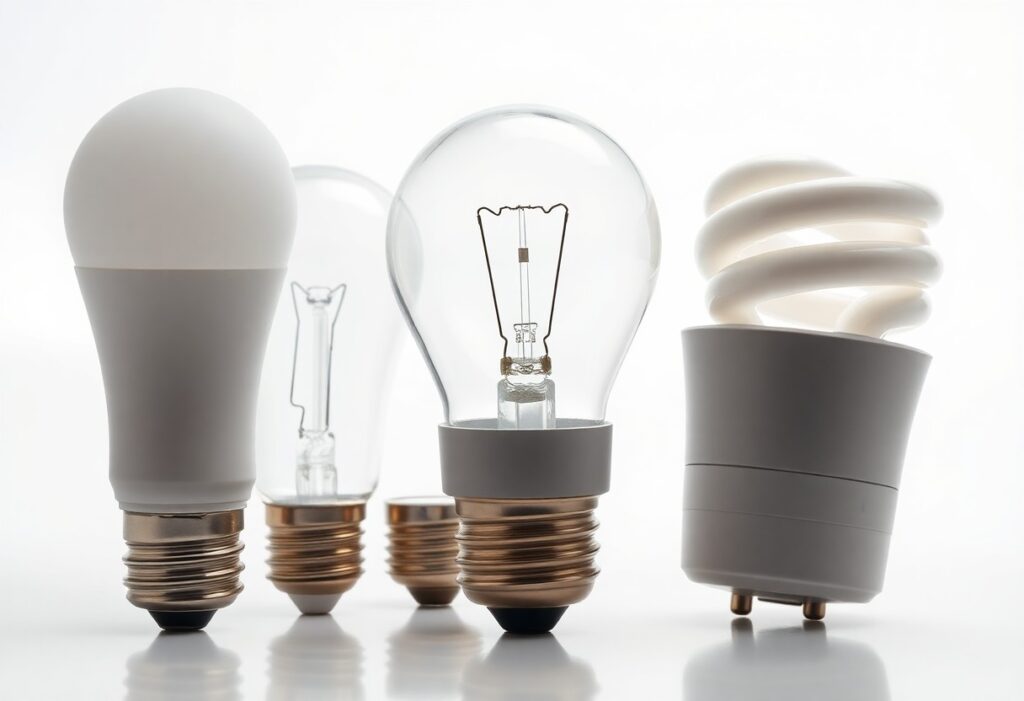
Types of energy-saving bulbs
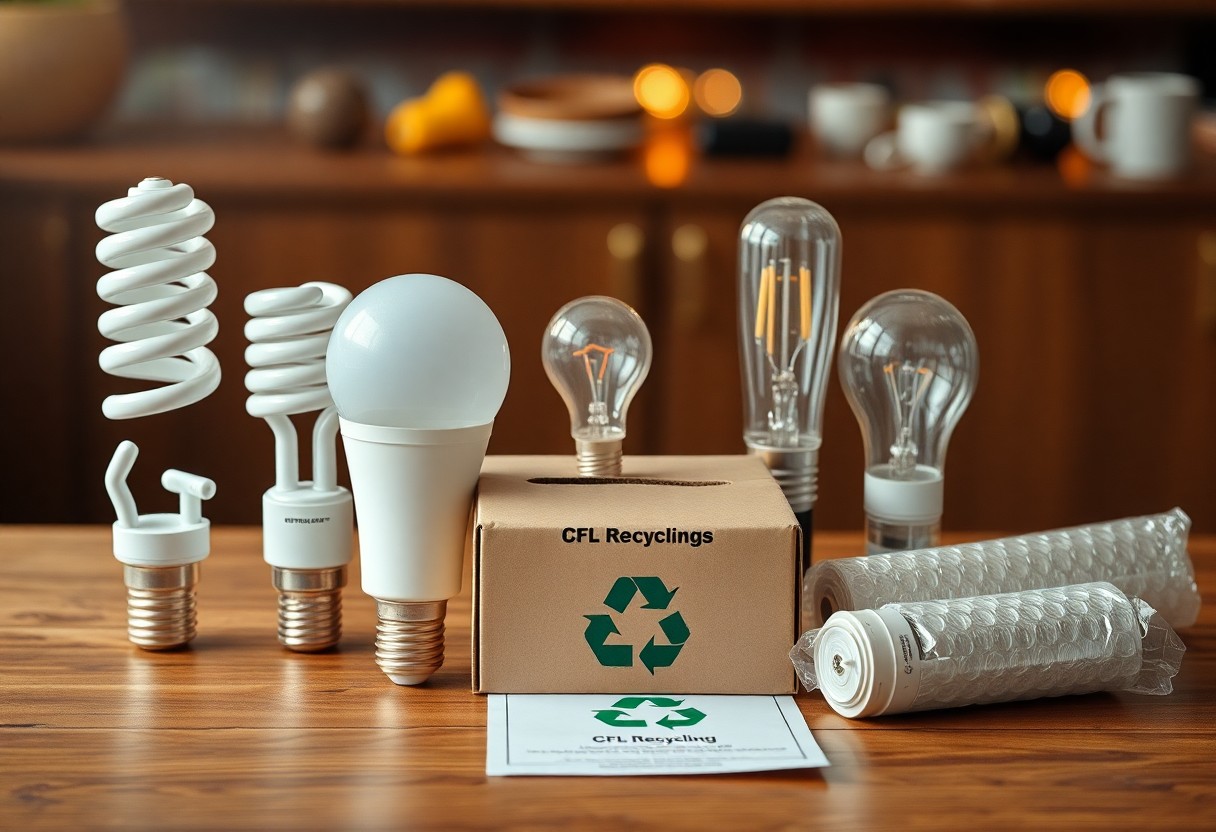
Different energy-saving bulbs vary in composition and end-of-life handling, so you should separate them before disposal. This determines which recycling stream or drop-off you must use.
- CFLs
- LEDs
- Fluorescent tubes
- Halogen
- Integrated fixtures
| CFL | Contains mercury; needs hazardous recycling |
| LED | Uses semiconductors and circuit boards; generally safer to recycle |
| Fluorescent tube | Long glass tubes with mercury; handled by lamp recyclers |
| Halogen | Simple glass and metal; treat as general glass/metal recycling |
| Integrated fixtures | Contain electronics and wiring; often sent to e-waste streams |
Compact fluorescent lamps (CFLs): composition and hazards
Inside compact fluorescent lamps you find glass, phosphor coatings and small amounts of mercury; a break can release toxic vapour, so you must avoid regular trash and use special recycling or hazardous-waste services.
Light-emitting diodes (LEDs) and other low-energy alternatives
Besides LEDs lack mercury and deliver high efficiency, but they contain circuit boards, solder and small amounts of rare-earth materials that you should recover at electronics or lamp recycling points.
Additionally, when you recycle LEDs proper facilities can extract valuable metals and reduce electronic waste; you should remove fixtures and take them to e-waste or lamp-drop centers so components are separated and reused rather than landfilled.
Why recycling matters
Because you recycle CFLs and LEDs properly, you reduce landfill contamination and conserve materials, transforming hazardous waste into reusable components and lowering pollution while supporting a circular approach to lighting waste.
Environmental and health risks (mercury, toxic materials)
Mercury in many energy-saving bulbs can be released when broken, exposing you to toxic vapors and contaminating soil and water; use certified recycling to minimize exposure and environmental spread.
Resource recovery and lifecycle benefits
Recovering components from bulbs lets you recapture valuable metals, glass and plastics, lowering demand for virgin resources and cutting lifecycle emissions when you recycle rather than discard them.
Additionally, you increase material efficiency by reclaiming rare earths and electronic parts from LEDs, which reduces mining pressure, saves production energy and delivers measurable emissions reductions when manufacturers incorporate recovered inputs.
How to recycle energy-saving bulbs
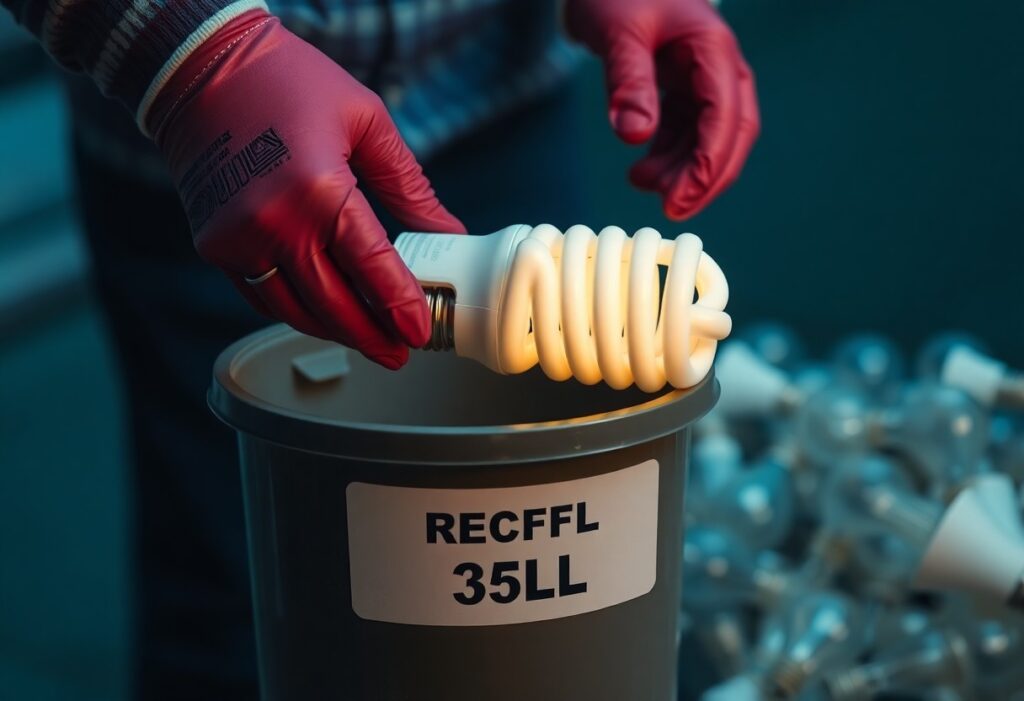
When you need to dispose of bulbs, take them to designated recycling or hazardous-waste facilities rather than regular trash; they contain small amounts of mercury and require proper recycling.
Preparing and packaging bulbs for drop-off
Carefully pack unbroken bulbs in their original boxes or wrap them in bubble wrap and place in a sturdy container; if a lamp breaks, you should ventilate the room, wear gloves, sweep up fragments, and avoid vacuuming.
Options: municipal collection, hazardous-waste events, mail-back and retail take-back
Find local options such as municipal collection sites, scheduled hazardous-waste events, manufacturer mail-back programs, or retail take-back at participating stores; check hours and any handling fees before you go.
Check your city website or call waste services to locate drop-off points and event schedules; mail-back programs often include prepaid packaging, while retailers may limit acceptance to certain bulb types, so verify acceptance rules and any size limits before heading out.
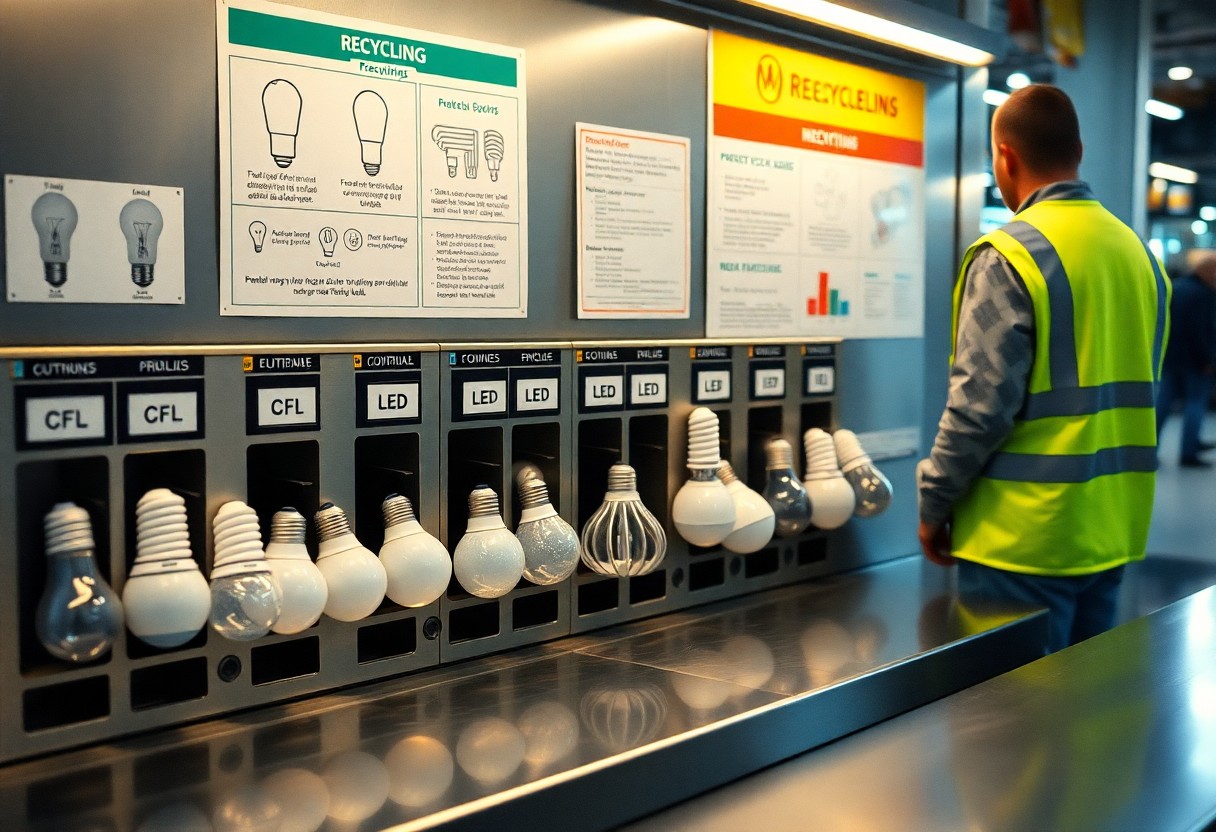
Recycling infrastructure and programs
Regional programs vary, so you should check local options for CFLs and LEDs; some accept bulbs at household hazardous waste sites, while others use retailer take-back or mail-back services.
What municipalities and waste handlers offer
Some municipalities host household hazardous-waste events and accept bulbs at transfer stations; collection schedules and fees differ, so you should verify hours and whether LEDs are accepted curbside or need special drop-off.
Manufacturer and retailer stewardship programs
Many manufacturers and retailers run take-back schemes or mail-back kits you can use; these programs often recycle bulbs safely and free, but availability varies by brand and store.
You can locate participating retailers and manufacturers online or ask in-store; package bulbs to prevent breakage and reduce the risk of mercury contamination. Some programs accept all bulb types and offer free recycling, while others limit returns to recent purchases or charge a fee.
What happens during recycling
During recycling, you see bulbs sorted and disassembled; hazardous parts are isolated, glass and metals separated, and components prepared for smelting or reprocessing so materials are recovered and landfill waste is reduced.
CFL processing and mercury capture
First, you have CFLs crushed inside controlled enclosures so mercury vapour is captured by filters and activated carbon; glass and phosphor powders are separated for specialized treatment or safe disposal.
LED disassembly and recovery of metals and plastics
Next, you remove drivers and separate PCBs, extracting valuable metals like copper and gold while plastics are sorted for recycling or energy recovery; proper handling prevents contamination from solder and electronic residues.
Properly, you fine-shred LED assemblies, then use mechanical, thermal, or chemical methods to recover gallium, indium and other metals; plastics may be pelletized, while hazardous solder and residues require specialist treatment to avoid environmental contamination.
Safety and accidental-breakage guidance
Immediate cleanup procedures and personal protection
After a bulb breaks, you should ventilate the room for 10-15 minutes, put on disposable gloves, scoop fragments with stiff paper, avoid vacuuming, and place debris and dust in a sealed plastic bag.
Handling and disposing of contaminated materials
Store the sealed bag and contaminated materials in a sturdy container, label it, and take it to an approved recycling or hazardous-waste facility; do not dispose with household trash.
Contact your local waste authority or recycling center for specific drop-off instructions, scheduled collection, or mail-back programs; you should keep contaminated items out of reach of children and pets and never crush the debris to avoid releasing mercury.
Summing up
Considering all points, you should recycle energy-saving bulbs-CFLs contain mercury and LEDs contain recoverable electronics, so many retailers and municipal centers accept them; check local collection programs or hazardous-waste events for proper disposal.
FAQ
Q: Can energy saving bulbs be recycled?
A: Yes. Recycling depends on the bulb type: CFLs (compact fluorescent lamps) contain a small amount of mercury and must be handled as hazardous waste; LEDs are electronic waste and contain metals and circuit components; halogen and incandescent bulbs are mostly glass and metal but are not usually accepted in curbside glass recycling. Do not place CFLs or LEDs in regular household recycling or trash. Take used bulbs to household hazardous waste facilities, municipal recycling centers, retailer take-back programs, or designated electronics recycling events.
Q: What should I do if a CFL or other energy-saving bulb breaks?
A: Ventilate the room for at least 10-15 minutes and keep people and pets out while airing it. Avoid using a vacuum to collect dust or fragments. Wearing gloves, pick up large pieces with stiff paper or cardboard, then use sticky tape to lift small particles. Wipe the area with damp paper towels or disposable wipes and place all cleanup materials, gloves, tape and fragments into a sealed plastic bag or container. Label the bag if required and take it to a hazardous waste drop-off or follow local guidance for disposal. Wash your hands after cleanup and keep cleanup materials out of regular recycling bins.
Q: Where can I drop off energy-saving bulbs and what happens to them during recycling?
A: Drop-off options include municipal household hazardous waste centers, many local recycling centers, electronics recycling events, and retailer take-back programs (some hardware and big-box stores accept bulbs). Recycling facilities separate components: for CFLs the mercury is recovered or stabilized, glass and metal are separated and processed for reuse; LEDs are processed as electronic waste to reclaim circuit boards, metals and glass. Check local government websites or call waste services to find accepted drop-off locations and any packaging or labeling requirements before transport.