
Over 30% of household energy costs can be cut when you combine smart devices with whole-home systems. You should prioritize smart thermostats, efficient HVAC, and solar integration and heed electrical hazards during installation to ensure maximum savings.
Key Takeaways:
- Smart devices deliver substantial, low-cost savings: smart thermostats, smart plugs, occupancy sensors and LEDs cut standby and HVAC waste through schedules, geofencing and automation, often qualifying for utility rebates.
- Whole-home upgrades yield the biggest long-term reductions: high-efficiency heat pumps, improved insulation and air sealing, heat-pump water heaters, and solar-plus-storage can reduce bills by 30-70% depending on existing systems.
- Prioritize by cost-effectiveness and payback: begin with air sealing, insulation and LEDs, add efficient heating/cooling, then integrate controls and solar; obtain an energy audit and review local incentives before major investments.
Intelligent Lighting and Automated Controls
You can cut household lighting energy by combining schedules, dimming, and sensor-based control, achieving notable savings and longer bulb life while avoiding DIY wiring that could cause electrical hazards.
Integrated LED Network Management
Smart LED networks let you centralize control, monitor consumption per fixture, and push updates; you lower bills, simplify maintenance, and must secure the network to prevent unauthorized access.
Motion and Occupancy Sensing Technology
Motion sensors detect movement and switch or dim lights so you avoid wasted energy; choose adjustable settings so you minimize false triggers and maintain comfort.
Install sensors by selecting the right technology-PIR for line-of-sight detection, ultrasonic for motion through obstructions, or dual-tech for fewer false positives-place them high, set timeout and sensitivity to match traffic patterns, connect to daylight and manual overrides; you reduce energy use, but plan professional setup to mitigate installation and privacy risks.
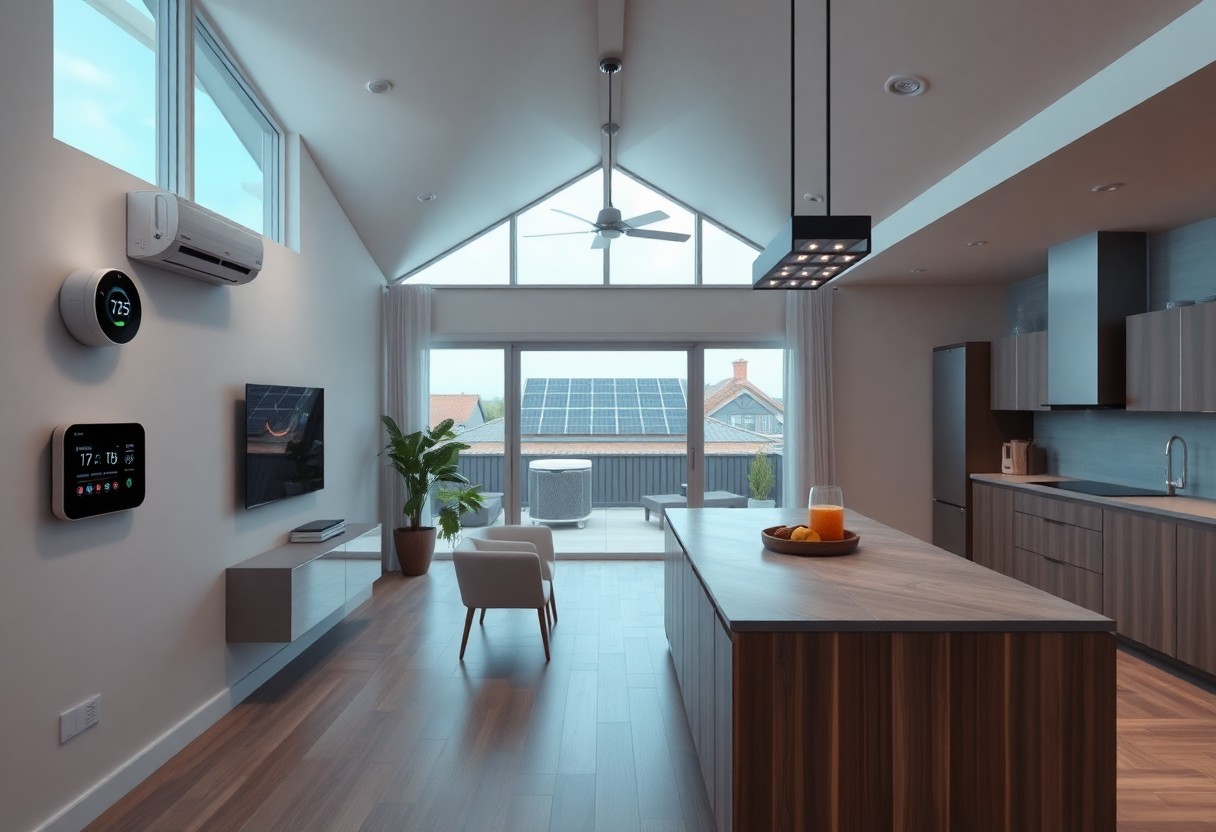
Smart Climate and HVAC Optimization
Smart climate controls combine sensors, scheduling and remote access so you can cut wasted heating and cooling. You can expect up to 20-25% energy savings by optimizing runtime and using occupancy data to avoid heating empty rooms.
Adaptive Learning Thermostats
Adaptive thermostats learn your habits and adjust setpoints automatically so you stay comfortable while reducing runtime. Using local sensors and weather data, they deliver consistent comfort with lower bills and avoid unnecessary HVAC cycles.
Multi-Zone Heating and Cooling Solutions
Multi-zone setups let you control temperatures per room, preventing over-conditioning and focusing energy where you need it. With dampers or ductless heads, you can achieve higher comfort and targeted savings.
Zoning uses motorized dampers or individual ductless units so you can heat or cool only occupied areas, which reduces run-time and boosts comfort. You should have professional design and balancing; poor zoning can increase energy use and wear equipment, while correct setup can deliver 20-40% localized savings and improved humidity control.
High-Efficiency Appliance Integration
Appliances with smart controls and efficient motors let you cut energy use, schedule loads, and tie into home automation. You should watch for electrical upgrades and installation costs; incorrect wiring can pose a fire risk.
Energy Star Rated Systems
Energy Star units give you tested efficiency, lower bills, and available rebates; check model ratings to maximize savings.
Induction and Low-Consumption Kitchen Tech
Induction cooktops heat faster, use less energy, and cut standby losses; you must use compatible cookware and handle hot cookware carefully.
Switching to induction and low-consumption kitchen tech gives you faster heat-up, precise temperature control, and reduced wasted heat, lowering bills and kitchen cooling needs. You should confirm that your electrical panel can handle a dedicated 240V circuit and adequate amperage before installation, and consult manufacturers if household members use sensitive medical devices; proper cookware and ventilation maximize performance.

Advanced Building Envelope Solutions
This section outlines advanced envelope upgrades so you can reduce heat loss and gain, lower energy bills, and improve comfort using airtight detailing, continuous insulation and smart fenestration.
- Install continuous exterior insulation to cut thermal bridging and stabilize indoor temperatures.
- Perform comprehensive air sealing so you can stop uncontrolled drafts and limit heat loss.
- Upgrade windows with smart glazing to reduce solar gain and lower HVAC runtimes.
| Measure | Primary Benefit |
|---|---|
| Continuous insulation | Reduces thermal bridging, improves envelope R-value |
| Air sealing | Minimizes drafts, prevents energy loss and moisture ingress |
| Smart glazing | Controls heat transfer, enhances daylight while cutting cooling loads |
High-Performance Thermal Insulation
You should specify high-performance insulation-spray foam, rigid board or dense-packed cellulose-to cut thermal bridging and reduce HVAC loads; ensure installers seal gaps to avoid air and moisture issues.
Smart Glazing and Low-E Window Systems
Select smart glazing and Low-E window systems to reflect infrared heat, admit daylight, and lower HVAC runtime; pair with argon or krypton fills for enhanced R-value.
Low-E coatings combined with double or triple glazing, inert gas fills, and selective tints let you tune U-factor and SHGC for seasonal performance; when you match glazing specification to orientation and climate you can expect substantial energy savings, but monitor for condensation risk on poorly ventilated frames and specify appropriate spacer and frame materials.
Residential Renewable Energy Generation
Homes with renewable systems let you cut bills and emissions; pairing PV and storage boosts resilience. You gain lower bills and reduced emissions, but must address installation and safety risks to avoid electrical hazards.
Solar Photovoltaic (PV) Installations
Rooftop PV lets you generate on-site power; you should assess roof angle, shading, and inverter choices. Expect reduced bills and export opportunities, while noting roof structural and fire considerations during installation.
Home Battery Storage and Grid Independence
Battery storage lets you keep excess PV for evening use and trim grid reliance; capacity determines backup duration and expense. You must follow installation and safety protocols to limit fire and electrical risks.
When choosing battery chemistry, select lithium-ion for higher cycle life and energy density, or budget for lead-acid alternatives. You should compare depth of discharge, warranty cycles, and inverter compatibility to size systems for desired backup days. Plan for permits, professional installation, monitoring, and emergency ventilation to reduce thermal runaway and other safety hazards, and check available incentives to offset costs.
Comprehensive Home Energy Management Systems (HEMS)
HEMS tie meters, smart devices, and battery systems together so you reduce waste and manage demand; dashboards let you optimize usage, and automatic controls can prevent costly overloads while maximizing energy savings.
Real-Time Consumption Analytics
Analytics show live usage so you spot spikes and adjust habits instantly; alerts notify you of high-draw appliances, helping you cut peak costs and prioritize efficiency measures.
Automated Load Shedding and Scheduling
Scheduling shifts nonimportant loads away from peaks so you lower bills and avoid breakers tripping; you set priorities and the system enforces safe automatic shedding when demand exceeds supply.
When the system detects high demand or a time-of-use price spike, it follows your preset priority list to shed or delay appliances, coordinate with battery discharge and solar, and can resume loads when conditions improve; you should mark critical circuits to avoid hazardous shutdowns of medical or safety equipment while enjoying reduced peak charges and improved reliability.
Summing up
So you can cut energy costs and increase comfort by combining smart devices, efficient appliances, insulation upgrades, and whole-home energy management systems; prioritize the measures that match your budget and habits to achieve measurable savings and reduced environmental impact.
FAQ
Q: What smart devices deliver the biggest energy savings in a typical home?
A: Smart thermostats, LED smart lighting, and whole-home energy monitors usually deliver the largest, quickest savings. Smart thermostats cut heating costs about 10-15% and cooling costs about 10-20% by optimizing setpoints, schedules, and learning occupancy patterns. LED smart bulbs reduce lighting energy use by roughly 75-80% versus incandescent bulbs and allow scene control and scheduling. Home energy monitors identify standby loads and inefficient appliances so you can target fixes; many homeowners recover the monitor cost within months by unplugging phantom loads and adjusting behavior. Smart plugs and smart power strips remove phantom loads from individual devices and are low-cost ways to reduce wasted energy. Smart HVAC zoning and smart vents can further reduce wasted heating/cooling in unused rooms when paired with a compatible system.
Q: What full-home solutions should I consider for deeper, long-term savings?
A: Insulation and air sealing, high-efficiency heat pumps, solar PV with battery storage, and integrated home energy management systems produce the largest lifecycle savings. Insulation and air sealing stop heat loss and often pay back in 3-7 years depending on climate. Cold-climate heat pumps can replace fossil-fuel heating and lower annual heating energy use by 30-60% compared with older systems. Roof-mounted solar paired with a battery reduces grid energy purchases and cuts peak charges; payback typically runs 6-12 years after incentives. Whole-home energy management systems coordinate PV, storage, HVAC, and EV charging to shift loads to low-cost periods and maximize self-consumption. Combining envelope upgrades with efficient heating, cooling, and on-site generation provides the best long-term return.
Q: How do I choose the right mix of smart devices and full-home upgrades for my house?
A: Start with an energy audit to identify the largest losses and easiest fixes. Small budget: prioritize LED lighting, smart plugs, and a smart thermostat. Moderate budget: add insulation, air sealing, and a home energy monitor to target problem appliances. Larger budget or long-term plans: install a heat pump, solar PV, and battery while integrating controls with a home energy management solution. Consider climate, existing equipment age, household occupancy patterns, and local incentives when prioritizing projects. Compatibility questions: check device protocols (Wi‑Fi, Zigbee, Z‑Wave) and whether your HVAC can support a smart thermostat or zoning. Phased upgrades allow immediate savings while spreading costs.
Q: Which upgrades are DIY-friendly and which require professional installation?
A: DIY-friendly: LED bulb swaps, smart plugs, smart bulbs, basic smart thermostats for homes with standard wiring, and using a home energy monitor that clamps to the main without rewiring. Professional installation recommended: insulation (blown or spray), air sealing for major envelope work, heat pump installation, solar PV and battery systems, electrical service upgrades, and HVAC retrofits that involve refrigerant or complicated control wiring. Licensed contractors ensure correct sizing, safe electrical connections, permit compliance, and warranty coverage. Many utilities require professional installs for rebates on major systems.
Q: What savings, costs, and incentives should I expect for common energy-saving systems?
A: Typical cost and savings examples: smart thermostat $100-300 with 10-20% HVAC savings; LED retrofit $50-300 for a whole home with up to 75% lighting savings; attic insulation $1,500-5,000 with 10-20% overall energy savings and payback often 3-7 years; heat pump $6,000-25,000 depending on type and home size with 30-60% heating energy reduction; solar PV $15,000-35,000 before incentives with payback 6-12 years after tax credits. Many utilities and governments offer rebates, tax credits, and low-interest loans for insulation, heat pumps, and solar that can cut upfront cost by 20-40%. Use your utility’s rebate search and get multiple quotes to estimate true payback for your home.