There’s a device that stabilizes voltage and trims reactive loads so you save energy; you should know it can lower bills, it won’t fix unsafe wiring, and actual savings depend on your home’s load profile.
Key Takeaways:
- Power saver devices condition incoming electricity by smoothing voltage spikes, reducing harmonic distortion, and stabilizing supply to lower stress and wear on appliances.
- Many designs perform power factor correction using capacitors or electronic controllers to reduce reactive current and line losses, which can cut energy waste in systems with high reactive loads or distortion.
- Real-world savings vary widely for homes because residential meters measure active kWh; measurable reductions occur mostly in installations with significant inductive loads, poor power factor, or confirmed harmonic issues-verify with third-party tests and before/after monitoring.
The Fundamentals of Power Factor Correction
Power factor correction reduces wasted current by aligning voltage and current phases, so you draw less reactive power; adding capacitors or power-saver devices can cut losses and lower your electricity bills.
Understanding Active, Reactive, and Apparent Power
Active power is the real work you pay for, reactive power oscillates between source and inductive loads, and apparent power is the combined magnitude; you manage costs by improving the power factor.
How Capacitors Compensate for Inductive Loads
Capacitors supply leading current to offset inductive lag, which lowers reactive current and raises your power factor; improper sizing or switching can create overvoltages or safety risks.
You will see capacitors placed at service panels or motor terminals so the leading current cancels local inductive lag, which reduces feeder currents and lowers losses. Automatic or manual switching matches capacitor banks to load to prevent overcompensation; improper tuning can provoke resonance with harmonics and cause overvoltages or shock hazards. Hire licensed electricians and install protective devices.

Voltage Stabilization and Surge Protection
Power saver devices stabilize incoming voltage so you avoid brownouts and protect gear; internal circuits and metal-oxide varistors (MOVs) redirect voltage spikes while regulators hold levels steady, reducing waste and equipment wear.
Mitigating the Impact of Transient Voltage Spikes
Surges originating from lightning or grid switching can overwhelm electronics; you rely on surge arrestors and clamping circuits to divert excess energy to ground, preventing irreversible damage and reducing fire risk.
Maintaining Consistent Current Flow to Sensitive Electronics
Sensitive equipment requires steady current; you benefit from active regulators and filtering that smooth waveform distortion and cut harmonic noise, keeping performance predictable and extending device life.
You can expect capacitors and LC filters to absorb short demand changes while synchronous buck/boost regulators correct voltage under load; this combo reduces inrush currents, prevents nuisance trips, and limits overheating or data corruption in mission-critical systems.
Reduction of Harmonic Noise and Thermal Loss
Power-saver modules cut harmonic distortion and lower thermal losses, so you see reduced heating and longer component life.
Filtering Electromagnetic Interference (EMI)
Filters attenuate high-frequency noise, letting you run sensitive gear with fewer glitches and reduced electromagnetic interference (EMI).
Improving the Operational Efficiency of Household Motors
Optimizing motor waveforms reduces current spikes, helping you cut thermal stress, lower vibrations, and extend motor lifespan.
Smoothing supply waveforms helps you maintain steady torque, prevent overheating and bearing wear, and secure measurable energy savings with less maintenance.
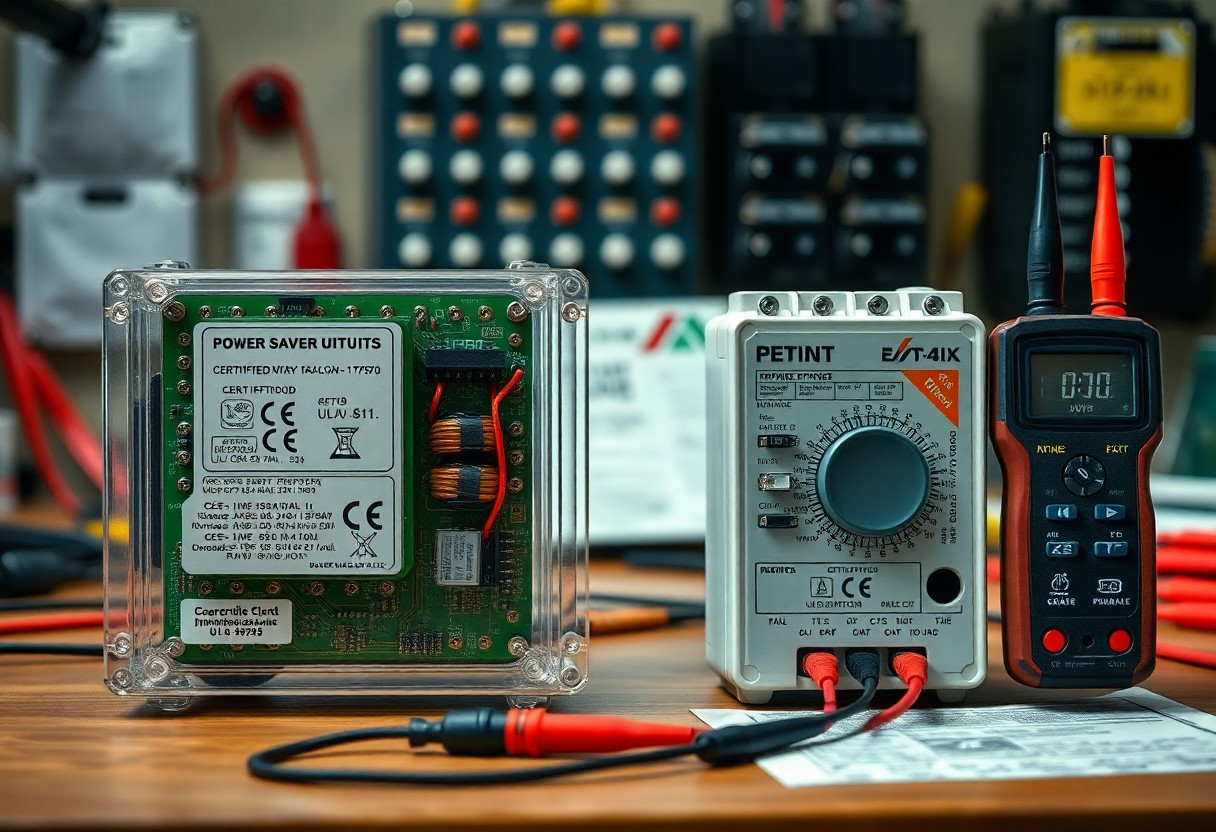
Distinguishing Legitimate Hardware from Market Scams
You should scrutinize build quality, transparent specs, and seller credibility; seek independent lab test reports and verified UL/CE listings, and reject products with vague promises or fake certification seals that commonly signal market scams.
Essential Safety Certifications and Engineering Standards
Check for recognized marks like UL, IEC, CSA or CE, available schematics, and thermal or failure test results; absent documentation or uncertified components means you should avoid the product for safety and performance.
Identifying Red Flags in “Plug-and-Save” Marketing Claims
Watch for absolute savings guarantees, vague percentages, or claims requiring no measurements; if the maker provides no usage data or third-party verification, treat promises of instant, high-percent savings as suspect.
Inspect product claims against basic electrical facts: you cannot cut true energy (kWh) for resistive loads like heaters or incandescent bulbs with a passive “power saver,” so blanket 20-50% reduction claims without appliance-level measurements or independent, third-party lab reports are false. Beware devices that promise meter changes or only reduce reactive power; meter tampering is illegal and dangerous. Demand transparent test data, wiring diagrams, and verified user logs before trusting high savings promises.
Strategic Integration with Home Energy Management
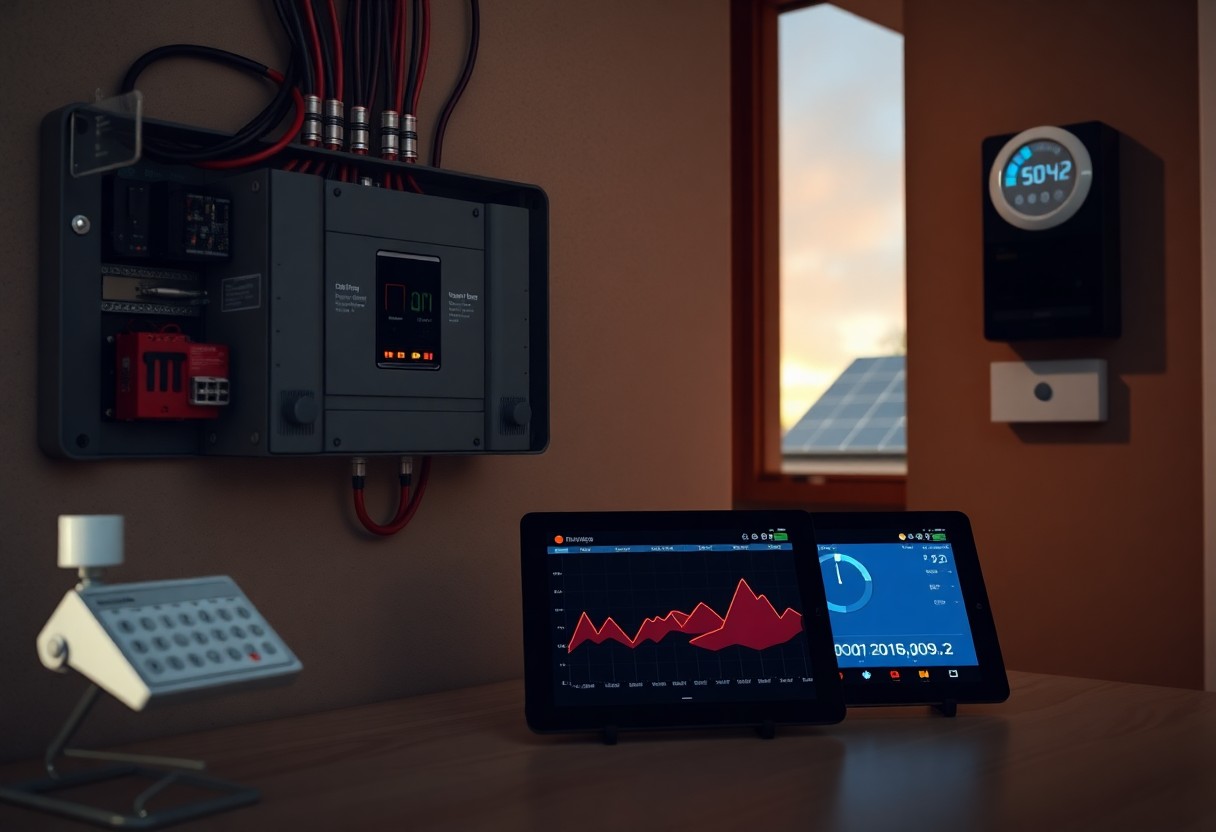
Use a power saver device alongside your smart thermostat and load controllers so you can smooth peaks, reduce reactive power, and improve overall efficiency; combine data from meters to target high-consumption devices and realize consistent energy bill reductions.
Identifying High-Consumption Inductive Loads for Optimization
Identify motors, pumps, HVAC compressors and large fans as your main inductive loads; you should monitor their reactive power and current spikes to prioritize where a power saver can cut losses and lower peak demand.
Complementary Methods for Reducing Overall Utility Costs
Combine scheduling, time-of-use awareness, efficient appliances, LED lighting and improved insulation so you can shrink baseline consumption; pairing these with a power saver maximizes cost savings and reduces exposure to peak charges.
When you integrate a power saver into a broader strategy, you can shift heavy appliance cycles to off-peak windows, program smart plugs to stagger starts, and accept demand-response signals for credits. You should inspect wiring and inrush protection so systems remain safe; improper setups can increase overcurrent or fire risk. Pairing with rooftop solar or upgraded HVAC delivers the largest utility cost reductions and faster ROI.
Conclusion
So you see how a power saver optimizes voltage, balances reactive loads, and smooths spikes to improve appliance efficiency and lower bills; you can monitor performance and pair the device with efficient appliances and simple behavior changes for reliable household energy savings.
FAQ
Q: What is a power saver device and how does it work?
A: A power saver device is an electrical appliance that claims to reduce wasted energy in a home by improving how electrical loads draw current from the supply. Many models use passive components such as capacitor banks or LC networks to correct phase shift between voltage and current (power factor correction), while others include transient suppression, harmonic filtering, or active electronic circuits that condition voltage. Capacitors supply leading reactive current to offset inductive loads like motors and transformers, which reduces the reactive component of current and can lower apparent power draw. Active designs monitor voltage and current, then apply correction electronically to smooth spikes, reduce inrush, and filter harmonics, which can reduce losses in wiring and some types of equipment. Performance depends on house load mix, device quality, installation point, and whether the utility charges for reactive or peak demand.
Q: Will a power saver device actually lower my home electricity bill?
A: Bill reduction is possible but not guaranteed for typical residential customers whose utilities bill primarily by kilowatt-hours (kWh). Residential meters measure real energy use, so devices that only change reactive power without reducing real power will not lower a kWh-based bill. Households with many inductive loads (air conditioners, pumps) or poor voltage may see modest savings because improved power factor and reduced harmonics can cut distribution losses and reduce current draw on some motors. Documented residential savings are usually small, commonly in the single-digit percentage range when present. Homes on demand or reactive-power billing, or commercial premises, can see much larger and measurable benefits from proper power factor correction and harmonic management.
Q: What internal components and technologies do these devices use?
A: Basic units use capacitor banks sized to provide leading reactive current and simple surge suppressors like metal-oxide varistors (MOVs). Intermediate designs combine capacitors with inductors and resistors to form passive LC or RC filters that target specific harmonic orders. Advanced products include microcontrollers, current/voltage sensors, solid-state switching (thyristors, relays), and active harmonic filters that synthesize compensating currents in real time. Protective elements such as fuses, thermal cutouts, and transient surge suppression are common. Quality units include measurement and control logic to avoid overcompensation or resonance with network inductances.
Q: Where should a power saver device be installed and how can I test its effectiveness?
A: Whole-house units perform best when installed at the main service panel or meter to affect all downstream loads and reduce supply-side losses, while plug-in models can target individual circuits or appliances. Professional installation ensures correct sizing, prevents resonance, and meets local electrical code. Effectiveness testing requires before-and-after measurements with a true RMS power analyzer or smart meter that reports kWh, power factor, voltage, current, and harmonic distortion. Look for measurable reductions in kWh consumption, improved power factor, and lower current or harmonic levels under comparable operating conditions over several days or weeks to account for load variability.
Q: What safety certifications and warning signs should I look for to avoid scams or unsafe devices?
A: Choose devices with recognized safety and performance certifications such as UL, CE, IEC, or local utility approval and request independent test results from accredited labs showing kWh, PF, and THD measurements. Beware of claims of very high savings (for example, more than 30-50% without major load changes) or marketing that states a single small box will dramatically cut all household bills regardless of appliance mix. Avoid products that lack circuit protection, provide only vague technical descriptions, or recommend installation methods that violate electrical code. Professional energy auditors and licensed electricians can validate claims and recommend appropriately sized solutions for homes or businesses.