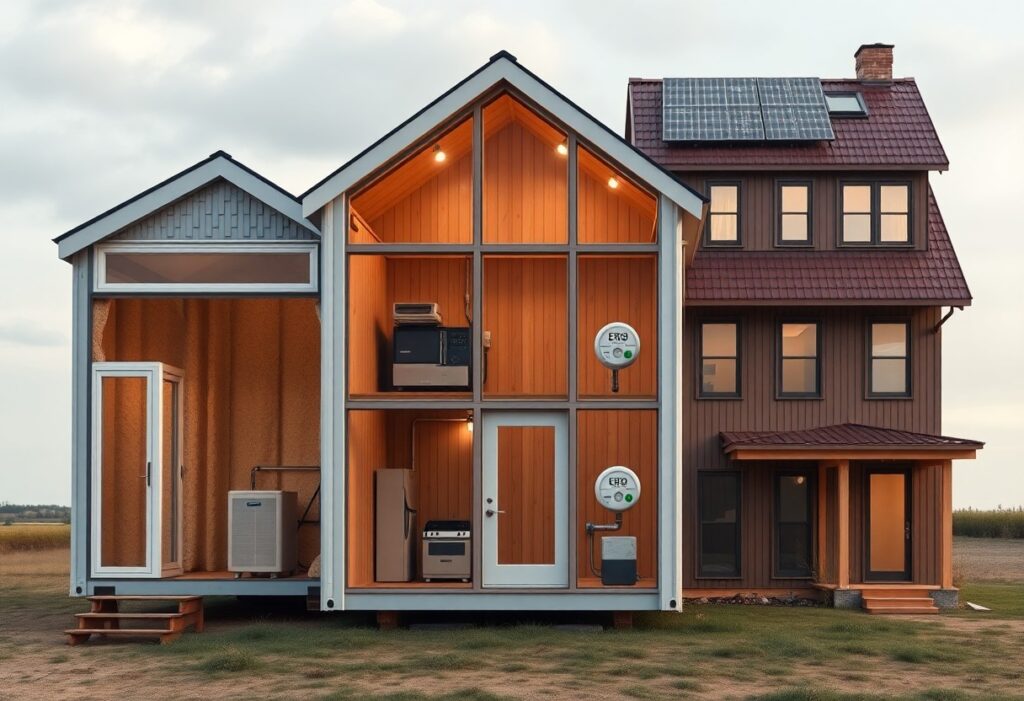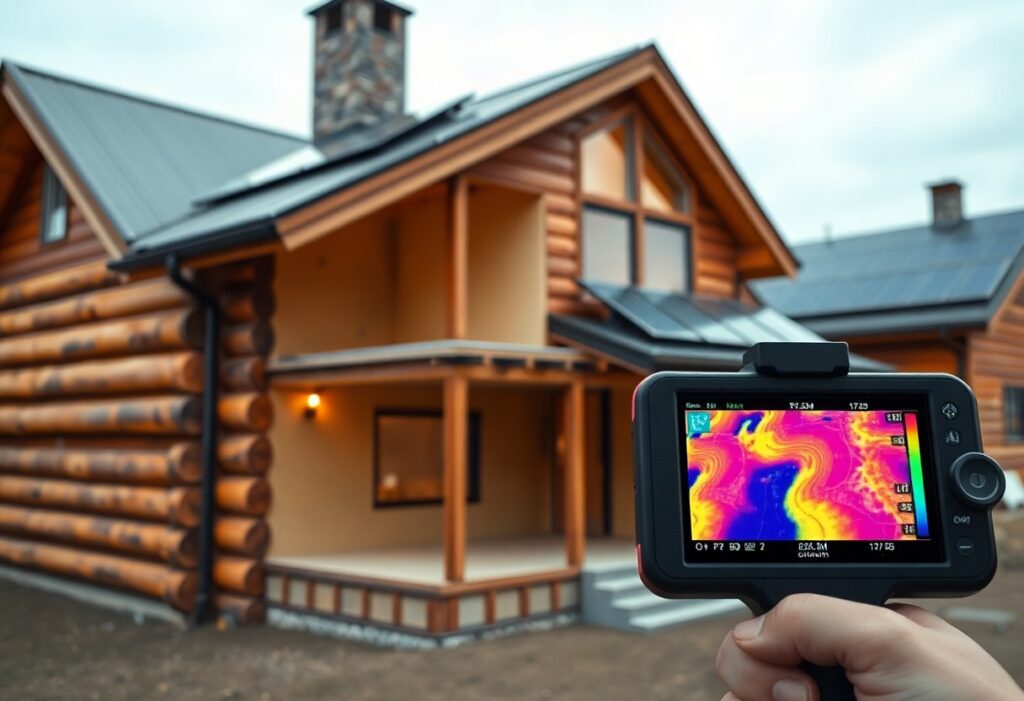
Insulation in log homes matters: you can enjoy thermal mass that stabilizes indoor temperatures, but you must guard against air leaks and settling gaps that waste energy; with proper sealing and added insulation you can have an efficient, cozy home.

Key Takeaways:
- Log walls provide thermal mass that evens indoor temperatures but typically have lower R-value per inch than modern insulated stud walls, so raw wall insulation is often less effective.
- Energy performance hinges on airtightness, construction details, and climate; well-sealed, properly detailed log homes with insulated roofs and foundations can perform as well as or better than conventional homes in many regions.
- Use thicker or insulated log profiles, double-wall systems, high-performance windows/doors, continuous air-sealing, and routine maintenance to minimize heat loss from settling and gaps.

The Magic of Thermal Mass
Logs buffer temperature swings by storing heat during the day and releasing it slowly at night, helping you enjoy stable indoor temperatures and lower heating peaks.
How logs store and release heat
Wood absorbs heat into its core, so when you heat or cool a log home the walls’ thermal lag smooths peaks and helps you reduce HVAC cycling.
Staying cool during the summer months
Shading, night ventilation and reflective roofing help you keep interiors cooler; logs’ mass delays peak heat, so you experience calmer late afternoons.
Nighttime cross-ventilation lets you purge stored warmth, and pairing that with deep eaves and shaded glazing maximizes passive cooling; if you don’t control humidity, stored heat plus moisture can encourage mold and rot, so use mechanical ventilation or dehumidifiers to protect comfort and the structure.
Understanding R-Values and Wood
Wood’s R-value per inch is lower than fiberglass, but you should consider thermal mass and air leakage when evaluating log-home efficiency.
Why standard ratings don’t tell the whole story
R-values measure steady-state resistance, yet you rely on air sealing, thermal bridging, and mass to judge real performance.
How log thickness impacts your comfort
Thicker logs raise thermal mass, smoothing indoor swings so you experience fewer temperature spikes and greater comfort.
You benefit from thicker logs’ thermal lag, which stores daytime heat and releases it at night to smooth temperature swings; if joints leak or moisture intrudes, that reduces efficiency and invites rot, so you should prioritize tight seals, proper flashing, and attention around windows and foundations.
Keeping the Drafts Out
Sealing gaps around logs helps you save on heating, reduce drafts, and avoid moisture damage that wastes energy.
The importance of quality chinking and sealant
Quality chinking gives you flexible, weatherproof joints; choose durable sealant to prevent air leakage, secure energy savings, and protect against rot.
Solving the mystery of air leakage
Detecting tiny leaks helps you target fixes quickly; use a blower-door test or thermal scan to find where you lose heat and stop moisture entry.
You can combine blower-door testing with infrared scans to pinpoint leaks at corners, windows, and log joins, then apply chinking, caulk, or foam with backer rod; fixing these spots reduces drafts, cuts bills, and prevents rot and mold.
Modern Ways to Boost Insulation
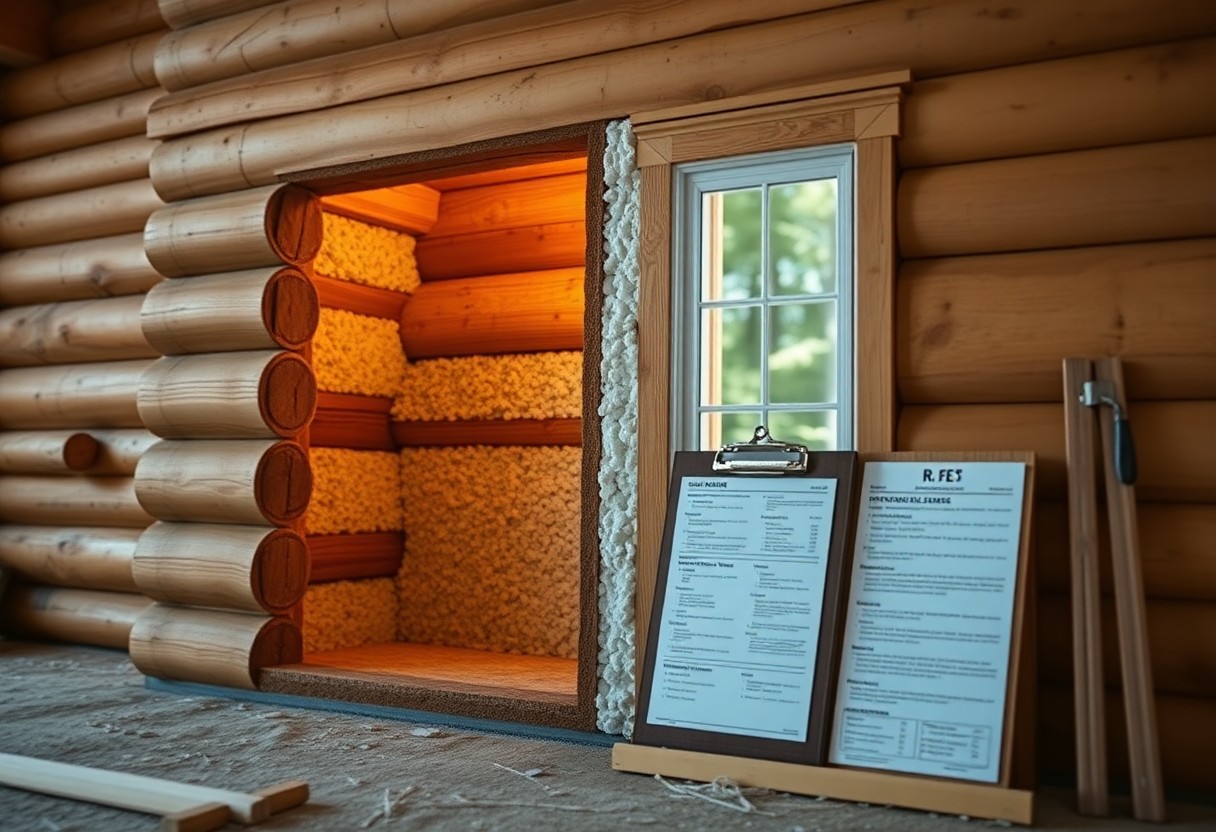
Today you can pair chinking with exterior rigid foam, spray foam, and tight air sealing to cut wall heat loss; using continuous exterior insulation reduces thermal bridging and boosts comfort.
Exploring “super-insulated” log systems
You can pick insulated log profiles, SIP cores, or double-log assemblies to raise R-values; super-insulated systems slash bills but demand precise sealing and moisture control.
Why your roof and floor matter just as much
Your roof and floor often leak more heat than walls; attic bypasses and uninsulated band joists can nullify wall improvements, so prioritize attic air sealing and continuous under-sill insulation.
Attics leak through recessed lights, ducts, and plumbing stacks; you should seal penetrations, add blown-in cellulose or closed-cell spray foam, and insulate the attic floor to stop convective losses. For floors over crawlspaces, seal vents, insulate joist bays with a moisture-aware approach, and keep ducts inside the conditioned envelope to avoid condensation and wasted energy.

Smart Design for a Greener Home
Design choices help you cut energy use in a log home: orient windows, seal gaps, add air barriers and combine thermal mass with insulation to reduce temperature swings and minimize air leaks.
Picking the best wood species for your climate
Species selection affects how well your walls insulate and resist moisture; choose local, stable woods with good insulation value and low rot risk, and plan regular finish maintenance to protect the structure.
Using the sun to help heat your space
Position windows to maximize south-facing solar gain in winter, add thermal-mass floors or walls, and install adjustable shading to prevent overheating in summer.
You can size roof overhangs to block high summer sun while admitting low winter sun, fit high-performance glazing (low-e, double or triple pane) to boost solar gain and limit heat loss, place dense interior surfaces as thermal mass, and use night insulation or shades; watch for overheating and condensation and add ventilation or external shading as needed.
Simple Maintenance for Energy Savings
Maintenance saves energy in your log home when you handle minor issues quickly; you should inspect chinking, seals, roofing, and vents yearly to prevent small air leaks and moisture that reduce efficiency.
Watching for natural settling and gaps
Check your log joints after seasonal shifts because settling can open gaps; you can spot and re-caulk or add foam to stop heat loss and drafts.
Keeping your logs healthy and weather-tight
Treat exposed wood with stain or sealer and keep gutters clear so moisture won’t cause rot and insect damage that reduces insulation performance.
Inspect annually for cracks, end-grain checks, and failing finishes; you should sand and spot-treat checks, reapply penetrating stain every 3-5 years, and use proper sealants at joints to keep weather out and thermal performance high.
Final Words
Now you can choose an energy-efficient log home by combining tight construction, proper insulation, and good windows; wood’s thermal mass helps stabilize indoor temperatures, and routine upkeep keeps performance high.
FAQ
Q: Are log homes energy efficient compared with conventional framed homes?
A: Log homes can be energy efficient when designed, detailed, and maintained properly. Solid-sawn logs provide thermal mass that moderates indoor temperature swings and reduces peak heating and cooling loads. Overall energy performance depends on wall thickness, species and moisture content of the wood, airtightness, insulation levels in the roof and floor, and quality of windows and doors. Many properly built log homes perform on par with framed homes that have similar overall insulation and air-sealing measures.
Q: How does thermal mass in logs affect heating and cooling needs?
A: Thermal mass in logs stores heat and releases it slowly, which smooths indoor temperature fluctuations and can reduce HVAC cycling. In cold climates, logs absorb and release heat from a heating system or sunlight, helping maintain stable temperatures. In hot climates, thermal mass can slow heat penetration during the day and allow cooling at night if night ventilation is used. Thermal mass does not replace insulation but complements it by improving comfort and lowering peak demands.
Q: What are typical R-values for log walls and how do they compare to insulated framed walls?
A: R-values for solid log walls vary with log diameter and species, typically ranging from roughly R-7 to R-15 for common log sizes and profiles when measured as wall assembly R-value. Insulated framed walls with cavity insulation and continuous exterior sheathing commonly achieve higher nominal R-values, for example R-20 to R-40 depending on construction. Whole-wall performance of a log home can be comparable to framed construction if supplemental measures such as insulating sheathing, double-wall log systems, or interior insulation are used along with excellent air sealing.
Q: What insulation strategies improve energy performance in log homes?
A: Adding insulating sheathing on the exterior, using double-wall or timber-frame systems with cavity insulation, and insulating roofs and floors aggressively improve overall efficiency. High-performance windows, properly detailed flashing, and air barriers at roof-wall intersections reduce uncontrolled heat loss and moisture issues. In retrofit work, adding internal or external insulation while managing vapor control and maintaining proper junction details preserves the log’s thermal mass benefits.
Q: How important is air sealing and chinking for log home efficiency?
A: Tight air sealing is imperative for energy-efficient log homes because gaps and settling can create significant infiltration paths. Quality gasket systems between logs, durable chinking or sealants, and well-sealed penetrations around windows, doors, and utilities reduce air leakage. Pressure testing (blower door) during construction or after retrofits helps identify leaks that most affect heating and cooling loads.
Q: Can a log home meet modern energy codes and qualify for efficiency programs?
A: Many log homes meet modern energy codes and qualify for efficiency incentive programs when built to current standards or retrofitted with upgrades. Compliance typically requires demonstrating whole-house thermal performance, airtightness, and systems efficiency through modeling, testing, or prescriptive measures. Working with designers familiar with log construction and local codes speeds approvals and increases chances of program eligibility.
Q: What maintenance and long-term practices preserve energy performance in a log home?
A: Regular inspection and maintenance of gaskets, chinking, sealants, and roof and foundation interfaces prevent air and moisture infiltration that degrades efficiency. Monitoring and controlling moisture content of the logs, maintaining overhangs and flashing details, and replacing weatherstripping and high-performing windows when they age preserve thermal performance. Periodic blower-door testing and thermographic inspections identify areas for targeted upgrades such as added insulation or improved air sealing.