Over 2025, you can compare smart thermostats, LED upgrades, and efficient appliances to cut bills; some devices claim >30% savings, while poorly installed gear can pose fire risks, so you should weigh cost, performance, and safety before buying.

Key Takeaways:
- Smart thermostats combined with modern heat pumps typically cut heating and cooling bills by 10-30% when paired with a well-maintained HVAC system and sensible scheduling.
- LED bulbs and smart power strips offer reliable, low-cost savings with payback often under two years for typical households.
- Improvements to insulation, air sealing, and correct device installation deliver larger, longer-lasting savings than standalone gadgets; occupant behavior still determines actual results.
Intelligent Lighting Systems
Modern intelligent lighting ties your fixtures into schedules, sensors and apps so you can cut wasted electricity and boost comfort. With voice and app control you can dim, color-shift, and set timers; energy savings and convenience are immediate when you tailor lighting to your routine.
Why smart bulbs are a bright idea
Smart bulbs let you schedule, dim, and monitor use from your phone so you only light what you need. You can set scenes and reduce brightness when idle; lower bills and longer bulb life follow when you control lighting remotely.
Using motion sensors to stop wasting light
Motion sensors cut wasted light by switching off when rooms are empty, so you don’t have to worry about forgetting to turn lights off. Pairing with timers gives automatic shutoff and added savings.
Sensors work best when you place them to cover entryways and high-traffic paths while avoiding direct sunlight and vents that cause false triggers. You should choose models with adjustable sensitivity and timeout settings, balance coverage with privacy-outdoor units can boost security but need directional aiming-and keep batteries fresh or hardwire for reliable performance.
Tackling Vampire Power with Smart Plugs
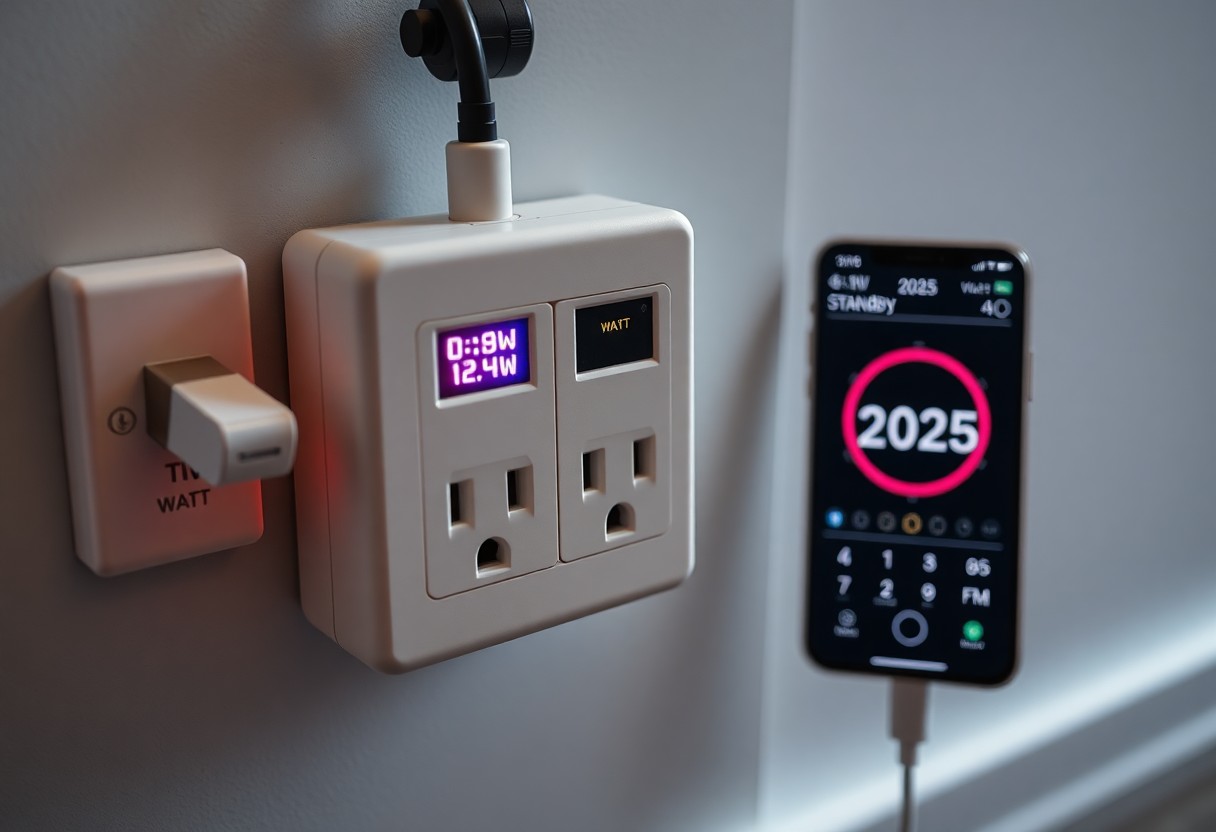
Smart plugs let you cut standby power by remotely switching off chargers and TVs when not in use, so you stop wasting money on devices that draw current 24/7. You can monitor usage and schedule shutoffs to make savings automatic and visible.
Identifying the hidden energy drainers
Check common culprits like phone chargers, set-top boxes and kitchen gadgets; they keep drawing tiny current that adds up. Use smart plugs to measure each device’s draw and find the biggest offenders so you can unplug or automate them.
Simple ways to automate your savings
Use routines to power down nonimperative gear at night and when you leave, pairing motion sensors or geofencing so devices turn off automatically. Tie smart plugs into your existing hub for hands-free energy cuts and set thresholds to avoid accidental shutdowns of critical appliances.
Schedule grouped plugs so you shut down entertainment, office and guest-room devices together, and set minimum on/off cycles to prevent wear. You should exclude fridge, router or medical gear-never cut power to critical appliances. Check weekly energy reports to refine routines and unlock the biggest cost savings.
Home Energy Monitors: Seeing the Invisible
Home energy monitors put data on your power use in front of you so you can spot waste fast. You see real-time draws, catch phantom loads, and make small changes that add up to noticeable savings on bills.
Tracking your usage in real-time
Track how your devices draw power so you can spot sudden spikes and identify heavy appliances. You get live graphs, per-device insights, and optional alerts to stop waste before it inflates your bill.
Turning data into a smaller utility bill
Use monitor alerts and hourly cost views to shift loads away from peak rates, schedule appliances, and curtail late-night vampire draws. You’ll see measurable savings within weeks when you act on clear, device-level signals.
Start by logging a week to set your baseline, then target the highest-draw devices for short tests-run the dryer, oven, HVAC-to see each signature. You can install smart plugs, shift routines, or program setbacks to cut demand during peak charges. Watch for incorrect installation warnings on CTs; miswired sensors can give fake readings and hide real waste.
Solar-Powered Helpers for the Modern Home
Solar gear for your home fits varied budgets: microinverters, smart inverters and compact batteries help you cut bills, provide backup power, and require minimal upkeep, so you see returns faster and avoid surprises.
Portable panels and outdoor lighting kits
Portable panels and kits let you power camping gear, charge devices, or light paths; easy setup and weatherproof designs give you reliable off-grid lighting without complex installation.
Can small-scale solar make a difference?
Small-scale panels and balcony systems can offset a portion of your electricity use, trim peak charges, and feed surplus to the grid if rules allow, so you directly lower costs and emissions.
You should weigh panel placement, roof angle, shading and local sun hours; proper siting maximizes yield, while poor placement cuts returns. Adding a small battery boosts self-consumption but raises cost; check net metering rules and warranty terms. Be mindful of DIY installs and fire risk; professional installation often gives safer, longer-lasting results and better payback.
To wrap up
Presently you can trust smart thermostats, LED lighting, heat-pump water heaters, and smart plugs to reduce consumption when you pick proven models and use them with simple habit changes, so you should see lower bills and greater comfort.
FAQ
Q: What are the best home energy-saving devices in 2025?
A: Top devices in 2025 include smart thermostats, air-source heat pumps (space and water heating), home energy monitors, smart plugs and power strips, LED lighting with advanced controls, high-efficiency induction cooktops, and rooftop solar paired with home batteries. Each device targets a specific load: thermostats and heat pumps cut heating/cooling use, monitors and smart plugs reduce standby and waste, LEDs handle lighting, and solar+batteries reduce purchased electricity and provide backup.
Q: Do smart thermostats actually save energy?
A: Yes when installed and programmed correctly. Field studies show typical savings of about 10-15% on heating and cooling bills versus manual thermostats, driven by optimized schedules, adaptive control, and setbacks. Savings drop if users override schedules often or if the HVAC system is oversized or already controlled by an efficient zoning system. Pairing a smart thermostat with proper insulation and efficient HVAC equipment yields the best results.
Q: Are heat pumps and heat-pump water heaters worth the investment in 2025?
A: Heat pumps offer much higher efficiency than resistance heating and many gas furnaces, with modern cold-climate models achieving COPs of 2.5-4.0 depending on temperature. Heat-pump water heaters typically use 2-3 times less energy than electric resistance tanks. Payback depends on local fuel prices, incentives, and existing system age; federal and state rebates in many areas now reduce upfront cost and shorten payback to a few years for eligible households.
Q: How effective are home energy monitors at cutting consumption?
A: Real-time monitoring and appliance-level disaggregation can reduce household energy use by roughly 5-15% by making waste visible and enabling targeted fixes. Monitors that show circuit-level or appliance signatures produce the largest behavioral and efficiency gains. Accuracy varies by model; clamp-on CT monitors and whole-home meters from reputable manufacturers give the most reliable data.
Q: Can smart plugs and smart power strips meaningfully lower my electric bill?
A: Smart plugs and advanced power strips eliminate vampire loads and allow scheduling for entertainment centers, chargers, and home-office equipment. They are most effective on devices with high standby draw or irregular usage. Expect modest overall savings (a few percent of total bill) unless your home has many always-on loads; combining smart plugs with behavior change and energy monitoring creates larger cumulative reductions.
Q: Do solar panels and home batteries still make sense for energy savings in 2025?
A: Solar systems remain an effective way to cut grid electricity use, and adding a battery increases self-consumption, provides backup, and helps avoid demand charges where applicable. Financial return depends on local electricity rates, net metering policy, incentives, and system cost. Typical residential payback ranges from 5-12 years in favorable markets; batteries extend value when rates have time-of-use pricing or weak net-metering.
Q: How do I avoid ineffective or scammy energy-saving gadgets?
A: Avoid products that promise huge bill reductions with a single small plug-in device or that lack independent test data. Check for certifications such as ENERGY STAR, UL safety listings, or AHRI ratings for HVAC equipment. Look for third-party measurements, local utility pilot program approvals, and clear technical explanations instead of buzzword-heavy claims. Get multiple quotes for larger installs and verify available rebates before purchase.