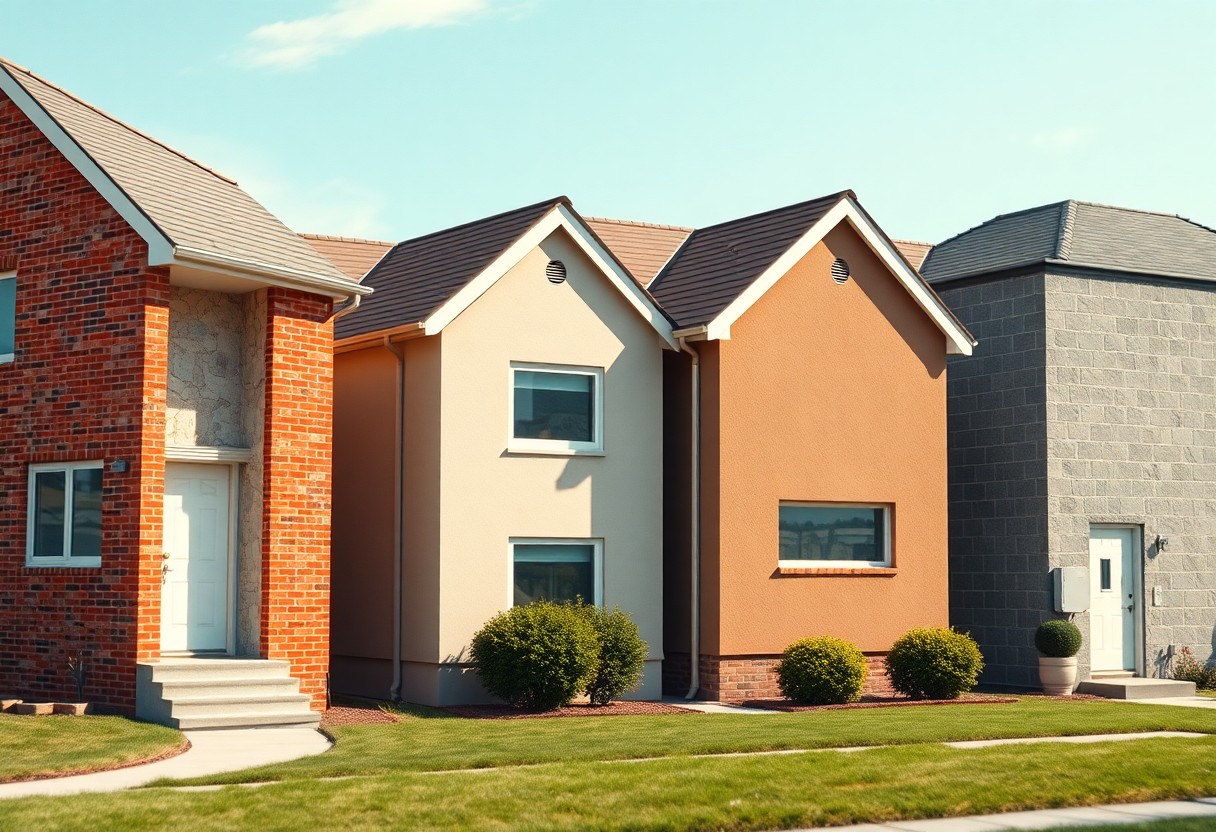
Stucco offers moderate insulation, while brick and stone provide excellent thermal mass; concrete block often needs added insulation. You should watch for moisture damage risks with some materials when assessing which saves you the most energy.
Key Takeaways:
- Brick and stone provide high thermal mass that moderates indoor temperature swings but have low inherent R-value, so they must be paired with insulation to achieve strong energy performance.
- Stucco’s efficiency depends on the underlying wall assembly and presence of continuous insulation; stucco itself adds little R-value but performs well when combined with insulated sheathing or cavity insulation and appropriate finish color in hot climates.
- Overall energy efficiency is driven more by insulation levels, continuous thermal barrier, and airtightness than by cladding choice; insulated concrete block, insulated masonry cores, or ICFs typically offer the best combined R-value and airtightness when properly constructed.
The Timeless Appeal of Brick
Brick helps you enjoy classic aesthetics and high thermal mass that smooths temperature swings, giving energy savings and long-lasting curb appeal with minimal maintenance.
How thermal mass keeps you comfy
Thermal mass in brick and stone absorbs daytime heat and releases it later, so you experience steadier indoor temperatures and reduced HVAC cycling for lower energy use.
Managing moisture and airflow
Proper moisture control and ventilation keep you safe from mold and structural decay; poor drainage or blocked vents can create hazards, so design and maintenance matter.
Homes with brick or block walls need clear drainage planes, flashing, and breathable barriers so you don’t trap moisture in cavities. Inspect weep holes, maintain guttering, and ensure mechanical ventilation to prevent mold and insulation degradation. Unchecked moisture can rapidly reduce R-values and cause costly repairs, so routine checks protect comfort and savings.
Rock Solid: Natural Stone Homes
Stone offers you remarkable thermal mass, absorbing daytime heat and releasing it slowly, so you get steadier indoor temperatures and often lower energy bills.
Nature’s way of regulating temperature
Thermal mass in stone means you experience fewer temperature swings; stone stays cooler in summer and returns stored warmth during cool nights, easing HVAC demand.
Stone: Quick Facts
| Characteristic | Effect for you |
|---|---|
| Density | High density increases heat storage, smoothing indoor temps |
| Thermal lag | Delays heat transfer-useful for hot days, less so for quick warmth |
| Moisture | Can trap water if not detailed properly-risk of damage |
Why thickness makes a difference
Thicker stone walls give you more insulation and thermal storage, reducing peak heating and cooling loads far better than thin veneers.
You will notice that raw stone has modest R-value per inch but massive walls act like a temperature battery, storing daytime heat and releasing it when you need it, which can cut system runtime. Adding insulated cavities or exterior insulation changes performance: combining thickness with proper insulation maximizes comfort while controlling condensation and the risk of trapped moisture.
The Smooth Finish of Stucco
Stucco offers a smooth, continuous exterior that helps reduce air leakage when properly installed, giving you better thermal performance and a sleek, low-maintenance finish.
Creating an airtight seal for your home
Sealing joints, penetrations, and trim helps you create an airtight envelope, cutting drafts and energy loss; poor details can cause moisture intrusion and damage.
Best climates for stucco efficiency
Dry, warm climates let you exploit stucco’s thermal mass for steady indoor temperatures, while humid or coastal areas raise deterioration and mold risks.
Homes in arid, Mediterranean, and temperate inland zones allow you to maximize stucco efficiency with minimal moisture risk when paired with proper drainage, weather barriers, and flashing; coastal or freeze‑thaw regions demand that you use flexible coatings, meticulous detailing, and regular inspections to prevent cracking, rot, and costly repairs.
Building with Concrete Blocks
Concrete block walls give you steady thermal mass and fire resistance, helping you temper indoor temperature swings and lower heating peaks; they can be more energy-efficient than lightweight claddings when detailed correctly.
The hidden power of high density
Density in heavy blocks gives you impressive heat storage, smoothing daily swings and cutting HVAC cycles; this mass reduces peak loads, but you must manage ventilation and moisture to avoid mold problems.
Boosting performance with core insulation
Insulation in block cores lets you raise R-values and stop cold bridging, so you save on heating and cooling; filling cores with foam dramatically improves performance, but gaps or compression will cut those gains.
You can choose rigid boards, poured foam, or spray foam for core insulation; each offers tradeoffs in R-per-inch, moisture resistance, and cost. Spray foam yields the best air seal and highest R-value, while rigid foam is simpler to retrofit. Ensure installers fully fill cores, seal grout and openings, and protect against moisture to keep those efficiency gains long-term; improper fills create thermal bypass and pest pathways.
The Great Efficiency Face-Off
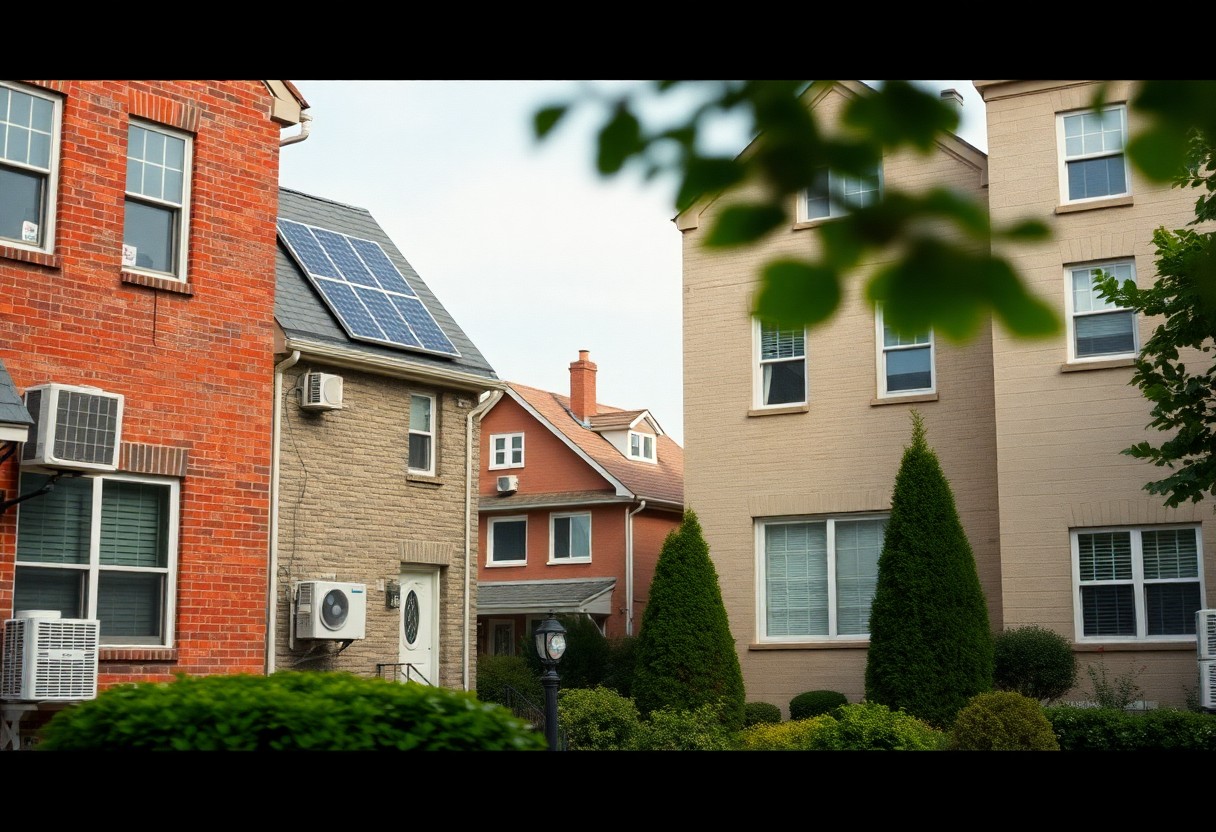
Today you weigh factors beyond appearance – thermal mass, insulation, and air sealing – to pick the most efficient envelope. Stone and brick add thermal mass, while stucco and insulated block can offer higher R-values when layered. You should focus on installation quality and continuous insulation to maximize savings.
Comparing R-values across materials
Check typical R-values: solid brick and stone walls often have lower R-values per inch than insulated stucco or concrete block with cavity insulation, so you’ll rely on added insulation to meet standards.
R-value comparison
| Brick (solid) | Approx. R-0.2-0.8 per inch |
| Stone (solid) | Approx. R-0.2-0.7 per inch |
| Stucco (with insulation) | Approx. R-0.2-0.6 per inch; higher with added foam |
| Concrete block | Approx. R-0.1-1.1 per inch; insulated cores boost performance |
Long-term savings on your energy bills
Expect material choice plus insulation and air sealing to determine your bills; properly insulated stucco or insulated block often cuts heating/cooling costs more than uninsulated masonry.
Analyzing lifecycle costs shows you recover higher upfront insulation or cavity upgrades through lower bills, especially in extreme climates; consider maintenance, local energy prices, and rebates when calculating payback to know which option pays off fastest.
Helpful Tips for Any Exterior
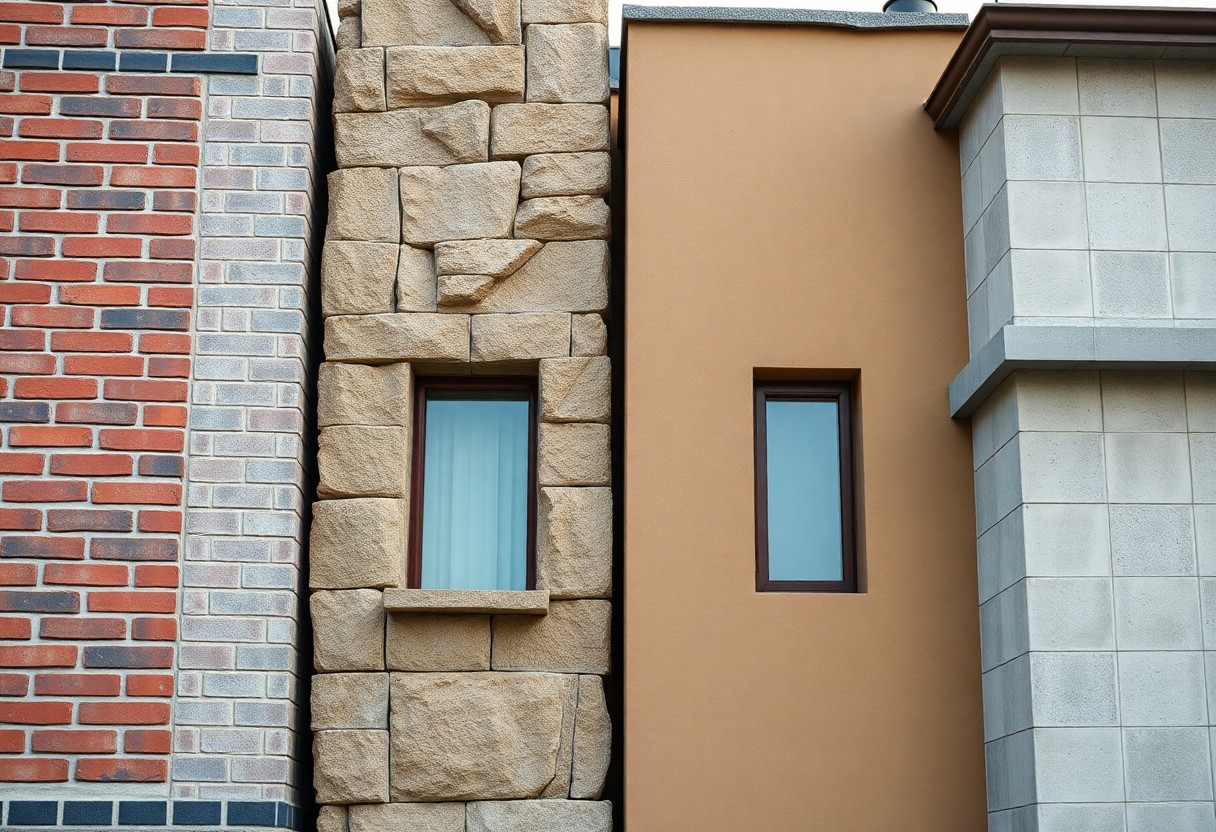
Outside you should focus on air sealing, insulation, and durable cladding to cut drafts and reduce heat transfer. Perceiving how thermal mass and shading affect comfort helps you choose the best fixes.
- Brick
- Stone
- Stucco
- Block
- Insulation
- Air sealing
Choosing the right insulation pairing
Match insulation to your exterior: you should pair dense stone with high-R cavity fill, use continuous insulation behind stucco, and opt for spray or rigid boards where thermal bridging is likely.
Simple upgrades for better heat retention
Small actions you can take include sealing gaps, adding weatherstripping, and fitting insulated doors to reduce drafts and retain heat.
Upgrade your home’s performance by tackling the biggest leaks first: inspect attic hatches, recessed lights, and rim joists, then seal with caulk or spray foam. Add or replace weatherstripping, install insulated doors and storm windows, and top up attic or wall insulation for measurable savings and more consistent comfort.

Summing up
Summing up, you’ll find stone and brick often insulate best for steady temperatures, stucco performs well with proper insulation, and concrete block offers thermal mass that helps in some climates; your climate, insulation quality, and construction details determine which is most energy efficient for you.
FAQ
Q: Which of brick, stone, stucco, or block is the most energy efficient?
A: No single material is inherently the most energy efficient; performance depends on assembly and climate. Brick and stone provide high thermal mass that moderates temperature swings but have low native insulation value, so they must be paired with cavity or continuous insulation for low heating and cooling loads. Stucco applied over a well‑designed insulated backing or as EIFS can deliver high R‑value and tight details. Concrete block offers poor insulation in its default form but can be upgraded by filling cores or adding continuous exterior insulation to become very energy efficient.
Q: How does thermal mass affect energy efficiency for these materials?
A: Thermal mass stores and slowly releases heat, which can cut peak heating and cooling loads in climates with large day‑to‑night temperature swings. Brick and stone have substantial mass and perform well where nights are cool and days are hot, reducing HVAC cycling. Stucco over lightweight framing has little inherent mass unless paired with heavy backing; EIFS systems reduce thermal bridging and add insulation but do not provide significant mass. Block has moderate mass but usually needs insulation to prevent heat flow through the structure.
Q: Which material is best for cold climates versus hot climates?
A: Cold climates favor high continuous R‑value and tight air sealing more than raw mass, so insulated masonry (brick or stone with exterior rigid insulation) or insulated block walls perform well. Hot‑dry and hot‑humid climates benefit from reflective cladding, shading, and either mass that evens out temperatures or well‑insulated lightweight walls if rapid cooling is desired. Coastal or mixed climates require a balance of moisture management, insulation, and some mass depending on diurnal swings.
Q: What moisture and durability considerations affect energy performance?
A: Moisture intrusion and trapped water reduce insulation effectiveness and create thermal bridging. Brick and stone veneers must have proper drainage planes, flashing, and controlled joints to avoid wetting the backup wall. Stucco needs proper lath, water‑resistive barriers, and weep systems; poorly detailed stucco can trap moisture and degrade insulation or framing. Block walls require good cavity drainage or sealed and insulated cores to prevent water from lowering thermal performance.
Q: How can existing brick, stone, stucco, or block homes be retrofitted to improve energy efficiency?
A: Exterior continuous insulation (rigid foam or mineral wool under a new cladding or over existing veneer) is one of the most effective retrofits because it reduces thermal bridging and increases wall R‑value without shrinking interior space. Injecting or filling block cores, adding cavity insulation where present, applying insulated plaster/stucco systems, improving air sealing at penetrations and openings, and upgrading windows and attic insulation will all lower energy use. Choice of retrofit depends on budget, historic preservation, and moisture management needs.
Q: How do embodied energy and lifecycle impact compare between these materials?
A: Brick, stone, and concrete block typically have higher embodied energy and carbon than stucco finishes over wood framing, mainly due to firing and cement production. Long service life and low maintenance of masonry can offset some upfront impacts through reduced repair cycles and steady thermal performance. Energy efficiency over the building’s life is driven more by insulation levels, air tightness, and systems efficiency than by cladding choice alone.
Q: What practical guidance should homeowners use when choosing between these materials for energy efficiency?
A: Prioritize a continuous thermal control layer, proper air sealing, and reliable moisture management over choosing a single cladding for its perceived efficiency. For new construction, specify exterior continuous insulation with details for drainage and flashing for brick, stone, or stucco. For masonry or block, plan for insulated cavities or filled cores. For retrofits, evaluate adding exterior insulation or targeted cavity upgrades and upgrade windows, doors, and attic insulation first for the fastest payback. Local climate and installation quality will determine which assembly yields the lowest operating energy.