Verdict: we would not buy a product sold as “Power Saver Pro” solely on a promise that one plug-in box will materially reduce a normal household electricity bill. The name is used in generic marketing, sellers and internal designs may vary, and a product-specific claim needs product-specific evidence.
This is an evidence review, not a hands-on laboratory test. Earlier wording on this page described a 30-day household experiment and outside electrical measurements. We cannot substantiate those events, so they have been removed. The review below evaluates the claim against how residential electricity is measured and explains what evidence a seller would need to change the conclusion.
- Do not treat an LED, a capacitor, or a lower amp reading as proof of lower billed kWh.
- Do not assume an industrial power-factor application transfers to a household tariff.
- Buy only if the exact model has verifiable safety certification, transparent seller details, and credible independent kWh testing.
- If your goal is a lower bill, spend first on diagnosis or on a device that directly measures, controls, or replaces an energy-using load.
What Power Saver Pro sellers commonly claim
Listings using this name commonly describe some combination of power-factor correction, voltage stabilization, electrical-noise filtering, surge protection, and lower utility bills. Those are different functions. A product can alter an electrical waveform or contain a protection component without reducing the real energy consumed by the home.
Because the product name is not enough to identify a single manufacturer or design, consumers should record the exact model, seller, rated voltage and current, certification number, warranty, and return address. We cannot attribute a claim, component, or certification to every unit carrying a similar label.
The billing question that decides the review
The U.S. Energy Information Administration explains that electricity use over time is measured in watt-hours and that utilities commonly measure customer use in kilowatt-hours. If a product promises a lower household bill, it should demonstrate lower kWh or lower charges under the customer’s actual tariff while the same useful work is performed.
Power factor is a real electrical concept, and commercial customers may encounter demand or power-factor provisions. The Department of Energy’s commercial utility-bill guide explains those billing elements. But a legitimate commercial engineering practice is not proof that a small box reduces a residential customer’s billed energy.
If a seller says the unit “reduces wasted electricity,” ask for a test that reports:
- the exact model and circuit;
- the controlled load and operating time;
- real watts, power factor, and accumulated kWh before and after;
- the measurement location and calibrated equipment;
- all results, not one selected meter reading;
- the independent laboratory or qualified engineer responsible.
Without that information, a percentage-saving headline is advertising, not a result you can apply to your home.
Why current-only demonstrations can mislead
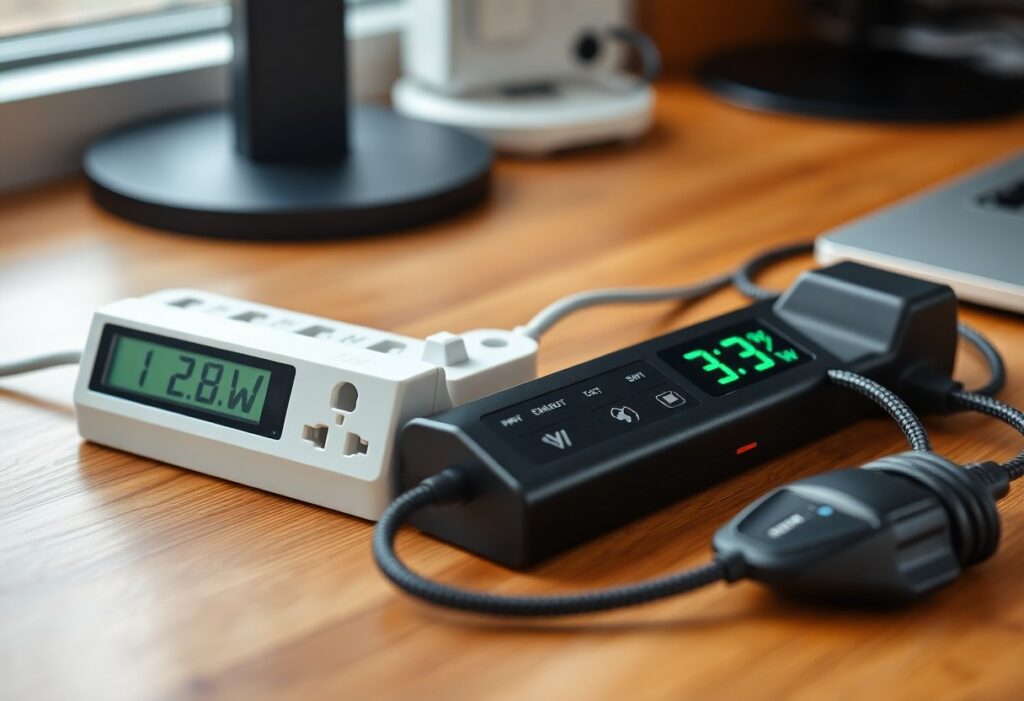
A demonstration may show fewer amps after a capacitor is connected. Current alone is not the same as real power or energy. Voltage, power factor, waveform, time, and where the measurement is taken all matter. The utility bill question is whether the billing meter records fewer kWh or lower billable demand—not whether one instrument displays a smaller number.
Likewise, a green light only confirms that some part of the device is energized. It does not show what the circuit is doing, whether the whole-home load changed, or whether the product will pay for itself.
What consumer-protection history tells us
The Federal Trade Commission’s records include a case concerning a different consumer power-factor controller advertised with large savings claims for motorized home appliances. The FTC decision record does not establish that every modern unit is identical, and it is not evidence that a specific Power Saver Pro seller has been charged. It does demonstrate that large electrical-savings claims have long required substantiation.
Be cautious when a sales page uses an invented news story, implies a utility or government endorsement, hides the legal seller, repeats countdown timers, or promises unusually large savings with no detailed test. The FTC also advises consumers to be skeptical of energy offers that promise more than they can deliver or use pressure and impersonation tactics.
Safety and product-identification checks
A device left connected to mains power should provide clear ratings and a verifiable certification listing. Search the certification number in the certifier’s own database; a logo printed on a case is not sufficient. Avoid products with missing manufacturer information, vague instructions, damaged pins, loose fit, cracks, buzzing, odor, discoloration, or unusual heat.
Do not open or modify a mains-powered device to investigate it. Capacitors may retain charge, and exposed conductors can cause shock, fire, or death. If you suspect an electrical problem or abnormal voltage, contact the utility or a qualified electrician.
If you already bought one
- Save the order confirmation, listing, promised percentage, return policy, packaging, and seller correspondence.
- Check the return deadline and request cancellation or a refund in writing.
- Do not rely on a single monthly bill as proof for or against the product; weather and usage can overwhelm any small change.
- If the item appears unsafe, unplug it without handling damaged parts and follow local disposal guidance.
- If advertising was deceptive, consider reporting the seller through ReportFraud.ftc.gov and contacting your payment provider about its dispute process. Eligibility and deadlines depend on the provider and transaction; a refund or chargeback is not guaranteed.
Alternatives that address a measurable cause
A product is more credible when its function connects directly to a load:
| Goal | Better starting point | What it actually does |
|---|---|---|
| Find a costly plug-in appliance | Plug-in energy meter | Measures watts and accumulated kWh for one compatible appliance |
| Understand whole-home patterns | Utility interval data or whole-home monitor | Shows when energy is being used; requires interpretation and, for some systems, professional installation |
| Cut selected standby loads | Advanced or smart power strip | Disconnects controlled outlets when equipment is not needed |
| Reduce heating and cooling waste | Maintenance, controls, air sealing, or an audit | Targets equipment runtime and building losses |
| Replace an inefficient appliance | Right-sized ENERGY STAR certified model | Performs the same service using a verified efficiency specification |
ENERGY STAR’s Home Energy Yardstick uses twelve months of bills and adjusts comparisons for factors such as weather, home size, and occupants. It also notes that a professional energy assessment is the better way to investigate the root causes of high bills or comfort problems.
Read our full explanation of why plug-in power saver claims do not automatically translate into bill savings. Then compare energy-saving devices with measurable functions, see whether a smart power strip fits your standby loads, or start with the home electricity-saving guide.
Frequently asked questions
Does Power Saver Pro work?
We have not seen product-specific evidence here that justifies expecting a meaningful reduction in a typical household’s billed kWh. A seller could change that assessment by providing transparent, independent, repeatable testing for the exact model and the tariff-related claim.
Could it improve power factor?
A device containing appropriate components may alter power factor in some circumstances. That is not the same as proving lower residential kWh or a lower bill. Ask your utility whether power factor is billed on your account and require measurements of real energy.
Is it a surge protector?
Do not assume so. Surge protection requires its own specifications, ratings, and certification. Buy a clearly identified surge-protection product if that is your goal.
What should I buy first to lower a high bill?
Often the first step is not a saver but a measurement: compare seasonal kWh, review utility interval data, or measure suspect plug loads. Spend money after you identify the load or building problem responsible.