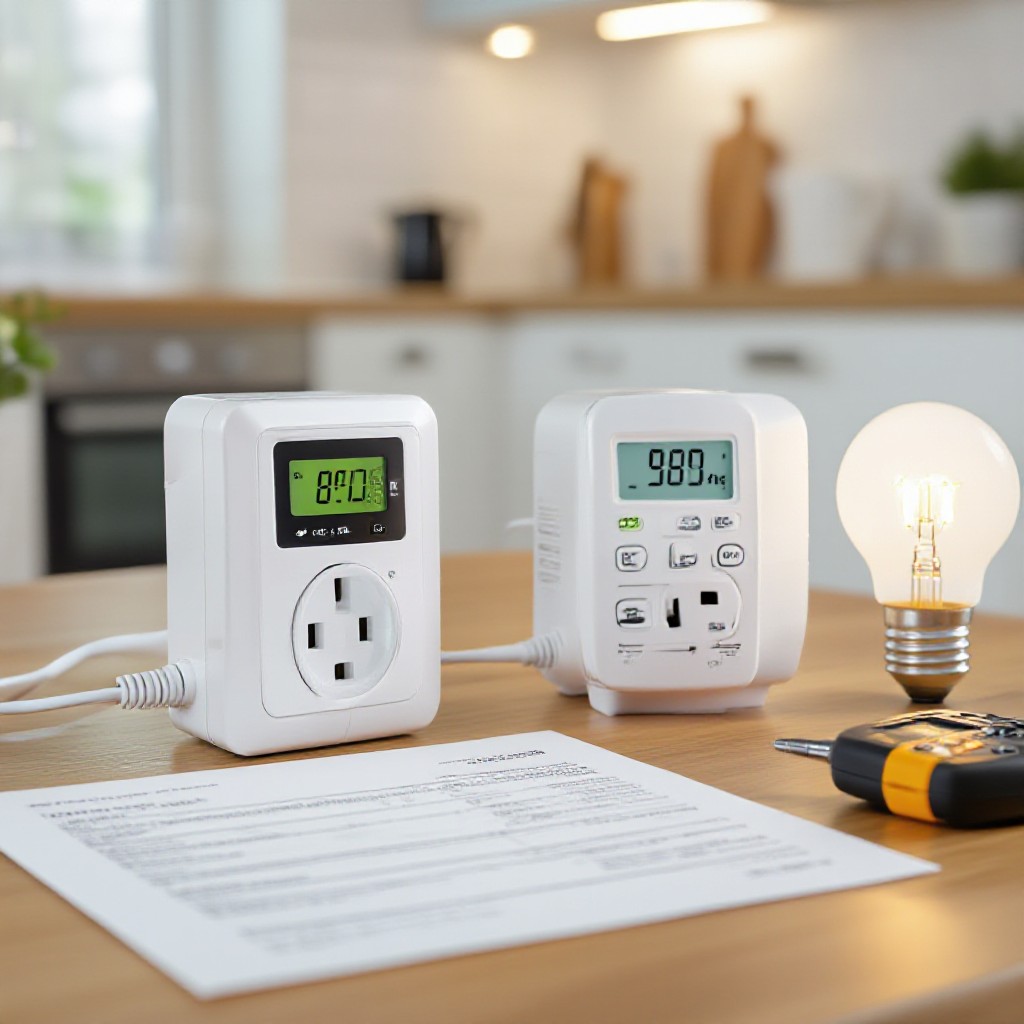
Short answer: a plug-in “power saver” is unlikely to reduce a typical U.S. household electricity bill merely by being connected to an outlet. A residential bill is generally driven by the kilowatt-hours (kWh) recorded by the utility meter, so meaningful savings require an appliance to use less real energy or run for less time.
This guide examines the category rather than claiming a laboratory test of every product sold under names such as power saver, electricity saver, power optimizer, or power-factor saver. Designs and sellers vary. Check your own utility tariff because billing rules are not identical everywhere.
- A blinking light is not evidence of lower kWh consumption.
- Changing power factor is not the same as reducing the real energy used by a refrigerator, air conditioner, heater, or other appliance.
- Before buying, ask for an independently verified test showing lower kWh at the utility meter under a controlled, repeatable load.
- For most homes, measuring usage and fixing the largest load is a more credible route to savings.
What your electric meter actually measures
Power and energy are related but different. Watts describe the rate at which a device is using power at a moment in time. Watt-hours and kilowatt-hours describe energy used over time. The U.S. Energy Information Administration explains that one kWh equals one kilowatt used for one hour and that utilities use meters to measure customer electricity use.
That gives us a practical test for any bill-saving claim: does the product reduce the kWh recorded while the same useful work is being done? If an air conditioner still removes the same amount of heat for the same number of hours, or a water heater still heats the same quantity of water through the same temperature rise, a plug-in box needs credible evidence that it reduced the real energy required.
Residential rate plans can include fixed charges, time-of-use prices, demand components, taxes, credits, or solar adjustments. Read your tariff or ask your utility exactly what is billed. Do not assume that a claim about “reactive power,” “dirty electricity,” or “voltage stabilization” affects the line items on your own bill.
Power factor is real—but the savings claim does not automatically follow
Alternating-current equipment can draw both real power, which performs useful work, and reactive power, which moves energy back and forth as electric and magnetic fields. Power factor describes the relationship between real power and apparent power. Large commercial and industrial facilities may face power-factor requirements or charges, which is why engineers sometimes install correctly sized correction equipment for specific loads.
The U.S. Department of Energy’s utility-bill guide discusses power factor in the context of commercial billing and capacitor banks. That legitimate industrial use does not prove that a small consumer device will reduce a household’s billed kWh.
Even if a device changes current or improves power factor at one point in a circuit, the homeowner still needs evidence that the utility meter records less real energy for the same appliance operation. “Improves power factor” and “cuts your electricity bill” are separate claims.
Why a single plug-in box usually cannot deliver a large whole-home reduction
It does not control the main loads
Heating, cooling, water heating, refrigeration, cooking, laundry, lighting, and electronics consume energy because they perform work. A device connected to an unrelated receptacle does not normally change thermostat settings, compressor run time, insulation levels, hot-water use, or appliance efficiency.
EIA reports that heating and cooling are among the largest residential electricity uses. That is why a large bill change is more plausibly explained by weather, equipment condition, thermostat settings, occupancy, or a new load than by whether a small box is plugged into a wall.
A lower current reading is not enough
Some demonstrations show a clamp meter reading fewer amps after a capacitor is connected. That can be misleading if voltage, power factor, real watts, time, and the measurement location are not also reported. A credible electricity-savings test should compare kWh or real power at the billing meter under the same controlled load—not one selected electrical measurement.
Large percentage claims need proportionally strong evidence
A claim of 30%, 50%, or more whole-home savings implies a major reduction in recorded energy. Ask for the test protocol, model number, load conditions, measurement equipment, duration, independent laboratory, and full results. Testimonials, animated diagrams, countdown timers, and photographs of lower bills do not control for weather, rate changes, occupancy, or appliance use.
The Federal Trade Commission previously challenged advertising for another consumer power-factor controller that claimed large savings on motorized home appliances. The historical FTC decision record is not a ruling on every modern product, but it shows why specific energy-saving claims require competent support.
What might be inside—and why certification matters
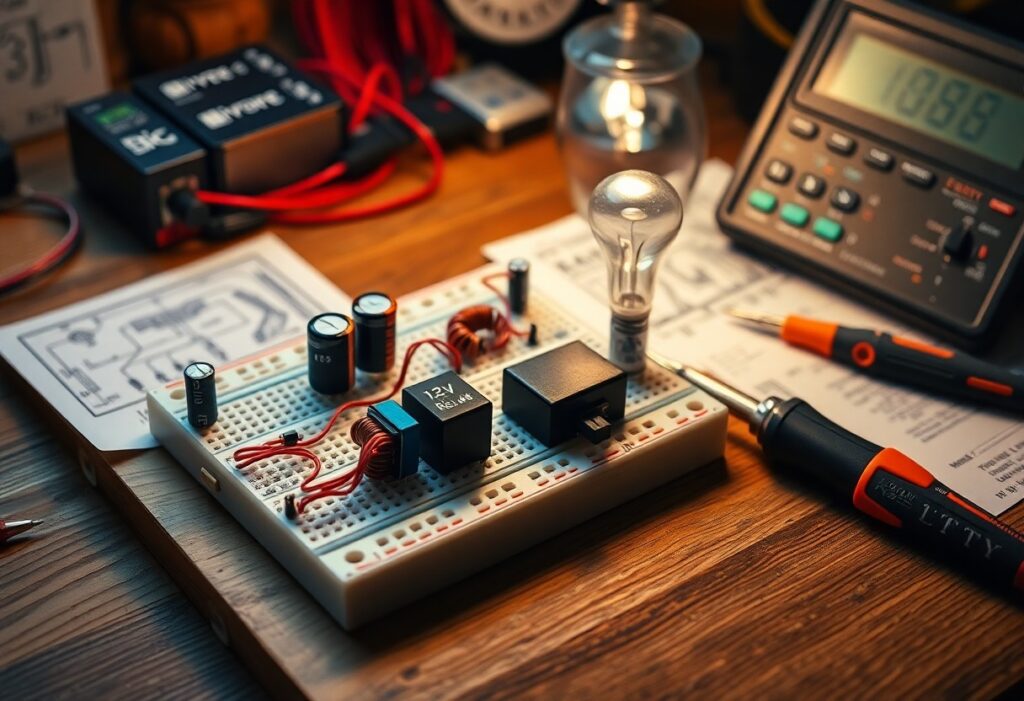
Marketing pages often describe a capacitor, filtering components, or surge protection. We have not opened or electrically tested every model, so we do not claim that all units share the same design. A capacitor can be a legitimate engineering component; that fact alone does not validate a whole-home bill-reduction claim.
Any device connected continuously to mains voltage should have clear manufacturer identification, electrical ratings, instructions, warranty information, and a safety certification mark that can be verified in the certifier’s database. Do not rely on a printed logo alone. Stop using a device that becomes unusually hot, buzzes, smells, discolors, cracks, or fits loosely. Do not open a mains-powered product yourself; stored energy and exposed conductors can injure or kill.
How to evaluate a power saver claim before buying
- Identify the exact product and seller. Generic names can be used by unrelated sellers. Record the model, legal business name, warranty, and return address.
- Read the claim literally. Does it promise lower kWh, lower peak demand, surge protection, voltage regulation, or power-factor correction? Those are not interchangeable.
- Match the claim to your tariff. Ask your utility whether residential power factor or demand is billed on your account.
- Request independent evidence. Look for repeatable before/after kWh measurements under identical loads, not testimonials or a current-only demonstration.
- Verify safety certification. Search the certification number in the issuing laboratory’s directory.
- Check the return terms before paying. Save the sales page, receipt, product listing, and all correspondence.
The FTC’s consumer guidance recommends caution when a seller or supposed utility representative promises unusually large energy savings or uses pressure tactics. See the FTC’s guidance on energy-related scams.
Can you test one using your monthly bill?
A simple month-before/month-after comparison is weak evidence. Outdoor temperature, billing-cycle length, utility rates, visitors, vacations, electric-vehicle charging, water heating, and HVAC use can change the result. A bill can rise even when efficiency improves, or fall for reasons unrelated to the device.
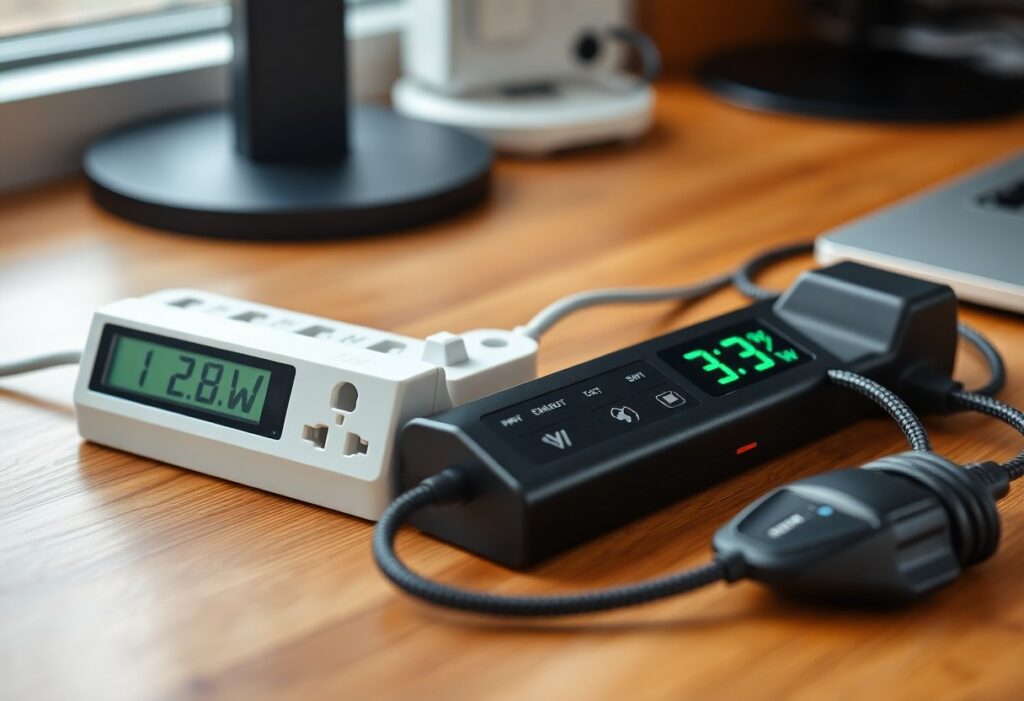
If you still want to evaluate a claim, use interval data from your utility when available, document weather and major loads, and compare multiple periods. For a plug-connected appliance, a reputable plug-in energy meter can show watts and accumulated kWh. Whole-home equipment involves the electrical panel and should be selected and installed according to its instructions by a qualified person where required.
What to do instead if your bill is high
Start with measurement and the largest likely loads:
- Compare the current bill’s kWh—not just its dollar total—with the same season last year.
- Check whether the billing period, rate, estimated reading, or time-of-use pattern changed.
- Review heating and cooling runtime, filters, thermostat schedules, and unusual sounds or comfort problems.
- Look for a leaking hot-water fixture, failed water-heater control, second refrigerator, dehumidifier, space heater, pool equipment, or EV charging.
- Use the ENERGY STAR Home Energy Yardstick to compare twelve months of use with similar homes.
- Consider a professional home energy assessment when the cause is not obvious.
Continue with our Power Saver Pro evidence review, guide to saving electricity at home, comparison of devices that measure or control a real load, or explanation of how smart power strips address standby use.
Frequently asked questions
Do plug-in power saver devices reduce residential kWh?
We have not found a sound reason to expect a meaningful reduction merely from plugging one into an unrelated outlet. Ask for independent evidence showing lower real energy or kWh under controlled conditions and confirm that the claimed change affects your tariff.
Can power-factor correction ever be useful?
Yes. Properly engineered correction can matter for commercial or industrial loads and tariffs. That does not mean a small consumer box will reduce a typical household bill.
Is a power saver the same as a surge protector?
No. Surge protection is a different function and does not inherently reduce ongoing energy consumption. If surge protection is the goal, choose a product with clear ratings and verifiable safety certification rather than assuming any “power saver” includes adequate protection.
What is the best first purchase for finding waste?
For plug-connected appliances, an energy meter that reports watts and accumulated kWh can turn guesses into measurements. For unexplained whole-home use, utility interval data or a properly installed whole-home monitor may help—but neither device saves energy by itself. Savings come from acting on what the data reveals.
Comparing a marketed energy-saving system? Read our evidence and buying checklist before visiting a vendor. It explains what to measure, which claims require support, safety limits, and our affiliate relationship. This article does not link directly to the vendor.