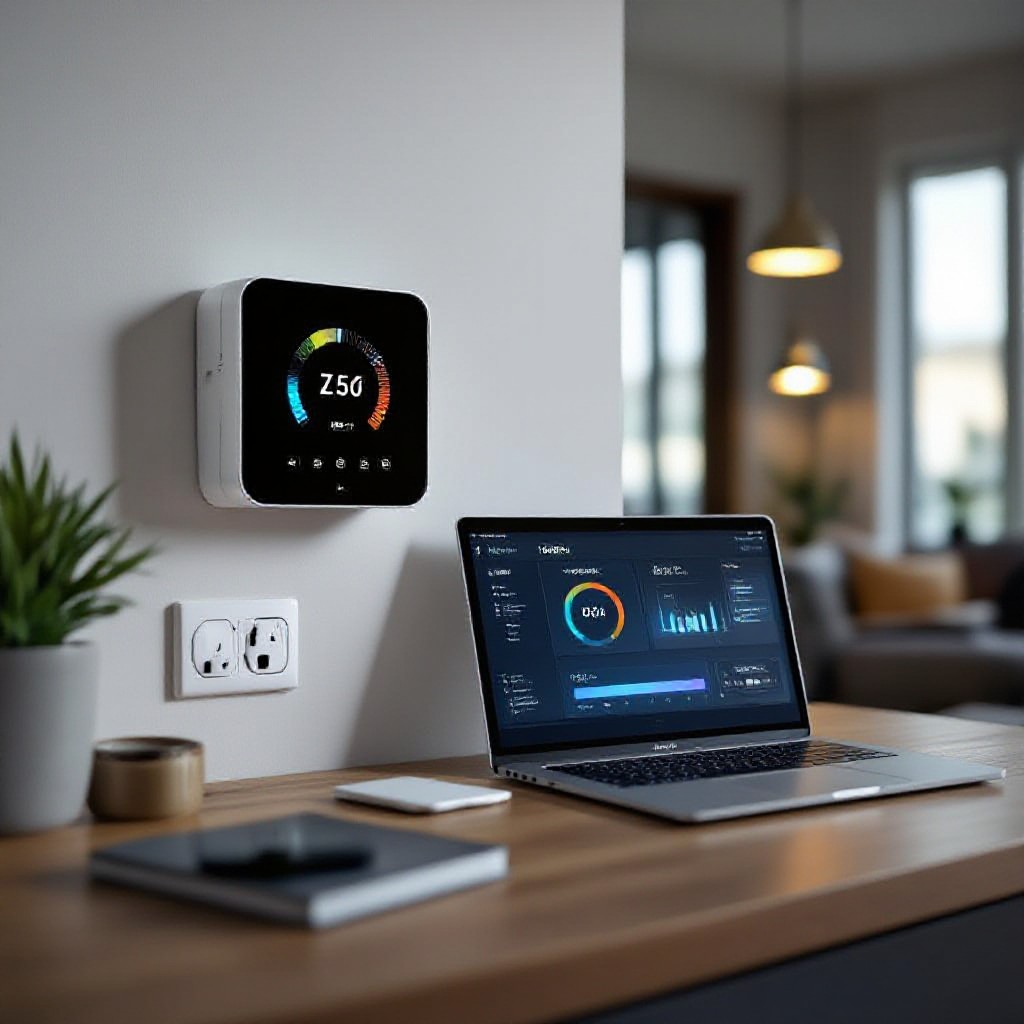
The best power-saving device for a home is the one that addresses a measured source of electricity use. For one appliance, that may be a plug-in energy meter or a smart plug with energy monitoring. For heating and cooling, a suitable thermostat or equipment repair may matter more. For an unexplained whole-home bill, utility interval data or a properly installed home energy monitor can help locate the load.
A generic plug-in box that promises to stabilize household electricity or correct power factor is a different category. It should not be assumed to reduce the residential kilowatt-hours shown on your bill. The Federal Trade Commission advises that energy-saving claims need scientific support and that consumers should be skeptical of dramatic savings promises.
Best power-saving devices by the problem they solve
| Your question | Useful device or data | What it can do | Important limitation |
|---|---|---|---|
| Which plug-in appliance uses the most? | Plug-in energy meter | Measures watts and accumulated kWh | Measures only compatible plug loads |
| Can I stop an unnecessary load automatically? | Smart plug or advanced power strip | Schedules or switches selected devices | Savings depend on how long the controlled load would otherwise run |
| Is heating or cooling driving the bill? | Compatible smart thermostat and HVAC data | Improves scheduling and reveals runtime patterns | Cannot repair poor insulation, airflow, sizing, or faulty equipment |
| When does the whole home use electricity? | Utility interval data or home energy monitor | Shows timing, trends, and sometimes circuit-level use | Monitoring itself does not save energy |
| Am I replacing an appliance? | EnergyGuide comparison and ENERGY STAR models where applicable | Compares estimated consumption or efficiency | Actual cost still depends on rates, climate, settings, and use |
1. Plug-in energy meters: best for finding a specific load
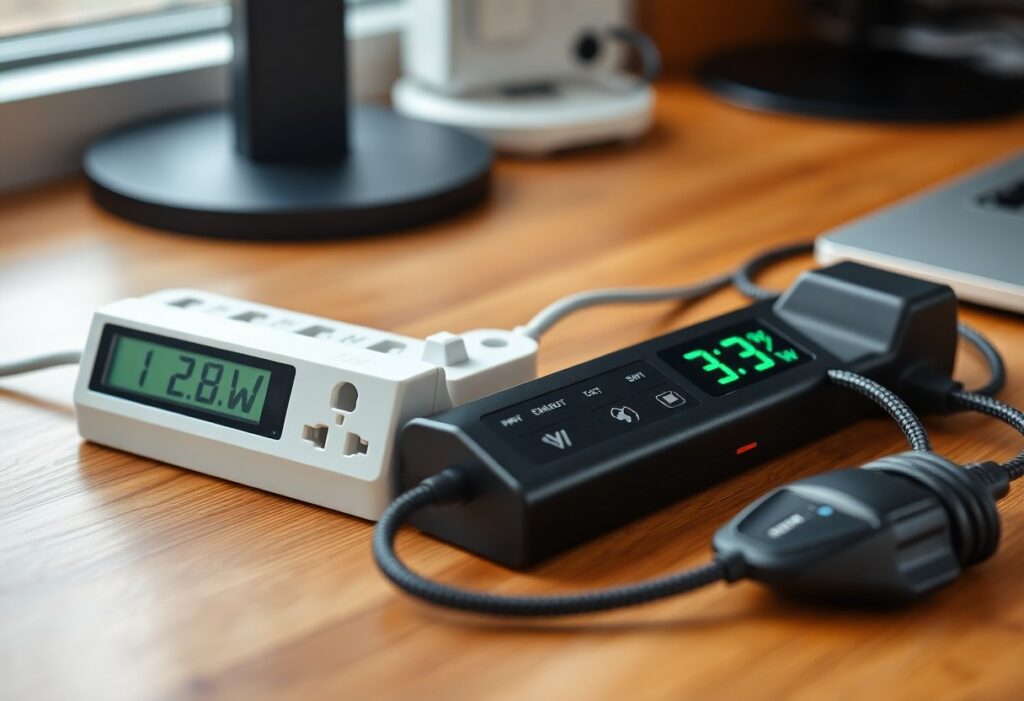
A plug-in electricity meter is often the most useful first purchase when you suspect a refrigerator, dehumidifier, entertainment system, computer, or another 120-volt plug load. A suitable meter reports instantaneous watts and accumulated kilowatt-hours over time. The accumulated figure is normally more useful because many appliances cycle on and off.
Measure for a representative period rather than taking one brief reading. A refrigerator may need several days of observation, while a television setup can be compared during active and standby periods. Do not use a consumer plug-in meter on equipment that exceeds its electrical rating, and do not attempt to meter hard-wired equipment this way.
Best when: you need evidence about one accessible appliance.
Not a direct saver: it identifies a possible action; it does not reduce use by itself.
2. Smart plugs: best for controllable schedules
A smart plug can help when a safe, compatible load remains on unnecessarily and can be switched or scheduled. Models with built-in energy monitoring are more useful because you can compare use before and after the control rule. Examples may include selected entertainment equipment, office equipment, lighting, or seasonal plug loads.
The arithmetic matters. Switching off a one-watt standby load for part of the day will not transform a household bill. Controlling a larger load for many unnecessary hours can matter more, but the device must be appropriate for that load. Never use a general-purpose smart plug with heaters, air conditioners, pumps, or other high-current equipment unless the manufacturer explicitly supports the application and rating.
3. Advanced power strips: best for grouped standby loads
An advanced or smart power strip may control secondary devices when a primary device is turned off, or provide timers and individually controlled outlets. It can be practical for a television area or home office where several accessories otherwise remain energized.
This is different from a box marketed as a universal electricity saver. A power strip can reduce consumption only by actually disconnecting or controlling connected loads. Our guide to how energy-saving power strips work explains where the savings can be measurable and where they remain small.
4. Smart thermostats: best when HVAC runtime is the problem
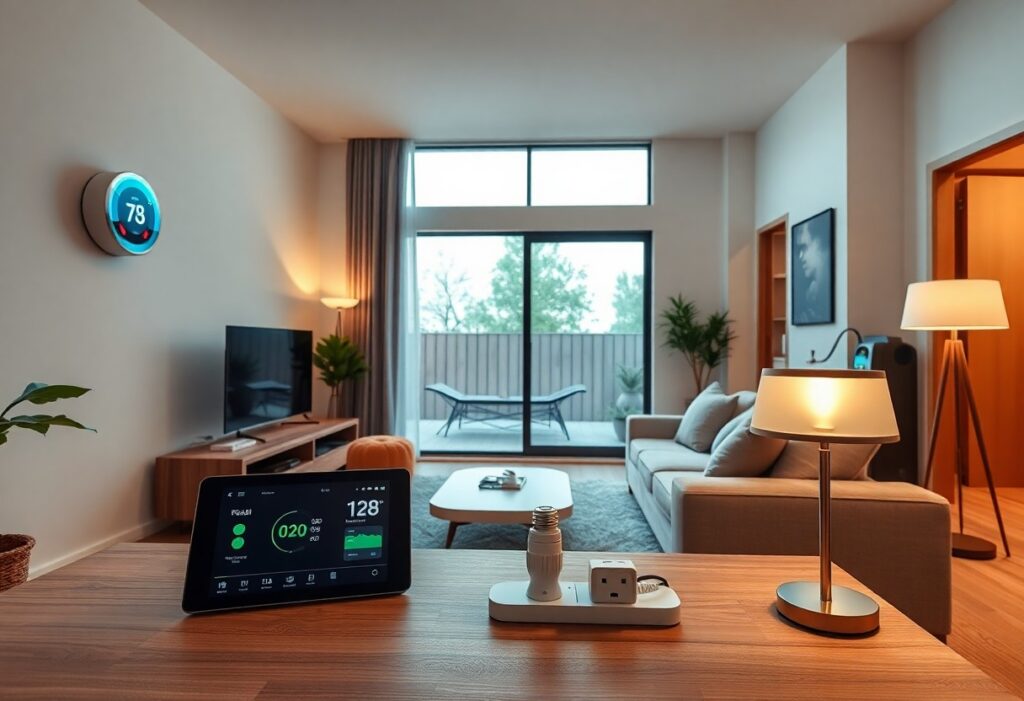
Heating and cooling can be a major household load, so temperature schedules and runtime may be more important than small plug loads. A compatible smart thermostat can make scheduling easier, show runtime history, and reduce unnecessary conditioning when the home is empty.
Compatibility and configuration are essential. Heat pumps, multi-stage systems, auxiliary heat, and communicating equipment can have specific requirements. A thermostat cannot compensate for major air leakage, restricted airflow, incorrect equipment sizing, or a mechanical fault. If the bill changed suddenly or comfort is poor, diagnose the cause before treating a thermostat as the solution.
5. Home energy monitors: best for timing and whole-home patterns
A whole-home monitor or smart electrical panel can show when electricity use rises and may estimate or measure individual circuits. This is useful when the question is broader than one plug-in appliance—for example, whether the spike follows water heating, HVAC operation, EV charging, or another large load.
Start with free utility interval data when it is available. A monitor adds value only if its level of detail matches your question and you will act on the findings. Installation inside an electrical panel should be performed according to the product instructions and local requirements, normally by a qualified professional. See our guide to whether a home energy monitor is worth it.
6. Efficient replacement products: best when equipment is already due
If an appliance or lighting product already needs replacement, compare energy performance as part of the purchase. The FTC’s EnergyGuide label provides estimated consumption or efficiency information for covered products, while ENERGY STAR identifies qualifying efficient models in applicable categories.
Replacing functioning equipment solely to chase a claimed percentage can produce a poor payback. Compare the purchase price, expected annual energy difference, repair needs, and remaining useful life. For lighting, LEDs can be a practical replacement where compatible bulbs are used for many hours, but the household impact will still depend on how much lighting contributes to total use.
What about plug-in “power saver” boxes?
Many small boxes are marketed with phrases such as voltage stabilization, power-factor correction, electrical-noise filtering, or whole-home optimization. Those functions should not be treated as proof that the product reduces the residential kWh billed by a utility. Power-factor correction can be an engineering requirement in some commercial or industrial situations, but that does not establish household bill savings from a generic plug-in device.
Before buying, ask for independent test results that measure real energy or kilowatt-hours under conditions comparable with your home. Check whether the claimed change affects the part of the tariff you actually pay. Also verify electrical ratings and recognized safety certification. Our detailed explanation of whether plug-in power saver devices cut a home bill covers the billing and power-factor distinction.
How to estimate savings without guessing
- Define the load. Identify the appliance, circuit, or period you are trying to change.
- Record a baseline. Use kWh over a representative period, not only the dollar total on one bill.
- Account for other changes. Weather, billing days, occupancy, rate changes, and new equipment can distort a before-and-after comparison.
- Measure after the change. Compare the same metric under reasonably similar conditions.
- Calculate simple payback. Divide the installed cost by measured annual dollar savings. If savings have not been measured, the payback is still an estimate—not a result.
Comparing a marketed energy-saving system? Read our Energy Revolution System evidence and buying checklist before visiting a vendor. That page explains what to measure, which claims require support, safety limits, and our affiliate relationship. This article does not link directly to the vendor.
A practical buying checklist
- What exact load does the product measure, control, or improve?
- Does it report watts or accumulated kWh, and at what accuracy?
- Is it rated and certified for the intended electrical load?
- Does it require professional installation?
- Can you test the result against utility or meter data?
- Are savings claims supported independently and tied to stated assumptions?
- Can the product be returned if it does not perform as described?
Bottom line
There is no universal best power saver for every home. Choose a plug-in meter when you need to measure one appliance, a smart plug or advanced power strip when a compatible load can be controlled, thermostat tools when HVAC schedules are the issue, and utility data or a home monitor when the problem is whole-home timing. Treat dramatic percentage claims as unverified until the seller provides credible evidence that applies to your billing method and household.
Frequently asked questions
What is the best power saver device for a home?
For diagnosis, a plug-in energy meter is often the best low-cost starting point. For a known unnecessary load, a properly rated smart plug or advanced power strip may help control it. The best choice depends on the load you have measured.
Do plug-in electricity saver boxes work?
Do not assume that a plug-in box reduces residential kWh because it changes voltage, power factor, or electrical noise. Ask for independent kWh testing under relevant conditions and compare the claim with how your utility bills you.
Does a home energy monitor save electricity?
A monitor provides information; it does not create savings automatically. It can support savings when its data reveals a correctable load and the household acts on that information.
How should I calculate payback?
Divide the total installed cost by measured annual dollar savings. Compare similar periods and account for weather, rates, occupancy, and billing-day changes. An advertised savings percentage is not a measured household result.