Quick answer: When an electric bill suddenly doubles, first determine whether usage doubled, the price per kWh changed, or the bill includes more billing days, an estimated reading, or an adjustment. That comparison is more useful than unplugging small devices at random.
Use this checklist before deciding that your meter or a specific appliance is at fault. For a wider overview of recurring high-bill causes, see Why Is My Electric Bill So High?.
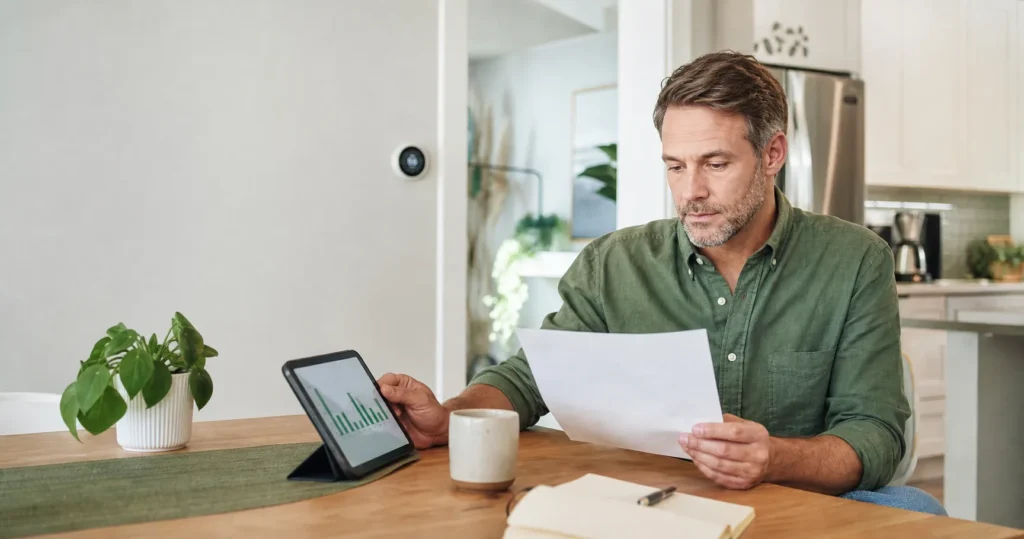
Start with four numbers on the bill
- Total kWh used. Compare it with the same month last year when possible, not just the prior month.
- Number of billing days. A longer billing period can make one bill look unusually large.
- Cost per kWh and rate line items. A higher total can come from a rate, tariff, supply-plan, or fee change even when kWh is similar.
- Reading type and adjustments. Look for “estimated,” “actual,” “corrected,” “adjustment,” or catch-up wording.
If kWh is close to normal but the dollar amount rose, ask the utility to explain the rate components and any adjustment. If kWh rose sharply, focus on when the added use occurred and which large load could have caused it.
A quick decision tree
kWh did not rise much
Check the billing days, rate plan, supplier contract, taxes and fees, and whether a previous estimated bill was corrected. Keep a copy of the bill and contact the utility with specific questions rather than assuming a meter fault.
kWh rose and the weather changed
Heating and cooling are among the largest household energy uses. Hot weather can extend air-conditioner runtime; cold weather can increase electricity use in homes with electric resistance heat or heat pumps. Compare temperature, thermostat settings, occupancy, and equipment runtime with a similar period.
kWh rose but daily life seems the same
Look for a new or hidden high-load pattern: longer HVAC runtime, a water heater cycling unexpectedly, a dehumidifier, pool or well pump, space heater, EV charging, or an appliance problem. Utility interval data, if available, can show the hours when the rise began.
Check the most likely large loads first
Heating and cooling
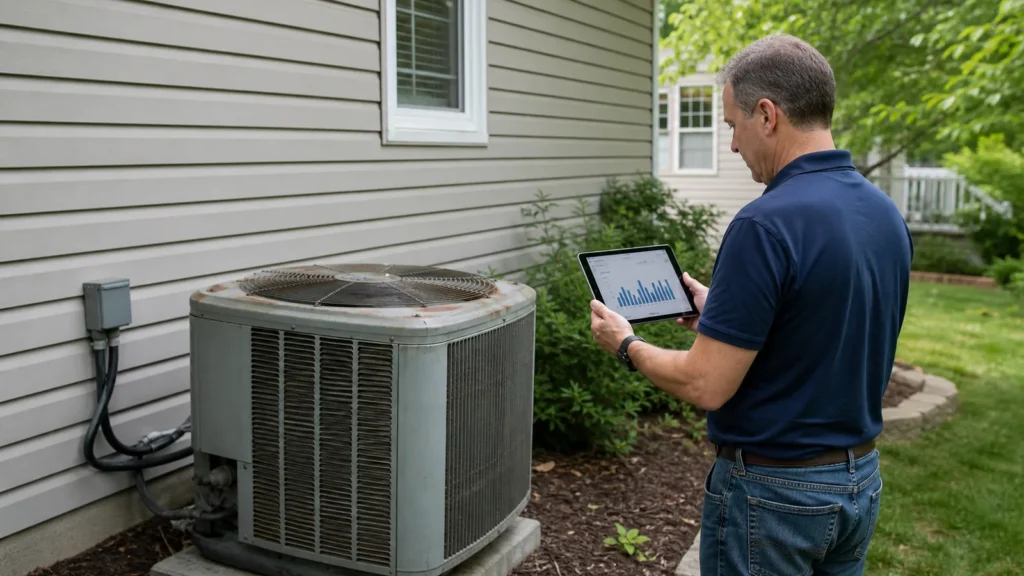
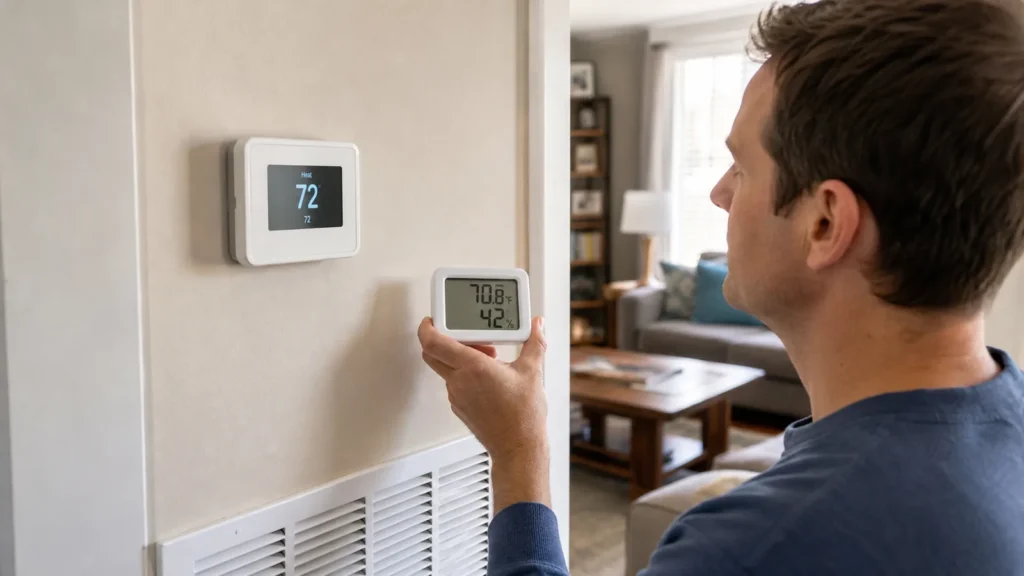
Check thermostat mode, setpoints, schedules, fan setting, blocked vents, and filter condition. Do not work on wiring, refrigerant, or internal equipment components unless qualified. An older system can run longer or deliver less cooling; see Can an Old AC Unit Cause a High Electric Bill?. If schedules, modes, or readings look wrong, use our faulty thermostat diagnostic before replacing controls.
Water heating
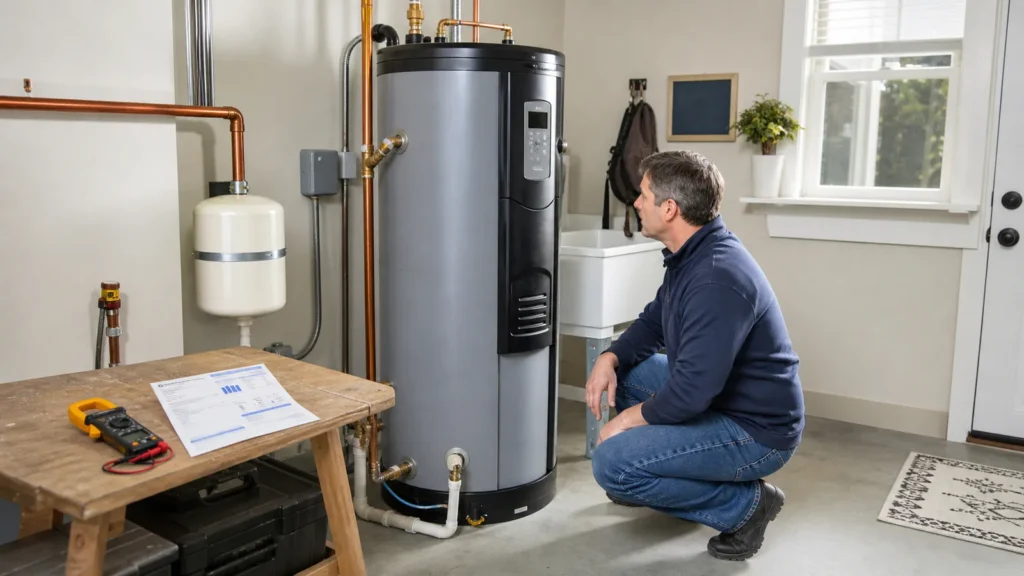
High hot-water use, a leak, a failed control, or a tank that keeps reheating can create a meaningful load. Start with safe observations such as water temperature, unusual runtime, leaks, and changes in household hot-water use. Our water-heater bill guide explains the checks and the point where professional service is appropriate.
Other continuous or scheduled loads
Review EV charging, pool equipment, well pumps, sump pumps, heated floors, portable heaters, dehumidifiers, and new appliances. A plug-in meter can be useful for a compatible individual appliance; a whole-home monitor or utility data is better for total-load timing. See Plug-In Meter vs Whole-Home Energy Monitor for the safe measurement boundary.
Use interval data instead of guessing
Many utilities provide daily or hourly usage data. Compare the first high-use day with a normal day. A rise concentrated overnight may point to charging, heating, or a pump. A rise during hot afternoons may point to cooling and solar gain. The pattern does not prove the appliance, but it narrows the next check.
If you do not have interval data, record the meter reading at the same time on a few days, along with outdoor weather, thermostat settings, and major equipment use. Do not open a meter base, remove panel covers, or probe energized circuits.
When to contact the utility, landlord, or a professional
- Contact the utility for estimated reads, billing-day differences, rate changes, supplier-plan questions, or a documented request to investigate a disputed reading.
- Contact the landlord or property manager when shared-meter, common-area, appliance-maintenance, or lease-responsibility questions apply.
- Use an HVAC or water-heating professional when equipment runs continuously, cannot hold temperature, leaks, short-cycles, or has unusual sounds.
- Use a qualified electrician urgently for hot outlets, burning smell, arcing, repeated breaker trips, damaged wiring, or uncertainty around electrical panels.
What not to do
Do not assume that a small plug-in “power saver” box explains a doubled bill, and do not accept a guaranteed-savings claim as a diagnosis. A bill increase needs a comparison of kWh, time, price, and major loads. Avoid switching breakers, opening an electrical panel, or tampering with utility equipment as a troubleshooting method.
Bottom line
A doubled bill is a prompt to compare the bill before buying anything. Separate price from usage, identify when the extra kWh appeared, then investigate the largest plausible loads. This order gives you better information for a utility call or professional visit and prevents an expensive guess.
Sources
- U.S. Energy Information Administration: electricity use and major residential loads
- U.S. Energy Information Administration: energy use in homes
- U.S. Department of Energy: cooling operation and maintenance tips
Editorial note: This is general information, not a remote diagnosis, billing-dispute service, or electrical-work instruction. It contains no product affiliate links at publication.