A high electric bill usually comes from one of three things: you used more kilowatt-hours, the price or structure of your rate changed, or the bill covers something unusual such as a longer cycle or an estimated reading. Start by separating price from usage. Then investigate the largest electrical loads—especially heating, cooling, and water heating—before chasing small standby devices.
- Compare this bill’s kWh with the same month last year.
- Compare the number of billing days and the price per kWh.
- Check whether the reading is actual or estimated.
- Review outdoor temperatures and heating or cooling runtime.
- List anything new: EV charging, a space heater, dehumidifier, pool pump, guests, second refrigerator, or home office.
First, determine whether the problem is price or usage
Do not compare only the dollar total. Find the kWh used, billing dates, rate, fixed charges, taxes, credits, and any time-of-use or demand charges. The U.S. Energy Information Administration (EIA) explains that a kilowatt-hour is one kilowatt used for one hour and that utilities measure customer electricity use with meters.
Use this simple comparison:
- Dollars rose, kWh stayed similar: investigate the rate, fixed charges, credits, or billing structure.
- kWh rose: investigate weather, equipment runtime, occupancy, and new loads.
- Both rose: you may have a usage increase and a price increase at the same time.
A longer billing period can also create a larger total even when daily use is unchanged. Divide kWh by billing days to compare average daily consumption.
Why weather is often the biggest explanation
Heating and cooling respond directly to outdoor conditions. EIA’s residential data identify air conditioning, space heating, and water heating among the largest categories of electricity use in U.S. homes. The shares vary by climate, fuel, home type, and year, so a national average is a starting point—not a prediction for your house.
Compare the bill with the same season last year, not only the previous month. A very hot July should not be benchmarked against a mild May. Utility interval data can be especially useful: a rising afternoon load on hot days points toward cooling, while repeated overnight or early-morning spikes may suggest heating, water heating, or scheduled equipment.
Common causes of a high electric bill
1. Air conditioning runs longer than usual
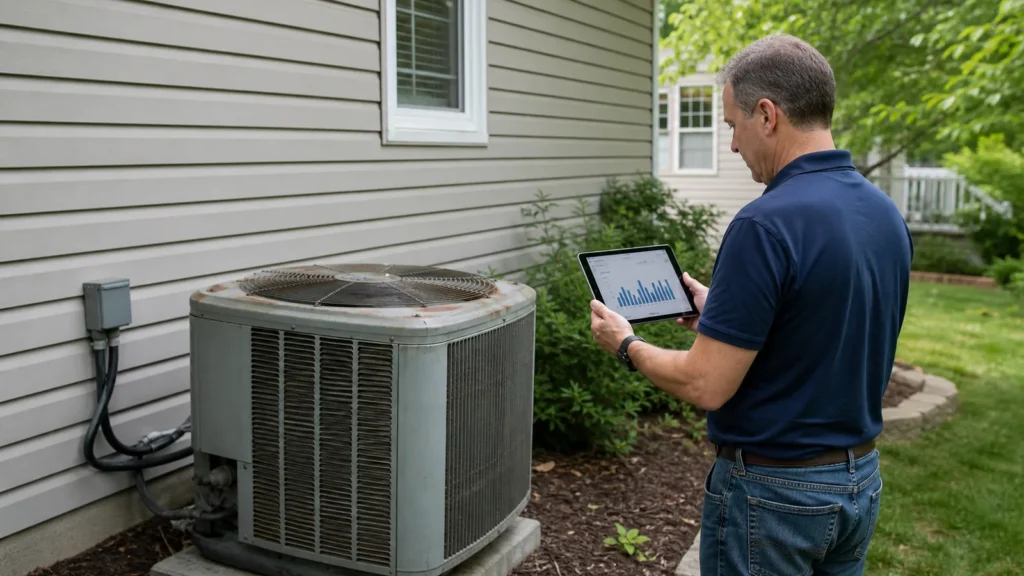
Hotter weather, a lower thermostat setting, a clogged filter, blocked outdoor coil, leaky ducts, poor insulation, or equipment trouble can increase runtime. ENERGY STAR recommends evaluating heating and cooling equipment that is over ten years old or not keeping the home comfortable, but replacement should follow diagnosis. Air leaks, ducts, sizing, and installation can matter as much as the equipment label.
Start with the filter, thermostat schedule, supply and return airflow, outdoor-unit clearance, and daily runtime. If the system runs almost continuously, freezes, short-cycles, trips a breaker, or no longer controls temperature or humidity, call a qualified HVAC professional. Use our summer electric-bill checklist to separate weather and rate effects from equipment symptoms, then determine whether an old AC unit may be contributing to a high electric bill before considering replacement.
2. Electric resistance heat or space heaters are operating
Portable space heaters and electric resistance backup heat convert electricity directly to heat and can draw substantial power. A 1.5 kW heater used eight hours a day consumes about 12 kWh per day:
1.5 kW × 8 hours = 12 kWh
At your own rate, multiply 12 kWh by the price per kWh to estimate daily energy cost. Heat-pump systems can also use auxiliary or emergency resistance heat during cold weather or when a fault or thermostat setting calls for it. Check the thermostat display and system manual; arrange service if backup heat runs unexpectedly.
3. The water heater is using more electricity
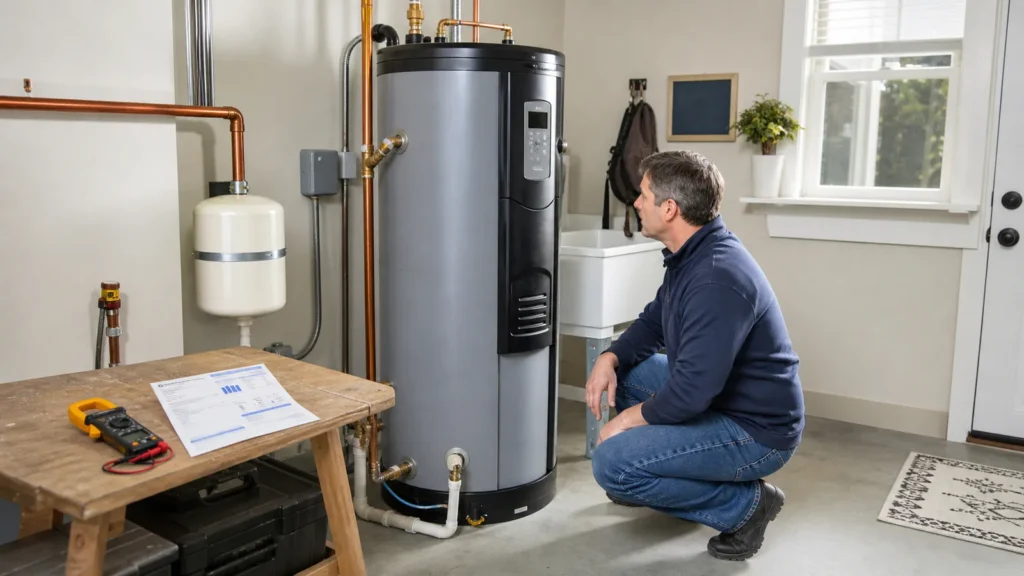
EIA estimates water heating as a major residential electricity end use. More occupants, longer showers, a leaking hot-water fixture, higher setpoint, failed control, sediment, or a hot-water recirculation schedule can increase consumption. A concealed hot-water leak may make the heater run repeatedly without an obvious puddle.
Listen for frequent reheating, check for warm or dripping fixtures, and compare interval data around shower and laundry times. Follow our water-heater high-bill diagnostic before assuming replacement is necessary. Do not remove electrical covers or test live components unless qualified. ENERGY STAR notes that heat-pump water heaters move heat rather than generating it solely with resistance elements, but suitability, installation space, climate, noise, condensate, and local rates must be considered before replacement.
4. A thermostat setting or schedule changed
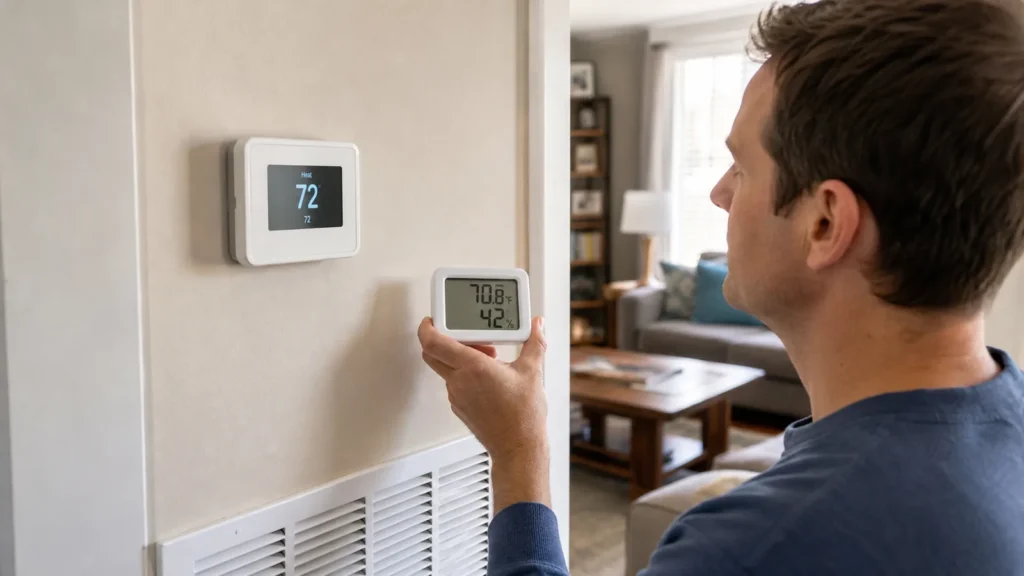
A few degrees, a disabled schedule, an incorrect hold, or a change from heat-pump mode to emergency heat can alter runtime. A smart thermostat cannot repair an inefficient system, but its history can reveal when heating or cooling operated. Check time, schedule, mode, setpoint, fan setting, and whether household members or an app changed them. Continue with the faulty-thermostat high-bill checklist.
If your home uses a heat pump: compare weather, thermostat mode, and any auxiliary or emergency heat indication before assuming that one appliance is at fault. See our heat-pump high-electric-bill checklist for the safe next checks and when professional diagnosis is appropriate.
5. A second refrigerator or freezer is working hard
Refrigerators cycle all day. EIA reports that many U.S. homes have more than one refrigerator and that second refrigerators and separate freezers add meaningful annual use. Garage temperature, dirty coils, damaged door gaskets, poor ventilation, frost, or a failing compressor can increase runtime.
Make sure the door closes, clean accessible coils according to the manual, allow ventilation, and measure a plug-connected unit over several days with a compatible energy meter. A momentary watt reading is less useful than accumulated kWh because compressors cycle.
6. A dehumidifier, pool pump, well pump, or sump pump runs longer
These loads can operate for hours without attracting attention. Wet weather can increase sump-pump use. A plumbing leak can make a well pump cycle. Humid weather or an aggressive setpoint can keep a dehumidifier running. Pool-pump schedules may reset after maintenance or a power outage.
Check runtime, controls, leaks, filters, and maintenance requirements. Never enter a flooded area or handle electrical equipment near water; use a qualified professional where there is shock risk.
7. Electric-vehicle charging was added or increased
EV charging shifts energy previously purchased as gasoline onto the electric bill. That is not necessarily higher total household transportation cost, but it can be a noticeable new electrical load. Review charger or vehicle records, off-peak rates, charge limits, and whether another vehicle has been charging at the property.
8. More people are home
Guests, remote work, school breaks, illness, or a new baby can increase cooking, laundry, electronics, hot water, and HVAC use. Compare occupancy and routines with the reference period before concluding that equipment has failed.
9. A device is malfunctioning or cycling excessively
Warning signs include a motor that starts repeatedly, a pump that never reaches pressure, a refrigerator that stays warm while running, a water heater that reheats constantly, or HVAC that cannot reach the setpoint. Diagnosis should focus on runtime and measured kWh, not a plug-in “power saver.” Read why plug-in power saver claims do not address the underlying load.
10. The meter reading, account, or billing period needs review
Confirm the meter number where shown, reading type, start and end readings, service dates, and any previous balance. Smart meters are designed to report usage, but billing and account questions should still be taken to the utility. If the bill does not match the meter or interval portal, document both and ask for an explanation.
How to find the cause without guessing
Use interval data first
If your utility provides hourly or 15-minute data, look for the date the baseline changed. Match recurring patterns to scheduled loads. Turn equipment off only when safe and permitted; do not disable refrigeration, medical devices, pumps, freeze protection, or critical systems simply to run an experiment.
Measure compatible plug loads
A plug-in energy meter can report watts and accumulated kWh for compatible 120-volt appliances. Confirm the meter’s voltage and current rating and follow its instructions. Do not use adapters or measure hardwired, 240-volt, or high-current equipment with a device not designed for it.
Use a whole-home monitor for patterns, not automatic savings
A whole-home energy monitor may help identify baseload, schedules, and large load changes. It does not save electricity by itself, and appliance detection may be imperfect. Panel-connected systems can expose hazardous voltage and may require installation by a qualified electrician.
Our guide to whether a home energy monitor is worth it distinguishes utility interval data, plug-in meters, current-transformer monitors, device-detection systems, and smart panels by what they actually measure. Use the simplest method that can answer the question, and see our energy-saving devices guide for the wider product hub.
Benchmark twelve months, not one bill
The ENERGY STAR Home Energy Yardstick compares twelve months of actual use with similar homes and considers factors such as weather, home size, and occupants. ENERGY STAR also states that the tool does not replace a professional home energy assessment when you need to find the root cause of high bills or uncomfortable spaces.
When to call for help
- Call the utility for tariff questions, meter/account mismatches, outages, damaged service equipment, or suspected problems on the utility side.
- Call an HVAC professional for loss of heating or cooling, icing, abnormal noise, repeated cycling, or unexpected auxiliary heat.
- Call a plumber or water-heater professional for hot-water leaks, relief-valve discharge, or continuous reheating.
- Call a qualified electrician for hot outlets, burning odor, buzzing, arcing, repeated breaker trips, damaged wiring, or panel-connected monitoring.
If there is smoke, fire, sparking, a strong burning smell, or immediate shock risk, leave the area and contact emergency services or the utility as appropriate.
A practical order for reducing the bill
- Correct billing or rate misunderstandings.
- Fix abnormal equipment operation and leaks.
- Adjust schedules and unnecessary runtime.
- Seal and insulate where an assessment shows a need.
- Replace equipment only after condition, sizing, installation, incentives, and expected operating cost are evaluated.
The Department of Energy describes a home energy assessment as an essential first step toward lower bills. Continue with our home electricity-saving guide and whole-home efficiency guide.
Frequently asked questions
Why did my electric bill suddenly double?
Check whether kWh doubled. If it did, look for extreme weather, resistance heating, water-heater problems, EV charging, pumps, dehumidification, or a new occupancy pattern. If kWh did not double, investigate rates, billing days, credits, estimated readings, and previous balances. Follow the full electric-bill-suddenly-doubled checklist before assuming a meter or appliance fault.
Can an old air conditioner cause a high electric bill?
Age alone does not prove the cause, but wear, dirty components, lost capacity, duct problems, poor installation, and extreme weather can increase runtime. Compare runtime and kWh using our old-AC diagnostic sequence, perform basic maintenance allowed by the manual, and obtain a professional diagnosis before replacement.
Can a faulty thermostat cause high electricity use?
A thermostat or configuration problem can call for unnecessary heating, cooling, fan operation, or emergency heat. Check mode, schedule, setpoint, sensor location, and runtime history with our faulty-thermostat checklist. Wiring or equipment diagnosis should be handled by a qualified professional.
Will a home energy monitor lower my bill?
Not by itself. A monitor can reveal when and where energy is used; savings depend on whether the data identifies an actionable load and whether you act on it safely. Read when a home energy monitor is worth the cost.