Quick answer: A heat pump can make an electric bill rise when it runs more hours, when the weather is more demanding, or when electric resistance backup heat is used. A high bill does not prove the heat pump is faulty. Start by comparing kWh, billing days, rate changes, outdoor weather, and the system’s operating mode before deciding what needs service.
If the increase is not clearly connected to heating or cooling, begin with our high-electric-bill diagnostic guide. This page focuses on the questions that are specific to a heat-pump home.
Why a heat pump can raise an electric bill
A heat pump uses electricity to move heat rather than create it directly. Its electricity use can still increase substantially when outdoor conditions are colder or hotter, when the home loses more heat, or when the system runs longer to hold the set temperature. The U.S. Energy Information Administration notes that household heating and cooling use varies with weather, equipment, and location.
In heating mode, some systems use auxiliary or emergency electric resistance heat when conditions require it or when the system is not keeping up. That backup heat can use more electricity than the heat-pump compressor alone. Its presence is a reason to investigate the pattern, not proof that a component has failed.
Check the bill before blaming the system
- Compare kWh as well as dollars. A higher total can come from a rate, fee, plan, tax, or longer billing period even if use is similar.
- Compare similar weather. Match the current period to days with similar temperatures rather than an unrelated calendar month.
- Look at daily or hourly data. If the utility provides interval data, note whether usage rises during cold mornings, hot afternoons, or stays elevated overnight.
- List other new loads. EV charging, portable heaters, water heating, a dehumidifier, pool equipment, or changed occupancy can affect the same bill.
If kWh is unchanged but the amount due rose, ask the utility about the bill’s rate components, reading type, and billing period before scheduling equipment work.
Safe checks for a heat-pump home
Review the thermostat mode and schedule
Confirm that the thermostat is in the intended heating or cooling mode and that temporary holds, schedules, fan settings, and vacation settings match how the home is occupied. On a heat-pump thermostat, note when auxiliary or emergency heat is shown. Do not switch to emergency heat as a troubleshooting experiment unless the equipment manual or a qualified professional instructs you to do so.
If the temperature reading, schedule, or response seems unreliable, use our faulty-thermostat high-bill guide to narrow the next safe check.
If replacement is justified, do not choose from a generic thermostat list. Our smart thermostat for a heat pump compatibility guide explains O/B reversing-valve support, stages, AUX/E heat, dual fuel, C-wire power, and proprietary-control limits.
Check airflow without opening equipment
Replace user-serviceable filters according to the manufacturer’s instructions, keep returns and supply registers clear, and make sure furniture or curtains are not blocking airflow. Restricted airflow can extend runtime. Do not remove panels, bypass safety switches, test live wiring, or alter refrigerant components.
Observe normal operation from a distance
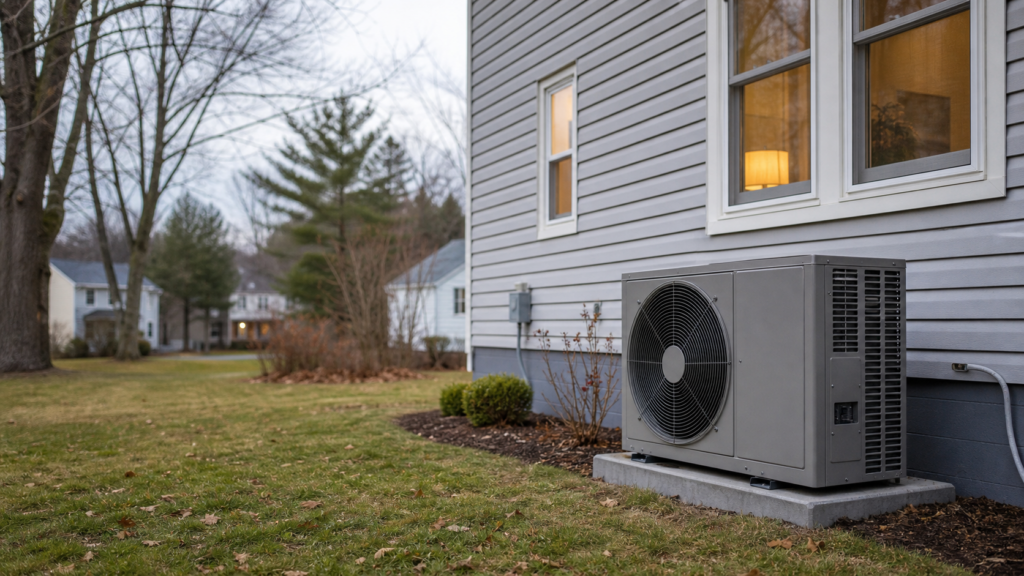
Note whether the home reaches its set temperature, whether rooms have become uneven, and whether the system runs for unusually long periods in comparable weather. A visible outdoor unit may also need clear space around it, but follow the manufacturer’s clearance instructions and do not spray chemicals or water into electrical equipment.
Patterns that deserve professional diagnosis
- auxiliary or emergency heat appears to run unexpectedly or for long periods;
- the system cannot maintain a reasonable setpoint in weather it previously handled;
- there is repeated short-cycling, new grinding/noise, icing, water damage, or uneven comfort;
- the bill’s kWh rose without a weather, occupancy, or other-load explanation; or
- a breaker trips, an outlet or panel smells hot, or there is arcing or damaged wiring.
Use a qualified HVAC professional for refrigerant, airflow, controls, and equipment testing. Use a qualified electrician urgently for electrical warning signs. Ask the professional to explain measured findings rather than accepting a replacement recommendation based only on a high bill.
How heat-pump bills relate to winter and summer
A heat pump can affect both seasons: it provides heating in cold weather and cooling in warm weather. For a cooling-specific symptom pattern, see whether an AC system can raise an electric bill. For a bill that may also include portable heat or electric water heating, return to the high-electric-bill diagnostic and compare the full set of likely loads.
Monitoring can help identify timing and repeatable load patterns, but it cannot diagnose a refrigerant, control, duct, or electrical fault remotely. Read whether a home energy monitor is worth it before purchasing one for this purpose.
Bottom line
A heat pump may be connected to a high electric bill, but the useful first question is why the kWh changed. Compare the bill, weather, operating mode, schedule, airflow, and other loads. Use those observations to decide whether the right next call is the utility, an HVAC professional, or an electrician.
Sources
- U.S. Energy Information Administration: heating and cooling electricity use
- U.S. Energy Information Administration: residential electricity use for heating
- U.S. Department of Energy: residential air-source heat-pump operation and maintenance
Editorial note: This is general household information, not an HVAC or electrical diagnosis. This article includes an optional paid resource with an affiliate disclosure above its link.