The best energy-saving devices for your home depend on what you already own and where electricity is being wasted. Replacing an incandescent bulb used every evening can make sense before buying a smart-home hub. A thermostat upgrade needs a controllable heating or cooling problem. A new water heater or heat pump needs a household-specific installation and cost comparison.
This guide helps you choose what to upgrade first, rather than ranking brands we have not tested. It is research-based guidance for U.S. households, reviewed September 24, 2026. The cover is an illustration, not a photograph of our testing. This article contains no affiliate purchase links.
Quick comparison: which upgrade fits your home?
Use the table to build a shortlist, then check the conditions below. There is no fixed savings percentage or payback period that applies to every household.
| What you have now | Option to evaluate | Check before buying |
|---|---|---|
| Incandescent bulbs used for many hours | LED bulbs with comparable brightness | Lumens, fixture fit and dimmer compatibility |
| Heating or cooling running unnecessarily | A compatible smart thermostat | Existing schedule, system type and controls |
| A water heater approaching replacement | A heat-pump water heater | Hot-water demand, airflow, electrical work and installed cost |
| Heating or cooling equipment due for replacement | A correctly sized efficient system or heat pump | Climate, local fuel prices, ducts and backup heat |
| A refrigerator or other appliance due for replacement | An efficient model of suitable size | EnergyGuide comparison and total ownership cost |
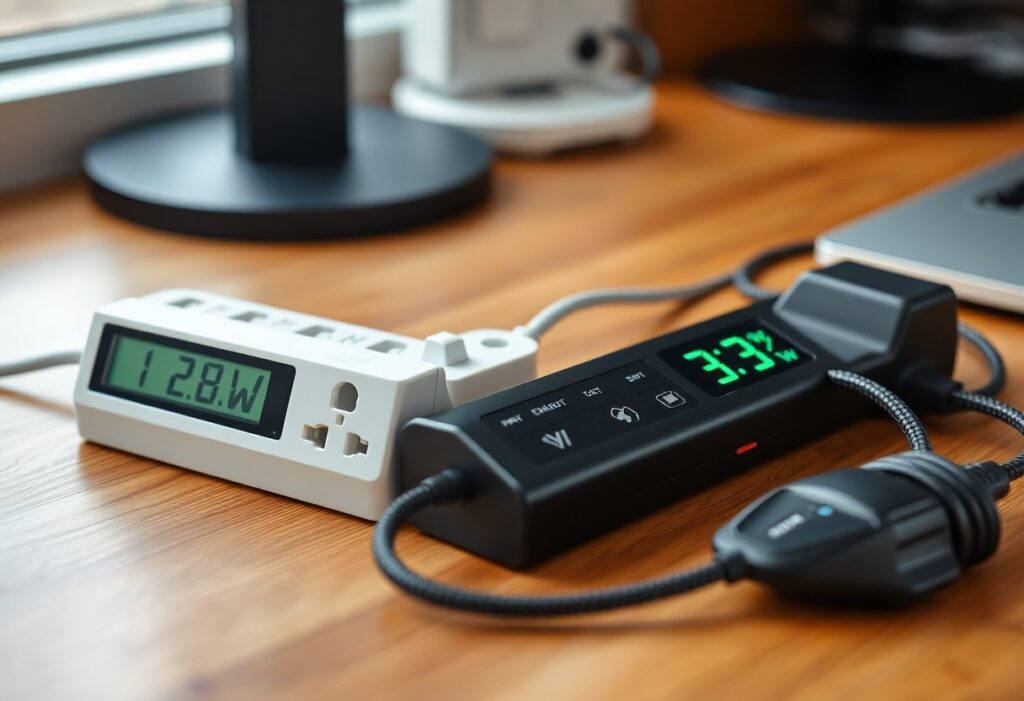
| Electronics left on unnecessarily | A suitably rated smart plug or advanced power strip | Measured avoidable use and safe switching |
If you do not know the cause yet, pause the shopping list. Start with our high-electric-bill checklist. For choosing between a meter, smart plug and whole-home monitor, use our separate guide to measurement and control devices.
1. LED bulbs: prioritize lights you actually use
Compare brightness in lumens, not just wattage. The FTC’s bulb-shopping guide illustrates the difference with a traditional 60-watt incandescent and an approximately 9-watt LED, both producing about 800 lumens. This is a comparison of those bulbs, not a percentage reduction in the whole home’s bill.
Check the packaging for brightness, light appearance, expected energy use and compatibility with your fixture and dimmer. If your home already uses efficient LEDs, replacing them with connected bulbs is mainly a controls decision; do not assume the added connectivity saves energy.
Priority: frequently used inefficient bulbs before rarely used ones. A bulb in a cupboard used for minutes each week has much less opportunity than the same bulb used for hours every evening.
2. Smart thermostats: improve control before replacing equipment
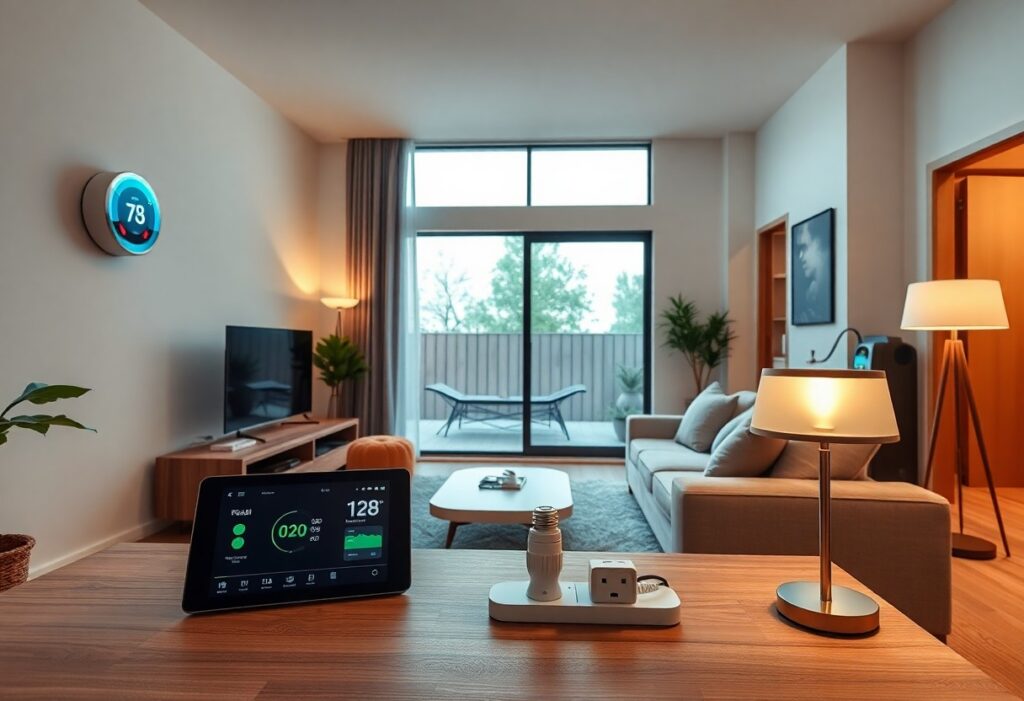
A thermostat can help manage avoidable heating or cooling runtime, but it is not a repair for faulty equipment. ENERGY STAR certifies smart thermostats using real-world field data and advises checking heating-and-cooling-system compatibility.
First examine the schedule you already use. If a working programmable thermostat meets your needs and is configured well, an app alone does not establish an energy-saving reason to replace it. Heat pumps, auxiliary heat and communicating systems require particular attention to compatible controls and installer settings. Do not apply a generic deep-setback schedule to every system.
Priority: a known scheduling or control problem. Compare the options in our smart versus programmable thermostat guide before purchasing.
3. Heat-pump water heaters: plan the replacement, not just the purchase
When a water heater is due for replacement, include a suitable heat-pump model in the comparison. Installation conditions are central to performance. ENERGY STAR’s design guidance covers air access, room conditions, noise, cooler exhaust air, tank sizing, condensate and electrical requirements.
Ask an installer to assess the actual location and your household’s peak hot-water demand. Follow the specific model’s instructions rather than treating one minimum room size as universal. Resistance backup operation can increase energy use, so capacity and operating mode matter alongside the efficiency label.
Priority: an upcoming replacement with a suitable installation location and a written total-cost comparison. This is not a recommendation to discard a functioning tank without comparing the alternatives.
4. Heat pumps and efficient HVAC: compare the whole system
A heat pump moves heat rather than generating all of its heat through electrical resistance. That makes it a useful option to evaluate when replacing heating or cooling equipment. However, a lower heating-energy requirement does not guarantee a lower total bill after switching fuels.
ENERGY STAR’s heat-pump buying guidance emphasizes sizing and cold-climate suitability. Request a load calculation, an assessment of existing ducts, and a clear explanation of any backup heat. Compare local electricity and fuel prices, the condition of current equipment, installation costs and expected maintenance.
Priority: replacement planning supported by professional assessment. If existing equipment suddenly costs more to run, investigate the change before assuming a new system is necessary. Electrical, refrigerant and hard-wired installation work belongs with qualified professionals following local requirements.
5. Efficient appliances: compare like-for-like models
When an appliance needs replacing, compare models that meet the same capacity and functional needs. The FTC explains that the yellow EnergyGuide label helps compare energy use for covered products. Its annual operating cost is an estimate using standardized assumptions, not your personal bill.
Consider purchase price, expected energy use, installation and repair needs together. A larger efficient appliance is not automatically the lowest-consumption choice for a smaller household. Keeping a functioning appliance can also be reasonable when the measured operating-cost difference is small.
Priority: a needed replacement where comparable energy information supports the choice. Check any incentive directly with the administering utility or program before counting it in your budget; this guide assumes no specific rebate or tax credit.
6. Smart plugs, power strips and sensors: target avoidable hours
Controls have an opportunity when they stop a load that would otherwise remain on. They cannot save the same amount in a household that already switches everything off. Measure the avoidable use and consider the controller’s own consumption before deciding whether the purchase is worthwhile.
Match the product to the connected equipment’s electrical rating and the manufacturer’s instructions. Do not automatically disconnect refrigeration, medical equipment, security systems or other equipment that needs continuous power. This guide does not recommend general-purpose smart plugs for heaters or other high-current appliances.
Before buying lighting controls, record how long lights remain on in empty rooms. If there are few avoidable hours, do not assume a sensor will quickly recover its cost. Choose controls compatible with the existing lighting and keep essential safety lighting available. Our power-strip guide covers grouped electronics in more detail.
Calculate savings before claiming a payback
The basic relationship is kWh = watts × hours ÷ 1,000, as explained by the U.S. Energy Information Administration. For a constant-power load, estimate the reduction using the difference between old and new wattage.
Illustrative bulb calculation — not a tested result
Assume one 60-watt bulb is replaced with a 9-watt bulb of suitable brightness, both used for 3 hours daily, at an assumed electricity rate of $0.20/kWh.
- Annual reduction: (60 − 9) × 3 × 365 ÷ 1,000 = 55.845 kWh.
- Estimated energy-charge saving: 55.845 × $0.20 = about $11.17 per year.
- At an assumed $5 purchase cost, simple payback is $5 ÷ $11.169 = about 0.45 years.
These are chosen example inputs, not current product prices or a national tariff. The calculation excludes installation, taxes, fixed utility charges, maintenance and heating/cooling interactions. Change the inputs to match your situation.
For appliances that cycle, use representative measured kWh or comparable label estimates rather than multiplying maximum rated watts by every hour of the day. For an upgrade you already need, compare the extra cost of the efficient option against its extra expected savings; do not confuse that with the payback for replacing working equipment early.
What should not be on an evidence-based shopping list?
A generic plug-in box is not proven to cut your bill because its label says “power saver.” Ask what load it changes, how savings were measured and whether the result applies to your billing method. The FTC’s energy-saving-claims material reinforces the need to scrutinize product advertising. See our explanation of plug-in power-saver claims for the kWh and power-factor distinction.
A monitor is another important distinction: it gives you information, not automatic savings. A device that reveals a problem can be useful, but the benefit still depends on the action you take afterward.
Your next step: choose one measurable improvement
- Identify the load or unnecessary operating hours.
- Check whether a no-purchase setting or habit change solves it.
- Compare suitable options using your own costs and usage.
- Make one change and record what changed.
- Compare similar periods, allowing for weather, occupancy, billing days and rates.
For a broader plan, use our home-efficiency guides. For measurement and control choices, return to the Energy-Saving Devices hub.
Frequently asked questions
What is the best energy-saving device for a home?
There is no universal winner. An LED replacing a frequently used incandescent, better control of unnecessary HVAC runtime, or an efficient appliance at replacement time can each be appropriate. The best first choice is the one with a demonstrated opportunity in your home.
Should I buy a smart device if the old one still works?
Only if the added function solves a useful problem at an acceptable cost. Connectivity, a dashboard or remote access is not by itself evidence of lower energy use.
Can a device guarantee a percentage off my whole bill?
Not from a generic category claim. A percentage measured for one bulb or heating system cannot be applied to all household consumption, and fixed bill charges may not change.
Which upgrade pays back fastest?
Calculate it from your avoided energy cost and actual purchase or installed cost. Hours of use, the equipment being replaced and local prices can reverse the ranking. The worked bulb example above is a method, not a promised result.