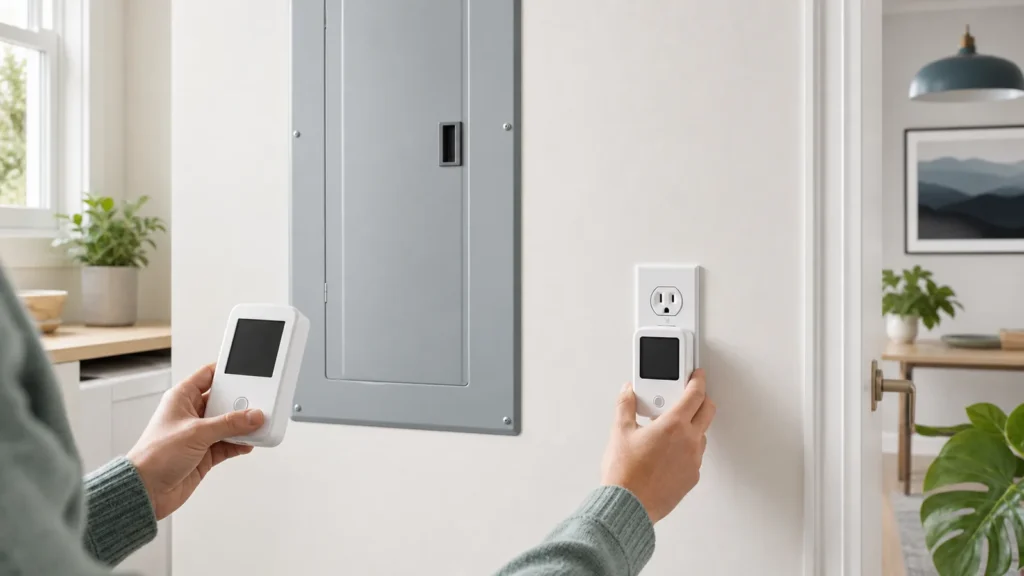
Quick answer: Choose a plug-in meter when one compatible appliance is the question. Choose utility interval data or a whole-home monitor when the question is about the entire house, timing, or a hardwired load. The best tool is the least complex one that can measure the uncertainty you actually have.
Electricity bills are based on energy over time, usually kilowatt-hours (kWh), while a device’s instantaneous draw is power (watts or kilowatts). That distinction matters: a small load that runs constantly can cost more than a larger load that runs briefly. Start with the cause of the high bill, then measure the right scope.
What each method can measure
| Method | Best for | Does not answer well | Effort and safety |
|---|---|---|---|
| Utility interval data | Whole-home daily, hourly, or shorter-interval patterns | Exactly which appliance caused the load | No hardware; availability and delay vary by utility |
| Plug-in electricity meter | One compatible plug-in appliance, standby use, runtime tests | Hardwired, 240-volt, or inaccessible loads | Low effort; use only within its rating and instructions |
| Whole-home current-transformer monitor | Total usage, baseload, peaks, and timing at the service | Exact appliance identity without a directly measured circuit | Panel work; use a qualified installer when required |
| Circuit-level monitor | Known branch circuits such as HVAC, water heating, EV charging, or a pump | Mechanical diagnosis or savings without an action | More panel space, sensor setup, and installation planning |
Choose a plug-in meter when the appliance has a plug
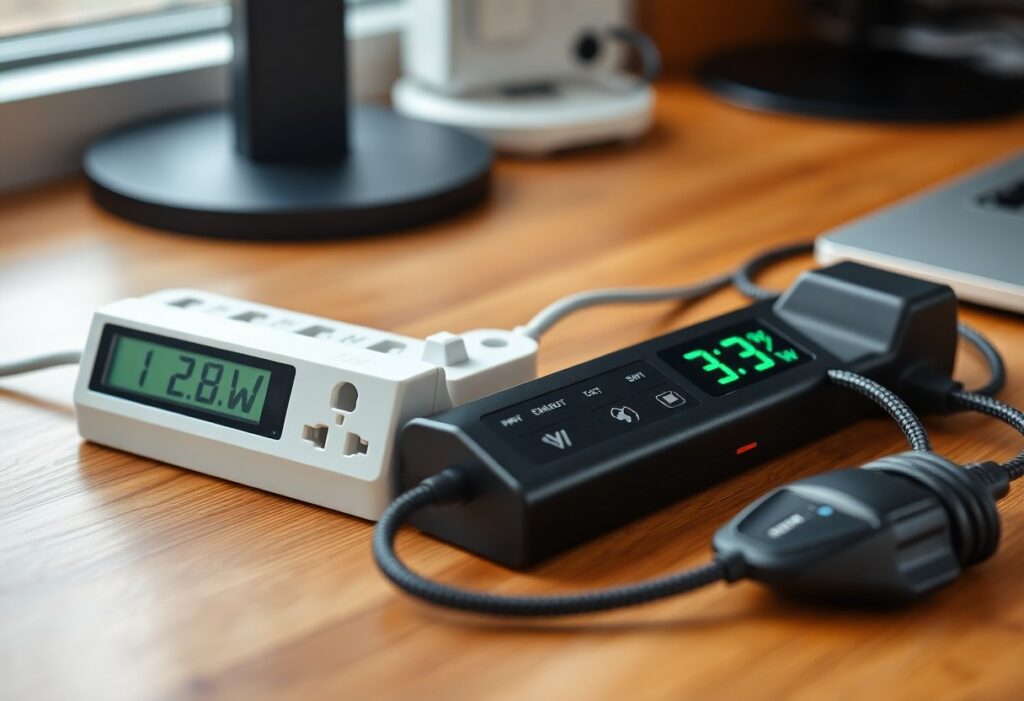
A plug-in meter is the quickest route to a defensible answer for a refrigerator, dehumidifier, entertainment setup, desktop equipment, or other compatible receptacle-connected load. Record kWh over a realistic period rather than relying only on a momentary watt reading. For cycling equipment, one short sample can be misleading.
Do not use a typical plug-in meter as a workaround for central air conditioning, an electric water heater, a range, dryer, EV charger, or other hardwired/high-voltage equipment. The wrong tool can create a safety problem and still produce a bad answer.
Choose whole-home data when timing is the mystery
Utility data is often the free first step. Look for an elevated overnight baseline, a repeated daily peak, or a step change after weather, occupancy, or equipment changes. U.S. utilities measure customer use in kWh; many smart meters can report usage at shorter intervals, but the detail available to you differs by utility.
A whole-home monitor is useful when the utility portal is too delayed or too coarse, when you want more immediate feedback, or when you need to see whether the total changes after a repair or schedule change. It measures the house total; it does not automatically diagnose a fault.
Choose circuit-level monitoring when the suspect load is hardwired
Circuit sensors can directly follow a known branch circuit. That makes them more useful than appliance-detection guesses when the question is, for example, whether the HVAC circuit, water heater circuit, pump, or EV charging circuit is running at an unusual time. It still cannot tell you whether a compressor has the correct refrigerant charge or whether plumbing work is required.
Use the measurement as a handoff to the right diagnosis: our old-AC guide explains why long runtime has several possible causes, and the water-heater guide covers repeated hot-water demand and equipment checks.
A practical decision path
- Start with the bill and utility portal. Confirm the billing period, rate changes, and when usage rose.
- Name the question. Is it one plug-in device, a hardwired circuit, or the whole-house pattern?
- Use the smallest safe measurement scope. Plug-in meter for a compatible appliance; interval data for timing; panel monitoring for hardwired or whole-home questions.
- Compare a controlled before and after. Change one schedule, repair, or setting at a time where practical.
- Escalate faults to a professional. A measurement can show unusual runtime; it is not authorization to work inside electrical equipment.
Where Emporia Vue 3 fits
Emporia Vue 3 is an example of a panel-mounted monitor that can track service mains and, with the relevant sensor bundle, selected branch circuits. It is not a plug-in meter. Read our Emporia Vue 3 evidence review for the current specification, cloud-data caveat, and fit criteria before considering any product.
What to include in a payback decision
Do not compare only device prices. Add professional installation, optional sensors, subscriptions, time spent reviewing data, and any ongoing cloud or support dependency. Savings are only real when the measurement leads to a feasible change and you verify lower kWh or lower cost on your actual tariff.
Bottom line
One appliance with a normal plug: use a plug-in meter. A whole-home timing question: start with utility data, then consider a total monitor if needed. A large hardwired circuit: consider circuit-level measurement installed safely. For a wider buying decision, see whether home energy monitors are worth it.
Sources
- U.S. Energy Information Administration: measuring electricity
- U.S. Energy Information Administration: interval and smart-meter data assessment
- Sense: panel-monitor installation safety guidance
Affiliate disclosure: This article contains no product affiliate links at publication. It is a measurement-method guide, not a product endorsement.