Quick answer: A faulty thermostat can cause a high electric bill if it makes heating or cooling run longer than intended, uses the wrong equipment stage, calls for heat and cooling incorrectly, or reads an unrepresentative temperature. But a high bill does not prove the thermostat is broken. HVAC faults, weather, air leakage, duct problems, and schedule changes can look identical.
Start with the bill-wide checks in Why Is My Electric Bill So High?. Then use the steps below to determine whether the thermostat is a plausible control problem.
How thermostat behavior affects electricity use
A thermostat does not create most of the energy load; it controls equipment that does. ENERGY STAR notes that heating and cooling represent a large share of household energy use. A small control or sensing error can therefore change hours of compressor, blower, heat-pump, furnace-fan, or electric-resistance operation.
Examples include a sensor reading warmer than the room during cooling, a schedule that never enters an away setback, auxiliary heat running more than expected, or a system that continues operating after the setpoint is reached.
Signs the thermostat deserves investigation
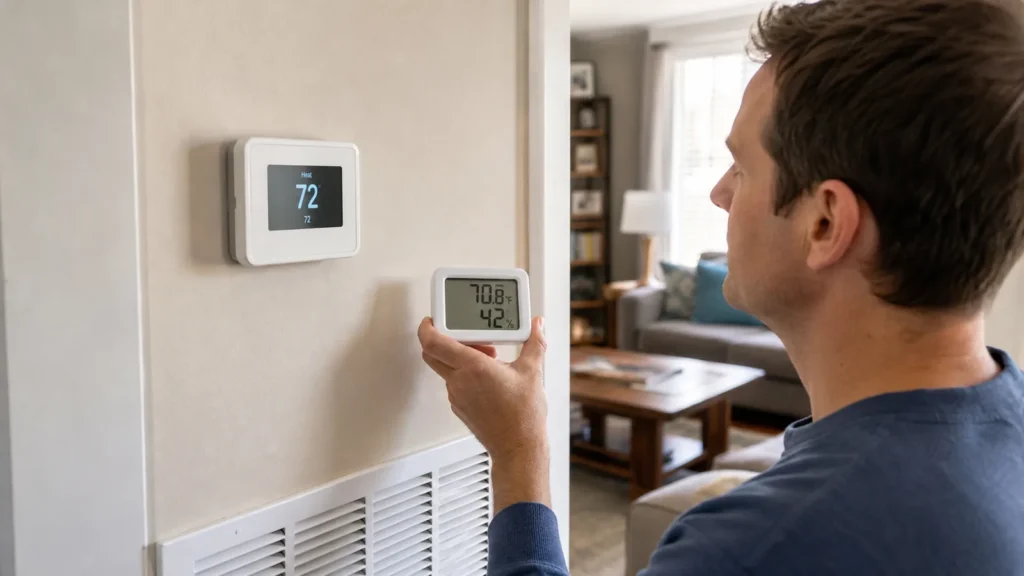
- The displayed temperature differs consistently from a reliable thermometer. Compare after both devices have stabilized in the same area, away from your hand and direct airflow.
- The HVAC runs well beyond the setpoint. Short overrun can be normal, but persistent heating or cooling in the wrong direction needs diagnosis.
- The system starts and stops unusually often. This can be thermostat-related, but also points to sizing, airflow, refrigerant, electrical, or equipment issues.
- The schedule or mode changes unexpectedly. Check holds, geofencing, utility-program events, app automations, vacation modes, and time-zone settings.
- The screen resets or loses power. Battery, low-voltage power, wiring, condensate safety switches, or equipment faults may be involved.
- Auxiliary or emergency heat appears unexpectedly. On heat pumps, controls and configuration strongly affect resistance-heat use.
- One room controls the entire house poorly. Thermostat location may be unrepresentative even if the device is accurate.
Checks you can perform safely
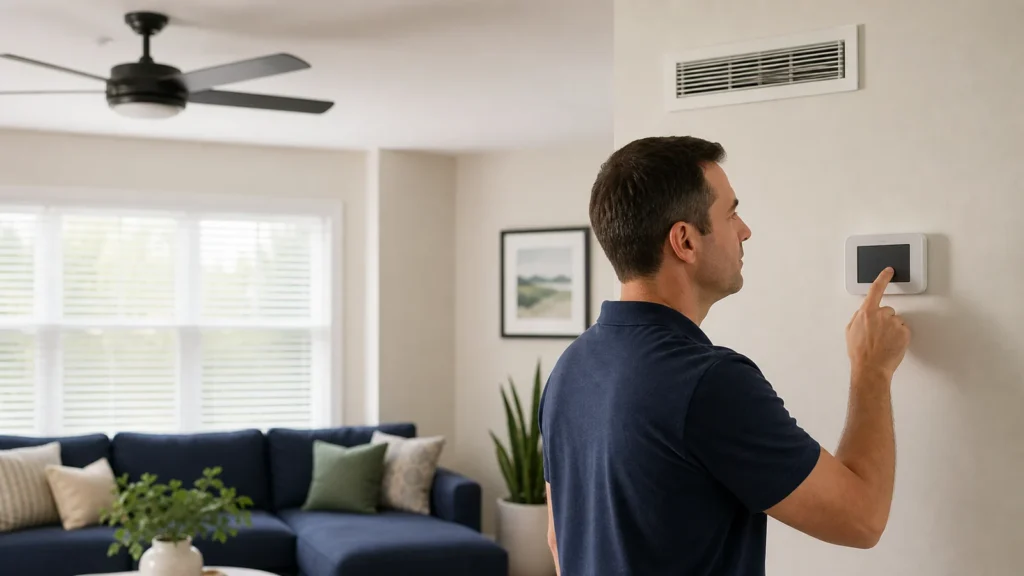
Review mode, setpoint, fan, and schedule
Confirm heating versus cooling mode, the current hold, fan setting, programmed periods, and whether an app or energy program can change them. A fan set to run continuously may increase blower electricity and can affect humidity in some cooling systems.
Compare temperature carefully
Place a trustworthy room thermometer near—but not directly on—the thermostat. Keep both away from sunlight, electronics, supply air, exterior doors, kitchens, and your body heat. Wait long enough for readings to stabilize. A small difference may fall within device tolerances; a persistent material difference supports further investigation.
Replace user-serviceable batteries
If the manual specifies replaceable batteries, use the correct type and preserve schedule information as directed. Batteries do not solve wiring, compatibility, sensor, or HVAC faults.
Review runtime and energy data
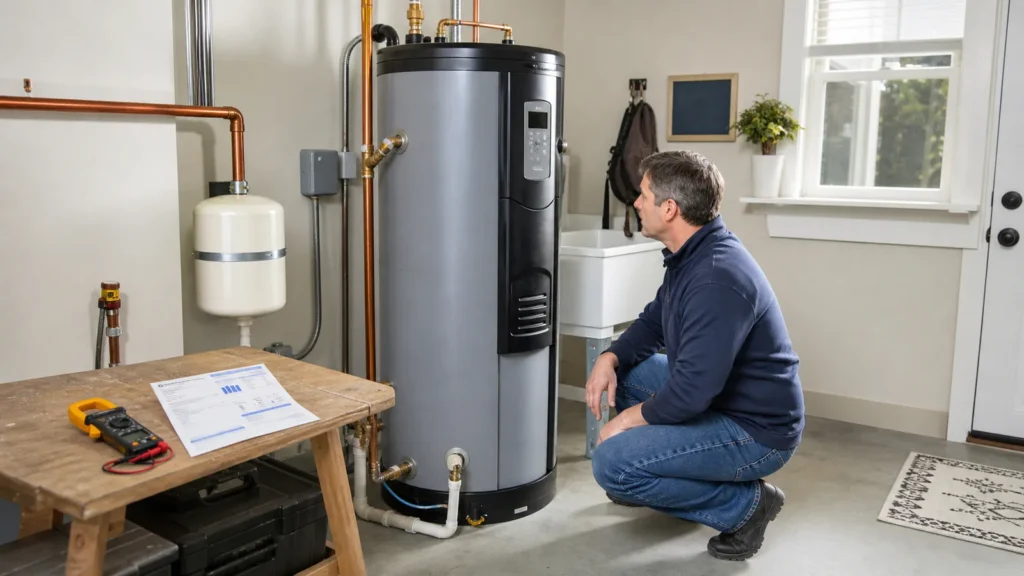
Many smart thermostats provide daily or monthly runtime. Compare similar weather and occupancy. Utility interval data can confirm whether total demand rises during the same hours. Runtime alone does not reveal whether the compressor, blower, or resistance heat was active.
Problems that imitate a bad thermostat
Restricted airflow: A dirty filter, blocked return, dirty coil, or blower problem can prevent the house from reaching the setpoint.
Building load: Extreme weather, open windows, air leakage, poor insulation, or direct solar gain can extend runtime.
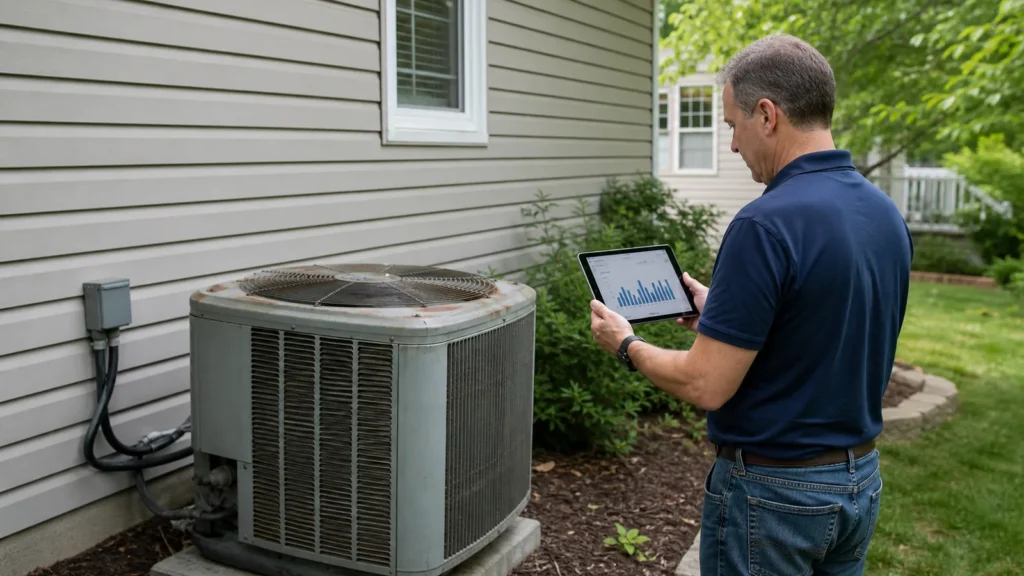
Equipment faults: Refrigerant, compressor, sensor, defrost, staging, electrical, and duct problems can all appear as a thermostat complaint. See whether an aging air conditioner may be contributing to the bill.
Location: DOE advises keeping heat-producing lamps and televisions away from room-air-conditioner thermostats because sensed heat can cause longer operation. The same principle applies broadly: a thermostat should represent the occupied space rather than a local hot or cold spot.
Should you replace it with a smart thermostat?
Replace a thermostat because the diagnosis, compatibility, scheduling needs, or desired controls justify it—not because every smart device guarantees savings. ENERGY STAR-certified smart thermostats must demonstrate energy-saving performance using aggregated field data, but household results still depend on climate, schedule, equipment, and existing habits.
Before buying, confirm HVAC type, number of stages, heat-pump and auxiliary-heat support, zoning, line versus low voltage, available wires, and manufacturer compatibility. ENERGY STAR notes that variable-speed, multi-stage, zoned, boiler, and certain other systems may require special compatibility or professional installation.
If replacement is justified but the wall has no connected common wire, use our smart thermostat without a C wire compatibility guide. It separates systems that may operate on compatible existing wiring from those that require a manufacturer power connector or adapter.
Our smart-home energy guide separates useful automation from convenience features. A whole-home monitor can show the electrical result of control changes; read whether a home energy monitor is worth it.
When professional diagnosis is warranted
- heating and cooling operate at the same time;
- auxiliary heat runs unexpectedly or continuously;
- the system short-cycles, trips protection, or ignores the setpoint;
- wiring, voltage, zoning, staging, or equipment compatibility is uncertain;
- the thermostat loses power repeatedly; or
- the home has line-voltage controls or other conditions outside safe user service.
Turn equipment off and seek qualified help for overheated wiring, burning odor, arcing, repeated breaker trips, or unsafe temperatures. Do not move thermostat wires without identifying the system and following the manufacturer’s instructions.
A useful test after correction
Record the date, outdoor weather, setpoints, occupancy, daily kWh, and HVAC runtime before and after the change. Compare multiple similar days rather than a single bill. This separates a genuine control improvement from changes in weather or behavior.
Bottom line
A faulty or poorly configured thermostat can raise electricity use because it changes the operation of a much larger HVAC load. Verify the displayed temperature, schedule, runtime, equipment response, and competing HVAC causes. Replace or repair only after those observations point to the control rather than the weather, building, or equipment.
Sources
- ENERGY STAR: smart thermostats, compatibility, and field-data certification
- ENERGY STAR: smart thermostat key criteria
- U.S. Department of Energy: thermostat and cooling guidance
- ENERGY STAR: HVAC maintenance checklist
Editorial note: This guide provides general information and cannot diagnose HVAC controls remotely. It contains no product affiliate links at publication.