Short answer: an energy-saving system is useful when it solves a specific problem: it measures a load, controls a schedule, improves the building envelope, or replaces equipment with a more efficient option. A dashboard or a plug-in box does not lower a bill by itself. Start with the part of the home that uses the energy, then choose the system that can change that use.
What counts as an energy-saving system?
“Energy-saving system” is a broad label. It can describe a connected thermostat and lighting package, a whole-home monitor, air sealing and insulation, a heat-pump retrofit, a solar-and-battery installation, or a combination of these. The label is not a performance result. The important questions are what the system measures or controls, which load it affects, and how you will know whether the change mattered.
For a normal residential bill, electricity use is generally measured over time in kilowatt-hours (kWh). The U.S. Energy Information Administration explains how electricity is measured. That means a credible recommendation should connect to lower kWh for the same useful heating, cooling, lighting, appliance use, or other service—or to a rate-aware change that is valid for the household’s tariff.
Start by sorting systems into four practical jobs:
- Measure: show when and where electricity is being used.
- Control: schedule or automate a compatible load so it is not running unnecessarily.
- Reduce the load: improve the equipment or building conditions that create the demand.
- Supply or shift energy: generate, store, or shift electricity after the load has been understood.
Begin with measurement when the cause is unknown
A measurement system is most valuable when it answers a question you cannot answer from a monthly bill. A plug-in meter can measure one compatible appliance. A whole-home monitor or utility interval data can show patterns across the home, such as overnight baseload or a large afternoon cooling load. Neither automatically identifies every appliance, and neither repairs an inefficient system; they help you decide what to investigate next.
Use the simplest measurement method that matches the question. For a refrigerator, dehumidifier, or portable appliance, a plug-in meter may be enough. For a sudden bill increase, compare billing days, kWh, rate components, outdoor conditions, and major equipment runtime first. For a whole-home pattern, review interval data if your utility provides it, or consider a properly selected whole-home monitor. See plug-in meter vs. whole-home energy monitor for the distinction and whether a home energy monitor is worth it before buying hardware.
Use smart controls only where they can control a real load
Smart controls can be useful when a schedule, occupancy pattern, or rate period is genuinely causing avoidable runtime. They are not a replacement for correct equipment sizing, maintenance, or a sound building envelope. A thermostat cannot fix a duct leak, a failing compressor, or an under-insulated attic; it can help prevent conditioning an empty home or maintaining a temperature schedule that nobody needs.
ENERGY STAR describes a Smart Home Energy Management System (SHEMS) as a package that includes, at minimum, a certified smart thermostat, lighting, and monitor/control plug loads. It may also coordinate other connected devices. Its practical functions include scheduling, suggesting actions based on use patterns, and controlling compatible devices based on occupancy. Read the ENERGY STAR SHEMS criteria and guidance before assuming that any single Wi-Fi device is a whole-home energy system.
Before adding a smart thermostat, verify the HVAC type, terminals, power requirements, and any communicating or line-voltage controls. A heat pump may use O/B, AUX/E, stages, and changeover settings that need careful compatibility checks. Our heat-pump thermostat compatibility guide explains what to check. A smart plug or power strip also needs a load that is safe and appropriate to switch; do not use one to control equipment that requires continuous power, safe shutdown, or a manufacturer-specified connection.
Prioritize the equipment and envelope that create the biggest demand
When a system is supposed to reduce energy use, ask what physical demand it changes. Heating and cooling often deserve attention because runtime is affected by thermostat settings, maintenance, airflow, duct condition, insulation, air leakage, windows, climate, and occupancy. Water heating, refrigeration, laundry, lighting, and cooking can also matter, but their importance varies by household.
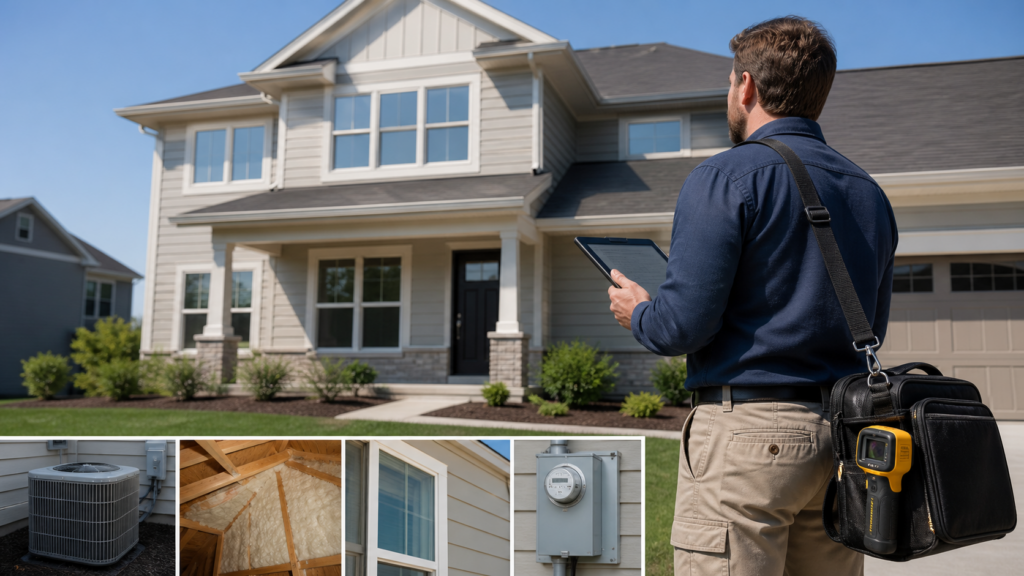
For building improvements, an assessment is more informative than a generic upgrade list. ENERGY STAR’s Home Energy Yardstick uses a year of utility data and household characteristics for a broad comparison; it also points people with a high bill or comfort problem toward a professional assessment for diagnosis. A professional can use appropriate testing to distinguish air leakage, duct problems, insulation gaps, and equipment issues. That is a stronger decision path than installing a gadget because it promises a percentage.
Use the home energy efficiency hub to compare envelope improvements, major loads, and system choices. If an old air conditioner appears to be the problem, start with the old-AC diagnostic checklist, not with a replacement claim based only on the unit’s age.
Where solar, batteries, and EV charging fit
Solar, storage, and smart EV charging can be part of a home energy plan, but they answer different questions. Solar can produce electricity; storage can provide backup or shift some energy use; EV charging controls can schedule a compatible vehicle load. Whether any of these lowers a bill depends on the utility tariff, export compensation, equipment cost, roof or site conditions, consumption timing, financing, interconnection rules, and the household’s goals.
Do not treat battery capacity as a promise of whole-home backup or universal savings. Identify the circuits that must remain on, the loads that can be shifted, and the limits of the system. For major electrical, HVAC, or solar work, obtain qualified design and installation advice and follow local requirements.
A sensible sequence for choosing a system
- State the problem in measurable terms. Is the concern a seasonal rise, high overnight use, a single appliance, peak pricing, comfort, outage backup, or electrification?
- Check the bill and existing equipment. Compare kWh, billing days, rate changes, weather, maintenance history, and major-load runtime.
- Measure before buying a complex system. Use interval data, a compatible plug-in meter, or a whole-home measurement method appropriate to the question.
- Choose the least-complex control or upgrade that addresses the cause. A schedule may help a predictable load; an envelope or equipment repair may matter more than automation.
- Verify compatibility and safety. Check electrical ratings, HVAC wiring and control type, installation requirements, certification, warranty, and return terms.
- Review after the change. Compare similar periods where possible, and separate weather, occupancy, rate, and billing-period changes from the effect of the system.
What to avoid
Be skeptical of products that promise a fixed household saving without asking about your loads, rate, climate, or home. A lower amp reading, a glowing indicator, or a claim about power factor does not establish lower billed kWh. Avoid treating a general product category as a substitute for model-specific compatibility, safety, and independent evidence.
Small plug-in “power saver” boxes are a separate category from monitoring, smart controls, and genuine efficiency upgrades. If you are considering one, read what plug-in power saver devices can—and cannot—change. For a broader map of measurable tools, see the energy-saving devices guide.
Frequently asked questions
What is the best energy-saving system for a home?
There is no single best system for every home. The right choice depends on the measured problem. A monitor may be useful for an unexplained pattern, a thermostat for compatible HVAC scheduling, an assessment for comfort and envelope issues, and major equipment or solar work only after the load, budget, tariff, and installation conditions have been evaluated.
Do smart-home systems automatically reduce an electric bill?
No. Smart-home systems can schedule, monitor, or control compatible devices, but savings depend on how they are configured and whether they reduce unnecessary operation. They cannot guarantee a result across homes with different equipment, rates, climates, and behavior.
Should I buy a monitor before a smart thermostat?
Buy the tool that answers the current question. If you already know HVAC runtime and scheduling are the issue, a compatibility-checked thermostat may be the next step. If you do not know what is driving the bill, measurement or utility interval data can prevent a guess.
Are solar panels part of an energy-saving system?
They can be part of a broader energy plan, but they generate electricity rather than reducing the underlying load. First understand consumption, tariff rules, roof/site constraints, equipment proposals, and financing. Reducing avoidable demand can make later system sizing more meaningful.