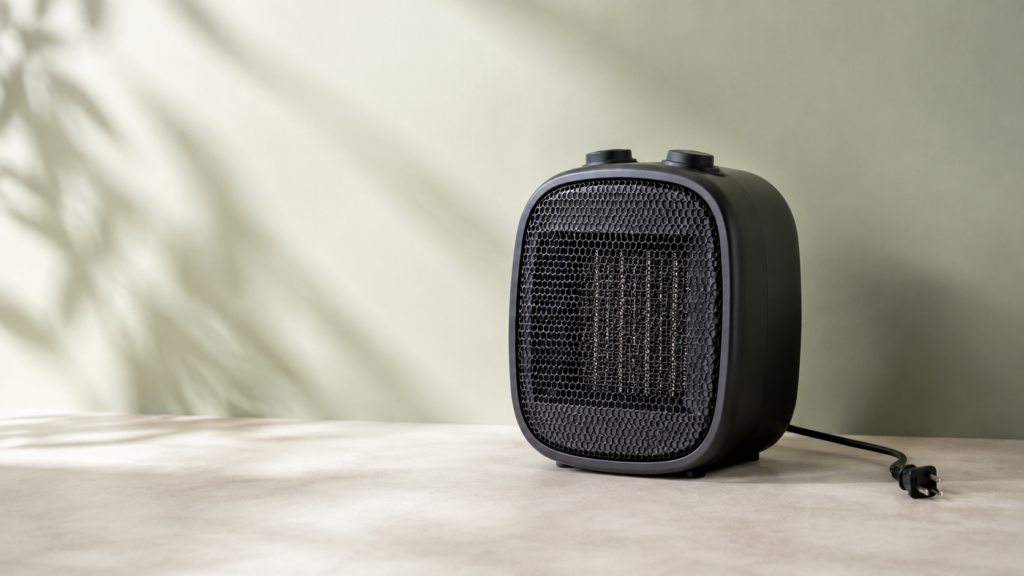
A portable electric space heater can noticeably change a winter bill because it turns electricity directly into heat. The useful question is not whether it is “energy saving” in the abstract; it is how many watts it uses, how many hours it runs, and whether it is heating a small occupied area instead of making the central system work harder.
This guide gives you a safe way to estimate the cost, compare it with your bill, and decide what to check before assuming the heater is the whole problem.
Start with the wattage on the heater label
Read the wattage for the selected heat setting from your heater label or manual. For a worked example, assume a heater rated at 1,500 watts; your model may differ. A 1,500-watt heater is 1.5 kilowatts (kW). Electricity bills are measured in kilowatt-hours (kWh), so the basic estimate is:
kW × hours used = kWh used
If a 1.5 kW heater runs for three hours, the estimate is 4.5 kWh. Multiply that result by the energy-charge portion of your own bill to estimate the electricity cost. Utility bills can also include delivery charges, taxes, time-of-use pricing, and tiered rates, so use the calculation as a planning tool—not a universal monthly-cost claim.
Why the runtime matters more than the heater’s name
A heater with a thermostat may cycle instead of drawing full power continuously, but its real use depends on room size, outdoor weather, insulation, drafts, thermostat setting, and how long someone is in the room. A small room with a closed door and a moderate setpoint can need far less runtime than a drafty open area.
Estimate heater use from its label wattage and supervised operating time. Plug a portable electric heater directly into a wall outlet, not into a plug-in meter, smart plug, adapter, extension cord, or power strip. For a whole-home view, compare utility interval data or ask a qualified professional about circuit-level monitoring. Our measurement-method comparison explains the limits of each approach; a plug-in meter suitable for a small appliance is not automatically suitable for a heater.
Can a space heater raise an electric bill?
Yes. A portable heater is a high-wattage load, so regular use can be visible on a bill. But a bill can rise for more than one reason at once: colder weather, a longer billing period, a rate change, electric backup heat, water heating, and changes in household schedules can all matter.
Before blaming one device, compare the current bill with a similar earlier period:
- kWh used, not only the dollar total;
- number of billing days;
- energy and delivery-rate changes;
- weather and central heating runtime; and
- new loads, including portable heaters.
Use the broader high electric bill checklist if the change is large or sudden. For a winter-specific investigation, see why winter electric bills rise.
Use a simple one-week estimation plan
- Write down the heater’s rated watts and the rooms where it is used.
- Track supervised operating hours for several typical days. Turn the heater off before sleeping or leaving the room.
- Estimate kWh as rated watts divided by 1,000, multiplied by operating hours. Thermostat cycling can make actual use lower than this full-power estimate.
- Record the thermostat setting and whether the central system also runs.
- Compare the estimated result with your utility interval data or bill, if available.
This turns a vague suspicion into a number you can compare. A whole-home monitor or utility interval data can help show when household demand rises, but it may not identify a single plug-in heater without additional measurement.
When a space heater is the wrong fix
A space heater may improve comfort in one occupied room, but it does not fix a central heating system that is failing, a serious air leak, or a home that cannot maintain a safe indoor temperature. If electric heat strips or emergency heat are running in a heat-pump system, start with the heat-pump high-bill checks. If a central system is short-cycling, has poor airflow, or requires electrical work, ask a qualified HVAC or electrical professional to assess it.
Follow the heater manual. Keep the heater at least three feet from bedding, curtains, furniture, and other combustible materials, on a stable surface. Plug it directly into a wall outlet. Never leave it running unattended or while sleeping. Energy cost and fire safety are separate questions; both matter.
Ways to lower the heat needed in the first place
Lowering drafts and heat loss can reduce the runtime required from any heater. Start with low-risk checks: close windows fully, use coverings at night where appropriate, check obvious gaps around doors, and keep supply and return vents clear. Larger insulation, air-sealing, window, or HVAC decisions should be based on the home, climate, and measured problem rather than a product promise.
For the bigger picture, read how to make a home more energy efficient. If you are deciding whether a device helps, our evidence-led device guide separates measurement and control tools from plug-in boxes that do not demonstrate a billed-kWh reduction.
Bottom line
A space heater’s electricity use is straightforward to estimate: convert its rated watts to kW, multiply by hours used, and compare the resulting kWh with your own rate. The more important decision is whether its recorded runtime is the best way to solve a comfort problem. Estimate use first, compare the whole bill, and address the largest real load before buying another device.